


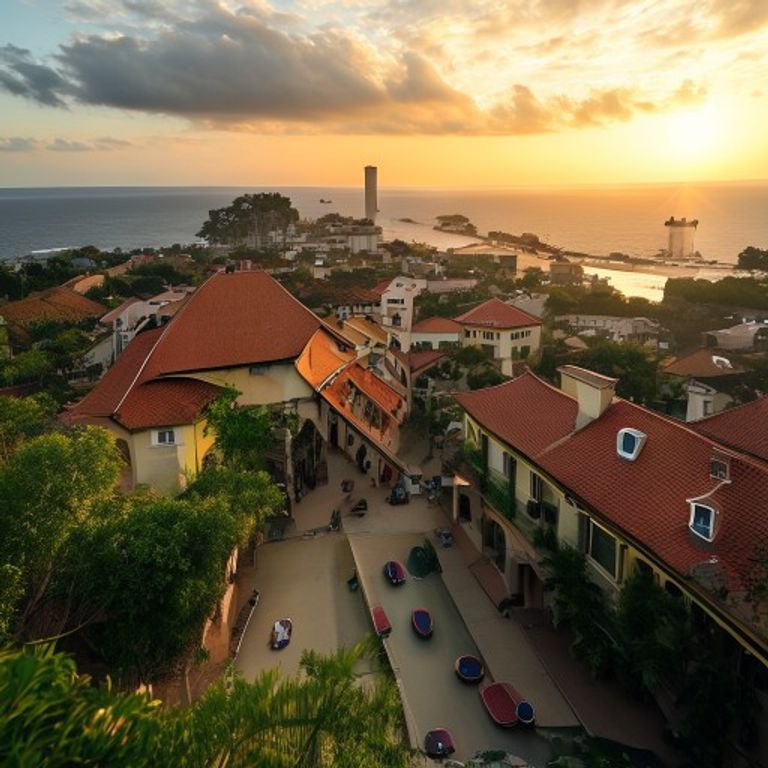
This municipality in the State of Mato Grosso do Sul, the White City, inspired Lobivar Matos and served as the setting for works that narrate river life on the Paraguay River and the history of the border with Bolivia.
⚠️ Research elaborated with the assistance of Deep Research is subject to referential ambiguity.
🖥️Clean HTML code using a proprietary tool.
👥 Research by Guilherme Felipe, Curation by Sílvio Lôbo
The Voice of the Pantanal and the Border: An Essay on Corumbá's Literature
Corumbá, an ancient city nestled in the heart of the Mato Grosso do Sul Pantanal, on the border with Bolivia, is more than a river port and a commercial hub; it is a cultural melting pot, a setting of intense natural and historical beauty, which has inevitably forged a literature of singular identity. The richness of its ecosystem, the complexity of its border relations, and the weight of its history converge to shape literary voices that echo the Pantanal soul and the resilience of its people, translating into prose and verse the essence of one of the planet's richest biomes and a vibrant border culture.
Main Authors and Their Contributions
Corumbá's literary production, although perhaps not as widely disseminated as that of large urban centers, is deeply rooted and authentic. Among the names that stand out, some are pillars of local and regional literary identity:
- Manoel de Barros (1916-2014): Born in Corumbá, Manoel de Barros is undoubtedly the most famous of its native sons. Although his work transcends any strict regionalism, his childhood and youth spent on the banks of the Paraguay River and in the vastness of the Pantanal are the lifeblood of his poetry. His "unlimits," his "inverted grammar," and his search for "insignificance" in the small things of the world have deep roots in the observation of exuberant nature and the simple life of the countryside. He transformed the Pantanal landscape and fauna into universal metaphors, elevating the perception of the everyday to an unparalleled philosophical and poetic level, influencing generations of writers with his originality and depth.
- Lobivar Matos (1915-1994): A poet, journalist, and chronicler, Lobivar Matos is another essential figure. His work is a dive into the Corumbá and Pantanal soul. With accessible language, yet full of lyricism, he captured the nuances of riverbank life, the Pantanal landscapes, and the challenges of existence on the border. His poetry often evokes saudade, rustic beauty, and the peculiar melancholy of the Pantanal man, acting as a sensitive chronicler of local customs and feelings, with a keen eye for the region's traditions and dialect.
- Carlos Magno Mieris (1937-2016): A historian, professor, and writer, Mieris dedicated a large part of his life to researching and documenting the history of Corumbá. His works, which include chronicles and historical books, are valuable sources for understanding the city's formation, its characters, and the events that marked it, such as the Paraguayan War. He was a guardian of local memory, consolidating facts and legends that underpin Corumbá's identity, with academic rigor combined with engaging prose.
- Wandick Faria (1939-): A poet and chronicler, Wandick Faria is another important voice in Corumbá's literature. His poetry, often inspired by daily life, natural beauty, and the city's popular figures, translates the sensitivity and keen observation of riverbank and Pantanal life. His chronicles, in turn, are vivid portrayals of local humor and speech peculiarities, capturing the essence of the "Corumbaense" with lightness and insight.
- Therezinha Betes Queiroz (1930-): A poetess who, in her work, celebrates her homeland, its rivers, its legends, and its local culture. Her poetry is a hymn of love and belonging to Corumbá, expressing a deep connection with the Pantanal identity and the richness of regional folklore. Her work is an invitation to contemplate the beauty and mysticism that permeate life in the Pantanal.
Historical Literary Movements and Their Characteristics
Corumbá's literature, while not strictly adhering to national movements in their strict denominations, reflects and incorporates characteristics of broader trends, always filtered through regional particularity, giving it its own identity:
- "Pantanal" Regionalism and Modernism: The dominant tone is undoubtedly regionalism. However, authors like Manoel de Barros subverted this notion, elevating it to a universal and modernist level, where the local becomes the cosmos, deconstructing language and perception. Other authors, like Lobivar Matos, explore a more traditional, descriptive regionalism, but with the modernist sensibility of valuing vernacular language and everyday life. Nature is a central character, and riverbank and Pantanal life shapes the narrative and poetry.
- Border Literature: Corumbá's geographical position as a border city introduces unique elements: coexistence with neighboring cultures (Bolivian), the transit of people and goods, the peculiarity of hybrid language, and cultural conflicts and exchanges. This dynamic is manifested in chronicles and poems that portray life on the "raya" (border), exploring themes of identity, migration, and cultural syncretism.
- History and Memory: Given Corumbá's strategic and historical importance (especially during the Paraguayan War), a significant strand of local literature is the preservation of memory, whether through rigorous historical works or through chronicles and fiction that retell the city's past and its heroes, ensuring that past narratives continue to shape the present.
- Orality and Folklore: There is a strong presence of orality, Pantanal and riverbank legends, and folklore. Many stories are passed down from generation to generation and eventually transcribed into writing, keeping local traditions and myths alive, enriching literature with magical and symbolic elements.
Important Publications and the Current Scene
Historically, the dissemination of literature in Corumbá has heavily relied on local platforms for the visibility of its talents:
- Local Newspapers and Magazines: Many poets and chroniclers began their careers by publishing in local periodicals, which served as important platforms for visibility and circulation for their early works, contributing to the formation of a local readership.
- Academies of Letters: The Academia Corumbaense de Letras, for example, plays a fundamental role in promoting, preserving, and disseminating local literature, organizing events, publishing anthologies, and encouraging new talents, consolidating a space of literary effervescence.
- Anthologies and Collections: The compilation of various authors in anthologies has been crucial in presenting the diversity of Corumbá's literary production to a wider audience, often extending beyond regional borders.
- Regional and Independent Publishers: Although access to major national publishers is a challenge, regional publishers and self-publishing have been pathways for Corumbá's voices to reach readers, boosting the circulation of works and the emergence of new writers.
Currently, there is a continuation of this tradition, with new authors exploring both the classic themes of the Pantanal and the border, as well as more contemporary approaches, using new media and languages to express local identity and engage with the world.
Local Cultural Identity Reflected in Books
Corumbá's literature is a multifaceted mirror of its cultural identity, where each element intertwines to form a cohesive and vibrant whole:
- The Pantanal as Protagonist: The exuberant nature, with its flood and dry cycles, diverse fauna, and vast landscape, is not just a backdrop but an active character that shapes the destiny and psychology of the characters. Man's relationship with nature is a recurring theme, whether in its beauty, the struggle for survival, or the mysticism that surrounds it, transforming the biome into a space for existential reflection.
- Riverbank Life: The Paraguay River and its tributaries are pulsating veins of the city and its literature. The lives of fishermen, boatmen, the dynamics of the port, and the floods are constant elements, reflecting a culture shaped by the waters, by fluidity, and by the constant renewal of river cycles.
- Border Culture: The proximity to Bolivia imparts a hybrid character to the local culture, with the presence of Spanish words and customs, mixed cuisine, and a more open mindset to transit and exchange. This "mix" is frequently captured in chronicles and dialogues, revealing the complexity and richness of an identity in constant construction.
- History and Collective Memory: The Paraguayan War, the city's formation, the arrival of different ethnicities (Syrians, Lebanese, Portuguese), and social and political events are recovered and reinterpreted, ensuring that the past remains alive in the collective consciousness and in the fabric of narratives.
- Local Speech and Folklore: The peculiar dialect of the Pantanal and Corumbá inhabitants, full of regional terms and border influences, is valued in prose and poetry. Pantanal legends (such as the werewolf, the Saci, the wandering souls) and religious festivals (such as São João) permeate the narratives, adding a layer of magic and tradition.
Conclusion
Corumbá's literature is a treasure waiting to be fully discovered, a wellspring of stories, poems, and chronicles that resonate with the soul of a unique land. It is the living testimony of a region of overwhelming beauty and a history rich in challenges and resilience. Through the visceral poetry of Manoel de Barros, the regional lyricism of Lobivar Matos, and the dedication to memory of Carlos Magno Mieris, among others, Corumbá reveals its soul. Its books are not just narratives; they are invitations to dive into the essence of a place where the river meets the sky, the forest meets the pampa, and the past meets a future that continues to be told in prose and verse, reaffirming the strength and particularity of its cultural identity in the vast panorama of Brazilian literature.



