


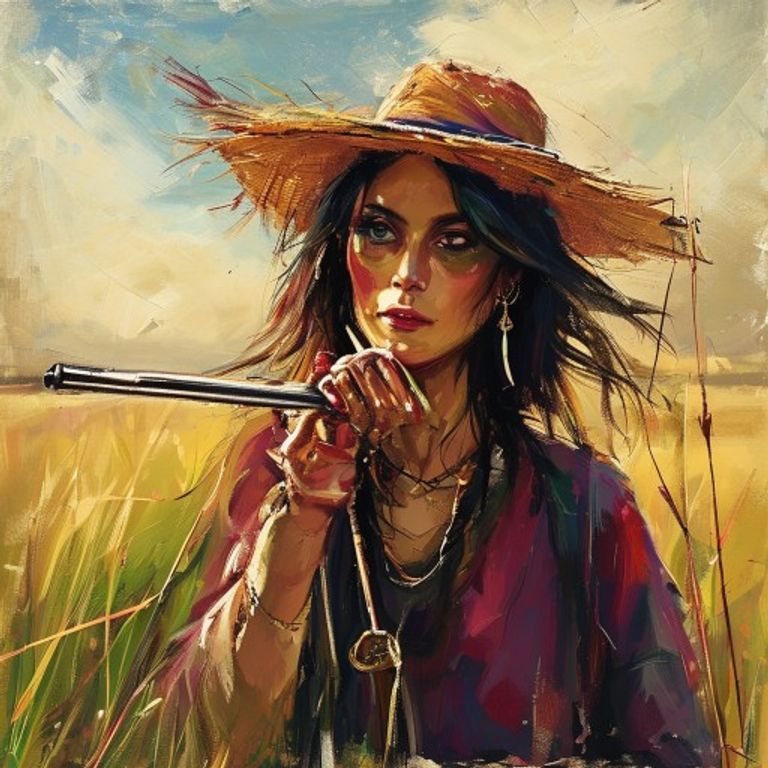
This municipality in the State of Rio Grande do Sul is the birthplace of Erico Verissimo, author of the monumental saga "O Tempo e o Vento" (The Time and the Wind), a work that defined the historical and literary identity of the Gaúcho people for the world.
⚠️ Research elaborated with the aid of Deep Research is subject to referential ambiguity.
🖥️Clean HTML code using a proprietary tool.
👥 Research by Guilherme Felipe, Curation by Sílvio Lôbo
The Literary Tapestry of Cruz Alta: Between the Pampa and the Pen
Cruz Alta, a municipality with a rich historical and cultural tapestry in the heart of Rio Grande do Sul, has been, over the centuries, a fertile ground for artistic and, in particular, literary expression. Strategically located, the city has witnessed and actively participated in the major movements that shaped the Gaúcho and Brazilian identity. This essay aims to unravel the literary fabric of Cruz Alta, exploring its main exponents, the movements that permeated it, the publication platforms, and, above all, how local identity is imprinted on the pages of its books.
Key Authors and Their Legacies
Without a doubt, the name that resonates most strongly in Cruz Alta's literature is that of Érico Veríssimo (1905-1975). Born in the city, Érico not only elevated it to the pantheon of Brazilian literature but also used its roots as an inexhaustible source of inspiration. Although his work extends beyond geographical boundaries, it is possible to identify in novels such as Clarissa (1933) and, most notably, in the saga O Tempo e o Vento, echoes of the landscape, the human types, and the historical dilemmas of the pampa and the Gaúcho hinterland. The Santa Fé farm, featured in the trilogy, evokes the region's ranches, and the chronology of historical events reflects the formation of Rio Grande do Sul, where Cruz Alta played a significant role. Veríssimo transcended regionalism to address universal themes of the human condition, but always with the sensitivity and perspective forged in his homeland.
In addition to Érico Veríssimo, Cruz Alta's literary scene is composed of a constellation of authors who, in different genres, contribute to cultural enrichment. Although perhaps not reaching Veríssimo's national projection, names like Athos Branco (historian and memorialist), Augusto César de Almeida (poet and chronicler), and other members of the Academia Cruzaltense de Letras (ACL) play a crucial role in preserving memory, interpreting the present, and projecting local identity through the written word. The ACL, founded in 1982, serves as an important hub for gathering and fostering local literary production.
Historical Literary Movements and Their Resonances
Cruz Alta's literature, especially in its most prominent phase with Érico Veríssimo, is part of the context of Brazilian Modernism of the second generation, also known as the "Generation of '30." This period was marked by the consolidation of the social and regionalist novel, with a strong inclination towards psychological analysis and the critique of customs. Veríssimo, in his early works, aligned himself with this trend, exploring the tensions between the individual and society, incipient urbanization, and the persistence of rural traditions.
However, the most indelible mark is Gaúcho Regionalism. This movement is not restricted to a specific period but is a constant, an underground current that irrigates local literary production. It is characterized by:
- Valorization of the pampa landscape and rural life.
- Exploration of Gaúcho folklore, legends, and myths.
- Portrayal of the "Gaúcho" as a social type and cultural hero.
- Historical narratives, focusing on the Farroupilha Revolution and the formation of the state.
- Use of vocabulary and expressions typical of regionalism.
Even contemporary authors, who seek new forms and themes, frequently revisit or dialogue with this rich regional tradition, whether to reaffirm it, question it, or reinterpret it from new perspectives.
Important Publications and Dissemination Channels
The vitality of a literary scene is often measured by the existence of channels for the circulation of works. In Cruz Alta, the history of publications is linked to newspapers and, more recently, to academic and cultural initiatives.
Historically, local newspapers such as "Correio Riograndense" and "A Voz da Serra" (the latter still active) played a fundamental role by opening space for regional chroniclers, poets, and short story writers. They served as the first showcases for many emerging talents, allowing local literary production to reach the public.
Currently, in addition to regional publishers that occasionally publish Cruz Alta authors, the Academia Cruzaltense de Letras itself plays an important role in organizing anthologies and promoting launches. Universities and higher education institutions in the city also contribute to cultural effervescence, hosting literary events, lectures, and publishing academic works that sometimes have a literary character or analyze local production. The internet and social media, of course, have also become platforms for independent authors.
Local Cultural Identity Reflected in Books
Cruz Alta's literature is a multifaceted mirror of the region's cultural identity, revealing the historical and social layers that compose it.
- The Gaúcho Identity: The Gaúcho identity, with its ethos of bravery, honor, and attachment to the land, is a recurring theme. The figure of the Gaúcho, chimarrão (mate tea), rural work, cattle drives, and native music are elements that permeate the narratives, building a rich and particular imaginary.
- The Frontier and Foundation: Cruz Alta was a strategic point in the advance into the state's interior. Literature reflects this history of pioneering, conflicts (such as the Farroupilha Revolution), and the construction of a new society. Tensions between the traditional and the modern, the rural and the incipient urban, are frequently addressed.
- The Legacy of Érico Veríssimo: Érico Veríssimo himself, by elevating the "querência" (homeland/native land) to a level of universal reflection, solidified a way of seeing and narrating the Cruz Alta/Gaúcho identity. His influence is so profound that the local literary identity is, to some extent, inseparable from his legacy.
- Contemporary Diversity: More recently, local literature has begun to incorporate other voices and perspectives, addressing more urban themes, contemporary social issues, and the cultural diversity that characterizes Brazil today, without losing, however, the dialogue with its roots.
Conclusion
Cruz Alta's literature is a testament to the cultural richness of Rio Grande do Sul and a vital link in the great chain of Brazilian literature. With Érico Veríssimo as its brightest beacon, the city has consolidated a legacy of profound reflection on the human condition, always anchored in the Gaúcho landscape and traditions. Regionalist and modernist movements found fertile ground there, and local publications ensured the resonance of these voices. More than a mere setting, Cruz Alta reveals itself as an active and inspiring character, whose cultural identity continues to unfold and reinterpret itself through the pages of its authors, ensuring the permanence of its voice on the national literary scene.



