


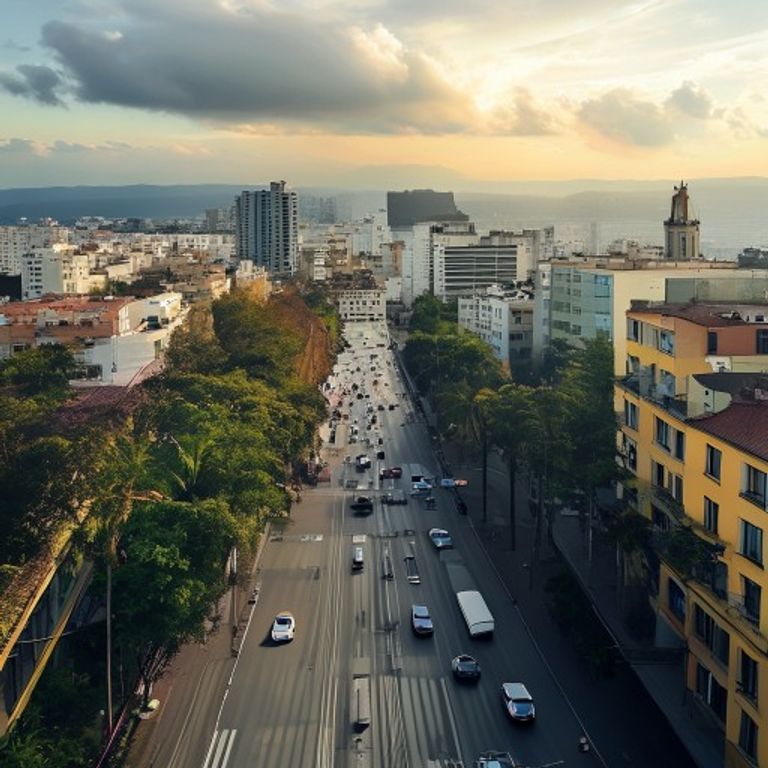
This municipality in the state of Paraná is the epicenter of avant-garde poetry, the birthplace of Paulo Leminski, and home to Helena Kolody and Dalton Trevisan, the Vampire of Curitiba, an author who immortalized the somber daily life of the capital in his short stories.
⚠️ Research elaborated with the assistance of Deep Research is subject to referential ambiguity.
🖥️Clean HTML code using a proprietary tool.
👥 Research by Guilherme Felipe, Curation by Sílvio Lôbo
The Literary Metropolis: A Panorama of Production in Curitiba
Curitiba, the capital city of Paraná, is more than a reference in urbanism and sustainability; it is a fertile literary ground, a hub of cultural effervescence that, throughout its history, has forged a unique identity in its pages. Curitiban literature, often tinged with an introspective, sometimes melancholic tone, and notably engaged with urban life and its complexities, reflects the soul of a metropolis that has managed to reconcile its European roots with the vigor of southern Brazil.
The First Whispers: Symbolism and the Roots of the 19th Century
The foundations of Curitiban literature were laid in the late 19th century, with a strong inclination towards Symbolism, a movement that found fertile ground in Paraná for its mystical and musical aesthetic. Names like Emiliano Perneta (1866-1921), with his hermetic and musically rich poetry, and Dario Vellozo (1869-1937), who moved between symbolism and mysticism, are pillars of this phase. Perneta's poetry, in particular, with its sonority and exploration of themes such as death and the transcendent, deeply marked the local sensibility. In parallel, Romário Martins (1874-1948) stood out as a historian and folklorist, recording Paraná's memory and traditions, contributing to the construction of a regionalist consciousness.
Modernism and the Generation of 1945: New Airs and the Consolidation of Voices
Modernism arrived in Curitiba in a particular way, less by breaking and more by incorporating. Although it did not have the same virulency as in the São Paulo and Rio de Janeiro centers, it opened space for freer poetry and more contemporary themes. However, it was from the Generation of 1945 that Curitiban literature acquired more defined contours and a more robust national projection. This post-war period brought a renewal of themes and styles, with a strong tendency towards introspection, existentialism, and sharp criticism of social behavior.
The great exponent of this generation, and perhaps the most inseparable name from Curitiban literature, is Dalton Trevisan (1925), the "Vampire of Curitiba." His short, acidic, and poignant stories dissect human misery, loneliness, hypocrisy, and the veiled violence of urban life, with the city of Curitiba as the setting and, often, as a character. Trevisan is a master of conciseness and intensity, capturing the essence of "curitibanidade" in his narratives of frustrated lovers, marginals, and petty bourgeoisie. Another significant name is Helena Kolody (1912-2004), whose haikus and lyrical poems explore the delicacy of nature and the depth of human feelings, contrasting with Trevisan's harshness, but equally rooted in the local landscape and spirit.
Still in this period and a little later, crucial figures emerged for the diversification of the scene: Newton Sampaio (1913-1979), with his ironic prose observing society, and Jamil Snege (1939-2003), whose short stories and chronicles explore the absurd, the fantastic, and black humor, revealing a surreal and critical face of the city. Wilson Martins (1921-2010), although better known as a literary critic and historian, also left his mark as an essayist and intellectual of vast culture.
Paulo Leminski and the Explosion of References
A chapter apart in Curitiban literature is Paulo Leminski (1944-1989). Poet, translator, essayist, composer, martial arts master, and polymath, Leminski redefined what it meant to be a writer in Curitiba and in Brazil. His work is a mosaic of Eastern and Western references, of concretism and lyricism, of irony and erudition. His poetry, characterized by conciseness, wordplay, and the fusion of high culture with popular elements, became an icon of the city and one of the most influential Brazilian poets of the 20th century. Leminski encapsulates the cosmopolitan and intellectual Curitiba, but at the same time "shrewd" and irreverent.
Contemporary Voices and the Diversity of the 21st Century
Curitiban literature remains vibrant and diverse in the 21st century. Authors like Cristovão Tezza (1952), although born in Santa Catarina, established himself as one of Brazil's most important contemporary novelists, with works like "O Filho Eterno" (The Eternal Son), which explore memory, language, and family relationships in profoundly human and complex contexts, often with resonances in the Paraná landscape. Valêncio Xavier (1933-2000) deserves recognition for his unique work, which blends literature and visual arts, creating experimental and thought-provoking narratives, often with a surreal and critical touch.
Other names that enrich the current panorama include:
- Miguel Sanches Neto (1965): A novelist and short story writer of great breadth, with works that explore the rural and urban universe of Paraná, history, and the human condition.
- Luci Collin (1965): Poet, short story writer, and translator, her work stands out for its formal sophistication and exploration of language, moving between lyricism and experimentation.
- Luiz Felipe Leprevost (1969): Poet, chronicler, and editor, his writing is marked by attentive observation of daily life and engaging lyricism.
- Giovana Madalosso (1975): An author who has gained prominence with novels of sharp prose and social criticism, addressing contemporary female and urban themes.
- Luís Henrique Pellanda (1973): Short story writer and chronicler, with a keen and ironic eye on the minutiae of modern life.
Publications and Spaces for Literary Dialogue
The vitality of Curitiban literature is sustained by a network of publications, publishers, and institutions. Historically, newspapers like A Gazeta do Povo and Diário do Estado provided space for chronicles and literary supplements. Magazines like the emblematic "Joaquim" (1946-1948), directed by Dalton Trevisan, were crucial for the consolidation of the Generation of 1945. More recently, the magazine "Nicolau", from the Paraná Public Library, has played a fundamental role in promoting new and established talents.
The local publishing market has also flourished. Publishers like Arte & Letra, Medusa, and POSSÍVEIS have contributed to the publication and dissemination of Paraná's production. Events like the Curitiba Book Fair and the Paraná Literário festival mobilize readers and writers, while the Paranaense Academy of Letters and the Federal University of Paraná (UFPR) continue to be centers for reflection and intellectual production.
The Curitiban Cultural Identity Reflected in Books
Curitiba's literature is a multifaceted mirror of its identity. The city, often described as "European" or "cold," finds in prose and poetry a way to reveal its deepest layers:
- Urbanity and Solitude: The planned and modern Curitiba, with its neighborhoods, buses, and parks, is the setting for alienation and introspection. Dalton Trevisan is a master at portraying solitude amidst the crowd.
- Climate and Melancholy: The reputation of a "gray" and rainy city often translates into a melancholic, introspective, and contemplative tone in writing, suggesting an intimate relationship between the environment and the state of mind.
- Irony and Black Humor: There is a vein of subtle humor, sometimes sardonic or absurd, that runs through the work of authors like Snege, Leminski, and Valêncio Xavier, satirizing bourgeois behavior and local "parochialism."
- Ethnic Roots: The strong European immigration (Polish, Ukrainian, German, Italian) is a cultural substratum that, although not always explicit, shapes the worldview and traditions that emerge in some narratives.
- Social Criticism: Many Curitiban authors, since Trevisan, use literature to question social conventions, hypocrisy, and power structures, revealing the fractures beneath the city's orderly surface.
- Intellectualism and Erudition: There is a tradition of writers with solid intellectual training, who incorporate philosophical, historical, and artistic references into their works, as exemplified by Leminski and Wilson Martins.
Conclusion
Curitiba's literature is a living, complex, and constantly transforming organism. From the symbolist poets who sang of mystery, through the chroniclers of the city and the short story writers who bared its urban entrails, to contemporary writers exploring new narrative frontiers, the city reveals itself in its words. It is a literature that, while drawing nourishment from its local specificities – the climate, the architecture, the behavior of its inhabitants – dialogues with the universal, offering a rich contribution to the Brazilian literary landscape and revealing the multifaceted soul of a metropolis that pulses in every paragraph.



