


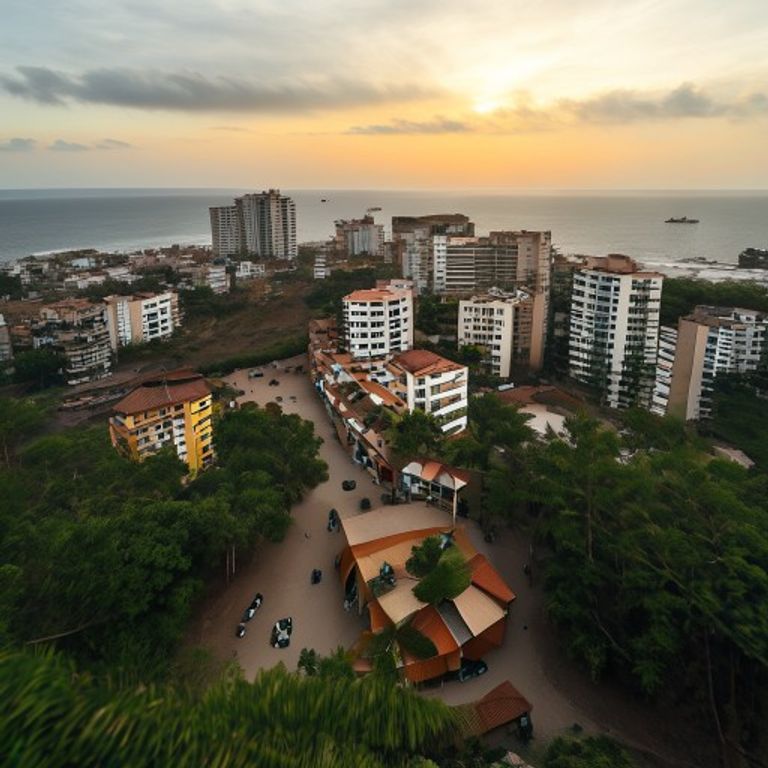
This municipality in the state of Pernambuco is the birthplace of writer Raimundo Carrero, a master of contemporary Brazilian literature, and inspires various works with its mountainous climate and strong cultural and academic tradition.
⚠️ Research conducted with the aid of Deep Research is subject to referential ambiguity.
🖥️Clean HTML code using a proprietary tool.
👥 Research by Guilherme Felipe, Curation by Sílvio Lôbo
The Pen and the Mountains: An In-depth Essay on Literature in Garanhuns
The literature of Garanhuns, in the Agreste region of Pernambuco, reveals itself as a fascinating microcosm of Brazilian intellectual production, intertwined with a unique cultural identity. Known as the "Pernambucan Switzerland" for its mild climate and mountainous landscape, the city has not only shaped the lives of great literary figures but also provided fertile ground for narratives that traverse regionalism and universality, melancholy and hope.
This essay seeks to outline the rich literary tapestry of Garanhuns, focusing on its exponents, the aesthetic currents that have shaped it, the publications that have sustained it, and, above all, how the soul of the city is reflected in its pages.
The Roots of the Word: A Historical and Geographical Context
Garanhuns, with its altitude and atypical climate for the Northeast, has always occupied a peculiar position. Far from the coastal effervescence of Recife, but strategic as a regional hub, the city developed its own culture, marked by the influence of the hinterland but tempered by a certain urbanity and a topography that inspires contemplation. This duality is one of the pillars of its literary production, which often explores the contrast between the arid Agreste and the mountain mist, between the harshness of rural life and the incipient sophistication of urban centers.
From the earliest local records and chronicles, the written word in Garanhuns manifested as an instrument of memory, observation, and expression of an identity in formation. Local journalism, since the 19th century, played a crucial role in fostering reading and writing, serving as a cradle for many of the authors who would later stand out.
Immortal Voices: The Pillars of Garanhuns Literature
The list of authors born in or based in Garanhuns who have significantly contributed to Brazilian literature is remarkable. Among them, figures stand out who not only transcended the municipality's borders but also imprinted an unmistakable mark on their work:
- José Condé (1918-1978): One of the most important novelists and short-story writers of the 20th century in Brazil, Condé was born in Garanhuns and was a master in the art of exploring the psychological complexities of his characters, often set in scenarios that refer to his hometown or the Agreste universe. His work, which includes titles like "Um Braço de Mar" and "Os Ventos da Mudança," is characterized by concise prose, sharp observation, and the ability to extract universal dramas from everyday situations. Although Condé lived most of his life in Rio de Janeiro, he never disconnected from his roots, which permeate his fiction and journalism.
- João Condé (1910-1967): José Condé's brother, João was a prominent journalist, literary critic, and writer. Although perhaps less known as a fiction writer than his brother, his contribution to criticism and the dynamism of the cultural scene was immense. His essays and articles are valuable sources for understanding Brazilian Modernism and Pernambucan literature, acting as an intellectual engaged in the dissemination and analysis of new literary trends.
- Nelson Barbalho (1912-1981): A historian, chronicler, and journalist, Barbalho is a foundational figure for the memory of Garanhuns. His vast historiographical work, such as "Garanhuns: Sua História, Seus Homens" and "Garanhuns e os Seus Sete Morros," is a meticulous record of the city, its personalities, and its development. His prose, often imbued with lyricism and affection for his homeland, is an inexhaustible source for understanding Garanhuns' identity.
- Marcos Accioly (1943-2004): One of the most innovative Brazilian poets of his generation, Accioly was born in Garanhuns and brought to his poetry a fusion of regionalism, colloquialism, and formal experimentation. His work, which includes "Saga" and "Trilhas," is marked by dense lyricism, strong imagery, and an authentic voice that echoes both the Agreste landscape and the tensions of modernity. Accioly, better than most, knew how to bridge the gap between the popular and the erudite, the local and the universal, solidifying his place in Brazilian poetry.
Other names, such as Luiz Jardim (a painter and writer who lived in Garanhuns for a period, contributing to the local cultural effervescence) and several contemporary chroniclers and poets, continue to enrich this legacy, working in the press and literary associations.
Movements and Expressions: From Tradition to the Contemporary
Garanhuns literature, although often rooted in its local context, has not been oblivious to the major Brazilian aesthetic movements. Modernism, in its regionalist veins, found a deep echo in the city's writers. The search for an authentic language, the valorization of local speech, and social criticism, characteristic of the period, resonated in the works of Condé and others. The concern with portraying the countryman, his struggles and passions, without falling into folkloric regionalism, was an important hallmark.
The chronicle, in particular, flourished in Garanhuns, driven by the strong presence of local newspapers and the aptitude of its writers for observing daily life and reflecting on customs. Figures like Nelson Barbalho and the Condé brothers were masterful chroniclers, using the genre to engage with society and perpetuate the city's memory.
In contemporary times, Garanhuns literature continues to diversify, with poets, short-story writers, and novelists exploring new themes and forms. The cultural scene, boosted by events like the Garanhuns Winter Festival (FIG), has encouraged new generations to express their voices, keeping the literary tradition alive and constantly renewed.
The Mirror of Culture: Garanhuns Identity in Literature
Garanhuns' cultural identity, with its nuances and particularities, is a central element in its literary production. The books born from the city or inspired by it reflect:
- The Landscape and Climate: The fog, the unexpected cold in the Northeast, the hills, and the vegetation of the Agreste are recurring elements, serving not only as a backdrop but as a metaphor for states of mind, solitude, contemplation, and isolation.
- The Agreste Man: The resilience, religiosity, hospitality, and, at times, a certain melancholy and introspection that mark the people of Garanhuns are frequently explored traits, revealing the complexity of the local character.
- Rural-Urban Transition: Garanhuns is a city that has grown and modernized but still maintains strong ties to its rural origins. This tension between past and present, between tradition and modernity, is a recurring theme in local fiction and chronicles.
- Memory and History: Garanhuns literature has a strong sense of historicity, with many authors dedicating themselves to rescuing and preserving the city's memory, its legends, and its characters. Nelson Barbalho is the greatest exponent of this trend.
Editorial Bridges: Publications and Support
The vitality of literature in Garanhuns is not sustained solely by great authors but also by the infrastructure that has allowed the circulation of their works. Historically, local periodicals, such as newspapers and magazines, have played a fundamental role, publishing poems, short stories, and chronicles by authors from the city and the region. These outlets were true schools for many writers.
The creation of the Garanhuns Academy of Letters (AGL) is another important milestone. Acting as a hub for intellectuals, the AGL promotes debate, the publication of anthologies, and the valorization of local talent, ensuring the continuity and recognition of literary production. Literary events, book fairs, and the Garanhuns Winter Festival itself, with its literary programming, contribute to the promotion of reading and writing.
Conclusion
The literature of Garanhuns is an eloquent testament to the richness and cultural diversity of Brazil's Northeast interior. Figures like José Condé, João Condé, Nelson Barbalho, and Marcos Accioly are not just children of Garanhuns; they are architects of a literary identity that, by narrating the local, achieves universal resonance. By exploring the soul of the Agreste man, the mountainous landscape, and the complexities of a constantly transforming city, Garanhuns literature offers a vibrant and profound panorama of the human experience, solidifying its prominent place in the national literary landscape.
It is a literature that breathes the scent of the mountains and the strength of the Agreste, translating into words the melancholy of the mist and the resilience of its people, proving that great narratives can be born and flourish in the most unexpected corners of the world.



