


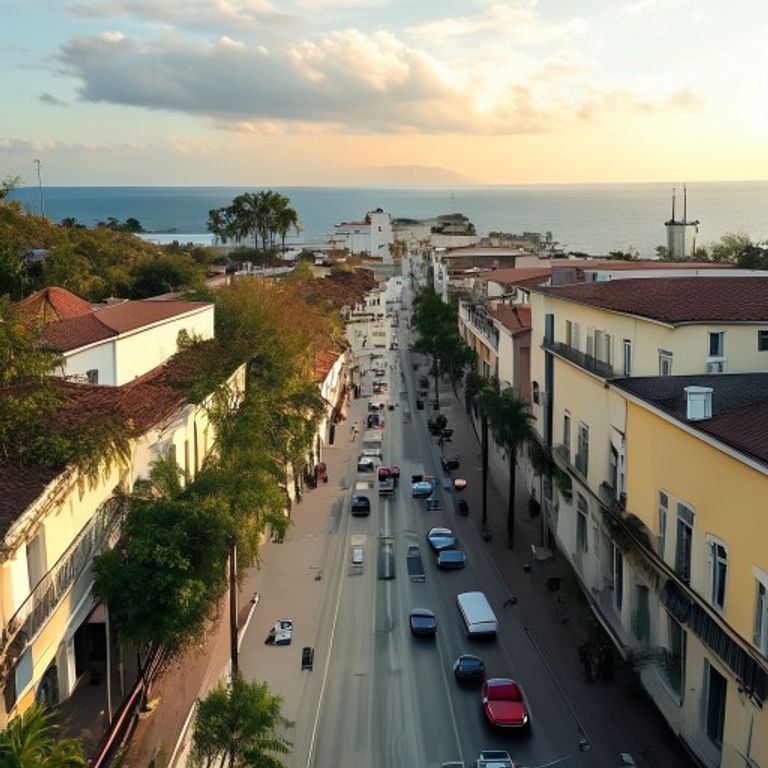
This municipality in the State of Santa Catarina stands out for its rich literary and academic production influenced by German immigration, being a hub for literary fairs that connect European tradition with Santa Catarina culture.
⚠️ Research elaborated with the aid of Deep Research is subject to referential ambiguity.
🖥️Clean HTML code using a proprietary tool.
👥 Research by Guilherme Felipe, Curation by Sílvio Lôbo
Literature in Joinville: Echoes of a Multifaceted Identity
Joinville, the largest city in Santa Catarina, known as the "Catarinense Manchester" for its industrial hub and the legacy of European colonization, is a cultural melting pot that, throughout its history, has generated and nurtured a rich and diverse literary production. More than mere narratives, the books produced in Joinville or by authors connected to it are mirrors reflecting the complex layers of its identity: industrial pragmatism, nostalgia for the German heritage, the exuberance of the surrounding nature, and the constant reinvention of its urban and social landscape.
First Voices and the Genesis of a Tradition
The beginnings of Joinville's literature are intrinsically linked to the very formation of the Dona Francisca colony, now Joinville. Early records, often diaries, letters, and chronicles by travelers or the first settlers, while not strictly literary in the fictional sense, already planted the seeds of a writing that sought to document and interpret the new reality. The linguistic duality, with German coexisting with Portuguese, marked this initial phase, with publications in both languages circulating within the community.
With the city's consolidation, the local press played a crucial role in fostering writing. Newspapers like A Notícia and O Correio do Povo, in addition to publishing news, provided space for poets, chroniclers, and short story writers, serving as stages for the first more formalized literary expressions. It was a period of searching for a local identity in literature, often with a strong regionalist and memorialist appeal.
Essential Authors and Literary Movements
Throughout the 20th century and into the 21st, Joinville saw the emergence and establishment of a constellation of authors who, in different ways, contributed to the literary landscape of the city and the state. The Joinville Academy of Letters (AJL), founded in 1968, has consolidated itself as a fundamental pillar for the promotion and recognition of these talents.
Key Authors:
- Urda Alice Klueger: Undeniably one of the most powerful voices from Joinville and Santa Catarina. Her extensive work includes short stories, novels, and chronicles, often delving into local history, folklore, the legends of the Serra do Mar, and the wild beauty of the Babitonga Bay. Klueger has the unique ability to translate the soul of the region into poetic and engaging narratives, with a strong appeal to memory and identity.
- Dario de Mello Pinto: A poet, journalist, and memorialist, Dario de Mello Pinto was a central figure in Joinville's cultural life in the 20th century. His poetry, sometimes melancholic and introspective, captured the essence of the city in transformation, while his chronicles recorded the daily life and characters that inhabited it.
- Carlos Ficker: Another indispensable name for Joinville's chronicles. Ficker had a keen eye for the details of urban life, customs, social transformations, and the dilemmas of a city that was growing rapidly. His texts are a valuable record of Joinville's affective memory.
- Carlos Adão: A poet with a body of work marked by sensitivity and a lyricism that oscillates between the particular and the universal. His poems often address themes such as love, existence, and the individual's relationship with time and space, frequently with the city of Joinville as a subtle backdrop.
- Godofredo de Oliveira Neto: Although his literary career developed extensively on the national scene, with notable works such as "A Fúria" and "O Placebo," Godofredo is an illustrious son of Joinville. His early education and childhood memories in the city can be perceived in nuances of his writing, even though his fictional settings expand beyond Santa Catarina's borders.
Movements and Publications:
Literary movements in Joinville, in large part, followed national trends but with an undeniable regional flavor. Regionalism and memorialism have always been strong, given the rich history of colonization and the city's rapid development. The search for a unique identity, whether in narratives about immigrants, accounts of industry, or descriptions of the natural landscape, is a constant.
- Literary Magazines: In addition to the cultural supplements of newspapers, some sporadic magazines and collections served as platforms for new authors and for the dissemination of local production. The Joinville Academy of Letters itself has a history of publications that gather texts from its members.
- Anthologies: Several anthologies have been released over time, compiling poems and short stories by local authors, offering an overview of the city's literary effervescence.
- Local Publishers: Small publishers and independent labels also play a crucial role, making it possible for authors who do not always find space in major national publishing houses to publish their work.
Joinville's Cultural Identity Reflected in Books
Joinville's literature is a rich mosaic of themes that mirror the city's complex cultural identity. The strong German heritage, the industrial drive, and the relationship with nature are recurring elements:
- The Heritage of Immigration: Many books explore the experiences of German immigrants and other ethnic groups, their adaptation challenges, the maintenance of their traditions, the culture shock, and the formation of a new Portuguese-German identity. Bilingualism, customs, and festivities are frequently portrayed, whether with nostalgia, criticism, or curiosity.
- The "Catarinense Manchester": Joinville's industrial vocation is a theme that permeates its literature. From the first factories to current technological development, the relationship between man and work, progress, urban transformations, and the social issues arising from growth are addressed in various works.
- Nature and Landscape: The proximity to the Atlantic Forest, the Serra do Mar, the rivers, and the Babitonga Bay inspires many authors. Nature is sometimes a setting, sometimes a character, with the fauna, flora, legends, and man's relationship with this wild and exuberant environment being explored themes, especially in the work of Urda Alice Klueger.
- Memory and Urbanization: Joinville's rapid expansion brought with it a concern for preserving memory. Literature becomes a guardian of the past, recording streets, buildings, characters, and habits that are lost or transformed, contrasting old Joinville with the ever-changing metropolis.
- Everyday Life and the Universal: Beyond local specificities, Joinville's literature also delves into universal themes: love, death, loneliness, family, human dilemmas, but always with a touch that refers to the experience of living and growing up in Joinville.
Conclusion
Joinville's literature, although sometimes underestimated in the national panorama, constitutes an expressive body of works that not only entertain but also inform, question, and celebrate life in one of Brazil's most dynamic cities. Through its authors, its publications, and its themes, it offers a window into the soul of Joinville – a multifaceted soul, built on work, cultural heritage, and natural beauty. It is a literature that, in its peculiar regionalism, reaches the universal, proving that great stories can be born and flourish on any soil, as long as there are voices willing to tell them with passion and truth.



