


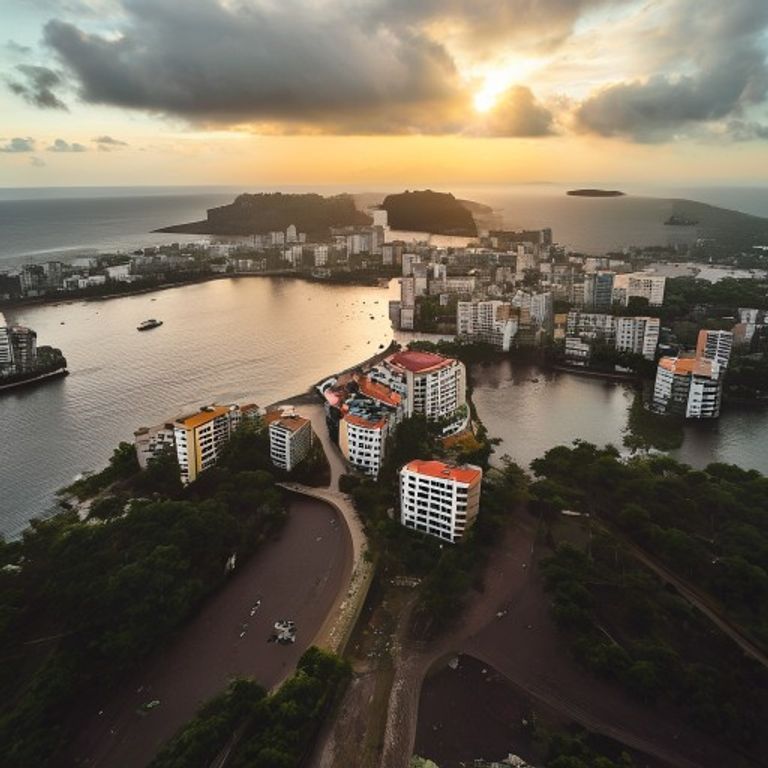
This municipality in the state of Amapá is the main literary center of the region, the birthplace of Alcy Araújo, the Poet of the Rio Mar, and Fernando Canto, whose works blend urban identity with the strength of the Amazon River.
⚠️ Research conducted with the aid of Deep Research is subject to referential ambiguity.
🖥️Clean HTML code using a proprietary tool.
👥 Research by Guilherme Felipe, Curation by Sílvio Lôbo
The Literary Landscape of Macapá: Voices from the Equator Line
The literature of Macapá, the capital of Amapá, emerges as a fascinating microcosm of Brazilian cultural expression, marked by its unique geographical and historical context. Situated on the imaginary Equator line, on the edge of the vast Amazonian estuary and in proximity to French Guiana, Macapá and its authors have been building a literary panorama that reflects the complexities of a border region, rich in biodiversity, ancestral cultures, and contemporary challenges. This essay seeks to outline the Macapá literary production, highlighting its main exponents, movements, publications, and its intrinsic connection to local cultural identity.
Pioneering Voices and the Affirmation of Amazonian Identity
The first glimpses of a more formal literary production in Macapá, especially after the creation of the Federal Territory of Amapá in 1943, sought to give voice to an identity that, for a long time, was on the margins of Brazil's major literary centers. The need to record the local landscape, customs, and history drove authors to dedicate themselves to writing, often under precarious conditions and with limited editorial infrastructure.
- Alcyr Guimarães (1913-1996): Considered by many as the patriarch of Amapá literature, Alcyr Guimarães is an unavoidable name. A poet, chronicler, and journalist, his work is a deep dive into the soul of Amapá. Books such as "O Canto do Marabaixo" (1975) and "Rios e Veredas" (1979) celebrate Amazonian nature, the Afro-Amapá culture of marabaixo, and the daily life of riverside people, laying the foundations for a local literary identity. His writing is marked by a lyricism that evokes the grandeur and mysteries of the Amazon.
- Murilo Silva (1930-1981): A poet and memorialist, Murilo Silva contributed significantly to the preservation of Amapá's memory and poetry. His work, imbued with a strong sense of regionalism and lyricism, echoes the musicality and traditions of his land. He is one of the founders of the Amapá Academy of Letters.
- José Sarney (b. 1930): Although his political career led him to the presidency of the Republic and his work has national reach, Sarney has deep roots in Amapá and its literature. His early literary ventures and the themes of some of his novels, such as "O Romance de Saraminda" (1966), reflect his connection to the Amazon region, albeit from a broader perspective of the Maranhão/Amapá Amazon. His role as an intellectual and cultural promoter also had an impact on Amapá's nascent literary scene.
- Clarice Maciel (b. 1957): A poet and chronicler of great sensitivity, Clarice Maciel is one of the most important female voices in Amapá literature. Her poetry, often introspective, explores human relationships and the urban landscape of Macapá, without losing touch with the state's cultural roots.
Literary Movements and Associations
The consolidation of Macapá's literature was intrinsically linked to the formation of groups and institutions that could shelter and promote local talents. The lack of publishers and the difficulty of circulation demanded a collective effort to value regional production.
- Academia Amapaense de Letras (AAL): Founded on December 28, 1978, the AAL is the state's main literary association. It plays a crucial role in preserving literary memory, promoting new talents, and disseminating Amapá's culture. The AAL has been a beacon for writers and researchers, conferring legitimacy and encouragement to local production. Its members, over the decades, have been the great guardians of the written word in Amapá.
- Independent Movements: In addition to the AAL, over the years, various small literary groups and collectives have emerged and disappeared, often with the aim of publishing pamphlets, organizing literary gatherings, and promoting debates. These initiatives, although ephemeral, were fundamental in revitalizing the literary environment and giving voice to younger generations.
Important Publications and Dissemination Channels
Publishing works in Amapá has always been a challenge. For a long time, literary production depended on individual efforts, government sponsorships, or publishers from other states. However, some publications stand out:
- Local Newspapers: Many of the pioneering authors, such as Alcyr Guimarães, began their careers and published their first chronicles and poems in local newspapers like "O Amapá," "A Gazeta," and later, "Diário do Amapá." These media were vital for the initial dissemination of literary production.
- Anthologies: The publication of anthologies has been an effective way to bring together diverse voices in a single volume. The "Antologia Poética Amapaense" and other collections organized by the AAL or independent authors are examples of initiatives that sought to map the richness of the state's poetic and prose production.
- Cultural Magazines: Periodically, magazines and cultural supplements, many linked to the AAL or local universities, have emerged to host essays, short stories, and poems, serving as important platforms for dialogue and diffusion.
- Local Publishers: In recent decades, with the growth of the state and the appreciation of local culture, some small independent publishers have begun to emerge, facilitating the publication of works by Amapá authors, although the scenario remains challenging.
Local Cultural Identity Reflected in Books
Macapá's literature is a multifaceted mirror of its cultural identity. The recurring themes and stylistic approaches reveal a deep connection with the territory and its particularities:
- The Amazon and the Amazon River: The exuberant nature is a constant presence. The rivers, the forest, the fauna, and the flora are not just settings but living characters that shape existence and imagination. The Amazon River, in its vastness and mystery, is a central theme, symbolizing life, communication, and isolation.
- The Equator Line: Macapá's unique geographical location on the Equator line lends a special symbolism to its literature. This invisible demarcation inspires reflections on boundaries, universality, and the peculiarity of living "in the middle of the world," influencing the perception of time and space.
- Marabaixo and Lundu: Afro-Amapá cultural manifestations, such as Marabaixo and Lundu, are inexhaustible sources of inspiration. The rhythm, lyrics, and history of these festivities are incorporated into poetry and prose, celebrating the resistance, faith, and joy of a people. Authors like Alcyr Guimarães were pioneers in this appreciation.
- The Border and Multi-ethnicity: The proximity to French Guiana and the history of migrations and interactions with different ethnicities (indigenous, African, European, from Maranhão, from Pará) result in literature that explores cultural diversity, border challenges, and the richness of hybridity.
- History and Daily Life: Historical events such as the Cabanagem revolt, the creation of the Federal Territory, and the urbanization of Macapá are frequently addressed. The daily life of the stilt houses, the market, the old neighborhoods, the anonymous characters, and local legends form a rich mosaic of narratives.
- Social Criticism: Many authors, especially from more recent generations, do not shy away from addressing pressing social issues, such as inequality, environmental exploitation, urban violence, and the pursuit of social justice, bringing an engaged dimension to Amapá's literature.
The New Generation and Contemporary Challenges
Currently, Macapá is witnessing the emergence of a new generation of writers who, equipped with digital tools and a more globalized vision, continue to expand the horizons of local literature. Authors such as Osmar Júnior, Raimundo Nonato Silva, Paulo Tarso de Lima, among others, explore new themes and forms, often engaging with modernity without losing the Amapá essence.
The challenges remain: limited editorial infrastructure, distribution, and national visibility. However, the effervescence of literary gatherings, literary blogs, and the increasing use of social media have democratized access to publication and audiences, allowing more voices from the Equator line to be heard, ensuring the continuity and renewal of Macapá's vibrant literature.



