


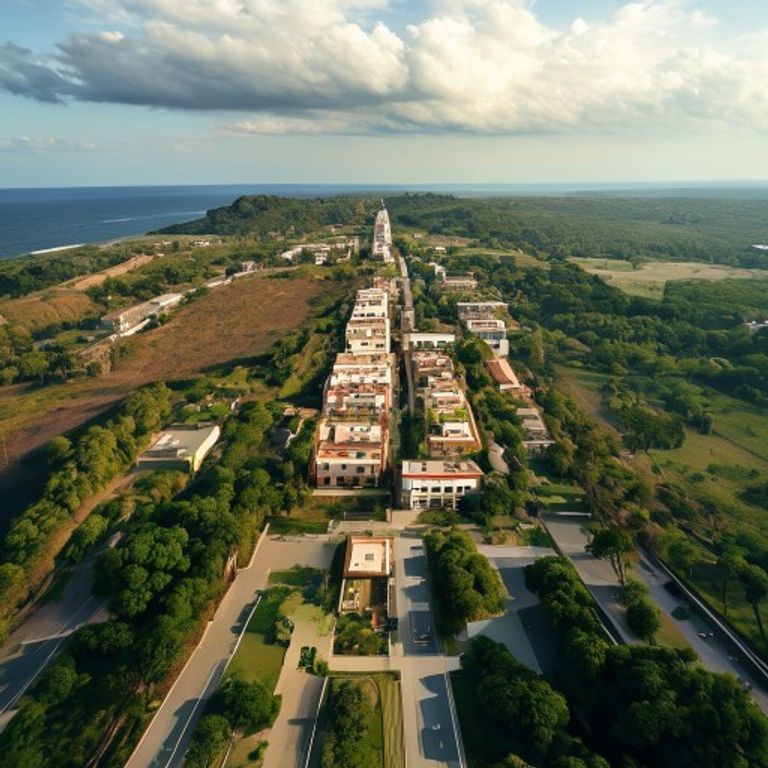
This municipality in the Federal District, the oldest city in the region, inspires works that revisit the colonial period and the bandeirantes' routes, uniting centuries-old history with the modernity of the federal capital.
⚠️ Research conducted with the aid of Deep Research is subject to referential ambiguity.
🖥️Clean HTML code using a proprietary tool.
👥 Research by Guilherme Felipe, Curation by Sílvio Lôbo
The Voice of the Cerrado and the Spirit: An Essay on Literature in Planaltina
Planaltina, a satellite city of the Federal District, but with a history that predates Brasília itself, emerges on the Brazilian literary scene as a space of singular resonance. Nestled in the cerrado biome and marked by a unique spiritual and cultural effervescence, its literary production reflects the complexity of its roots, the diversity of its inhabitants, and the poetics of its landscape. Far from the major publishing centers, Planaltina's literature pulses with an authenticity that deserves to be explored and celebrated.
Initial Roots and Voices: The Construction of a Local Narrative
The history of Planaltina, once "Vila de São Gabriel da Cachoeira," lends its literature a substratum of orality and memory. Even before the founding of Brasília, the region was already a stage for cultural exchanges, popular narratives, and rural life that shaped the perception of the world. The first literary manifestations, often not recorded on paper, reside in
oral chronicles, in
cerrado tales, in
legends about the Vale do Amanhecer, and in improvised poems that celebrated daily life, faith, and the exuberant nature.
Over time, this oral effervescence began to be transcribed, initially in more informal formats such as local newspapers and community bulletins, which served as embryos for the formation of its own literary identity. It was the record of a society in formation, seeking its voice amidst the transformations brought by its proximity to the new federal capital.
Authors and Their Universes: Pillars of Planaltina's Expression
Planaltina's literature finds the materialization of its multiple facets in its authors. Although many talents remain at the local level, some names stand out for the consistency and depth of their works:
- Gylson Sousa: One of the most recognized names, Gylson Sousa is a poet and chronicler who manages to capture the soul of Planaltina in his verses and texts. His work frequently addresses the contrast between the rusticity of the cerrado and the incipient urbanity, local spirituality, and social issues. His poetry is permeated by a lyricism that exalts the region's landscape, people, and mysteries. Sousa is an attentive observer, and his chronicles serve as a valuable record of Planaltina's memory and daily life.
- Valdivina Ribeiro: In addition to being an educator and researcher of local history and culture, Valdivina Ribeiro also dedicates herself to literature. Her work is fundamental to the preservation and dissemination of Planaltina's identity, and her publications often combine academic rigor with literary sensitivity, becoming references for understanding the city. Her research and writing contribute to the consolidation of Planaltina's historical and cultural narrative, often rescuing voices and events that might be forgotten.
- Collectives and Young Talents: Planaltina's literature is also marked by the effervescence of collectives and a new generation of writers. Many young poets and prose writers use literature as a way to express their experiences, social criticisms, and aspirations, often publishing in local anthologies, zines, or digital platforms, ensuring the renewal and diversity of the city's literary production.
Movements and Themes: Dialogue with Time and Space
Literature in Planaltina, although not fitting into national literary "movements" in the classic sense, dialogues with themes and styles that make it unique. We can identify some predominant strands:
- Cerrado Regionalism: The cerrado landscape, with its unique flora and fauna, its rivers and springs, is a constant character. Many authors use the natural scenery as a backdrop for their narratives, exploring the beauty, fragility, and mystique of this biome. There is a strong connection to the land, to agricultural traditions, and to the simple life of the countryside.
- Spirituality and Mysticism: The presence of spiritual communities such as Vale do Amanhecer in Planaltina lends its literature a mystical and esoteric dimension. The supernatural, the transcendental, and reflections on the meaning of life and faith are recurring themes, weaving a tapestry of fantastic elements and existential questions that distinguish the local production.
- Urban and Social Chronicles: With urbanization and population growth, works have also begun to address social issues, life on the outskirts, the challenges of migration, the search for opportunities, and the complexity of human relationships in an environment that mixes rural and urban. Planaltina's literature thus becomes a mirror of the tensions and beauties of development.
- Memory and Identity: The search for Planaltina's identity, the valorization of its pre-Brasília history, and the recovery of its traditions are important axes. Literature functions as a guardian of collective memory, a means of reaffirming the city's uniqueness in the face of the capital's influence.
Pages That Tell Stories: Publications and Dissemination
The dissemination of literature in Planaltina occurs through various channels, many of them independent or local:
- Local Anthologies: Publications such as the "Antologia Planaltina em Prosa e Verso" bring together various authors from the region, offering an overview of literary production and encouraging new talents. These collections are crucial for giving visibility to writers and fostering the literary community.
- Independent Publishers and Self-Publishing: Many authors resort to smaller publishers or self-publishing, demonstrating persistence and passion for writing. Books are launched at local cultural events, community bookstores, or art spaces.
- Association of Writers of Planaltina (AEP): Entities like the AEP play a vital role in stimulating reading, organizing literary events, workshops, and promoting their members, acting as a catalyst for the production and dissemination of local literature.
- Local Newspapers and Magazines: Local media outlets, both digital and print, often dedicate space to columns by poets and chroniclers from Planaltina, serving as an accessible platform for publication and public engagement.
Cultural Identity in the Mirror of Literature
Planaltina's cultural identity is intrinsically reflected in its literary production. Books become living documents of a city that is simultaneously old and new, mystical and prosaic, rural and urban.
The cerrado is not just a landscape, but a state of mind: resilience, raw beauty, the wisdom of plants and animals. Faith, in its multiple manifestations, permeates the narratives, whether as an element of hope, conflict, or pure magic. Collective memory, of the families who arrived there before the construction of Brasília, of popular festivals, and of social transformations, is diligently recorded and reinterpreted. Planaltina's literature is a link between the city's past, present, and future, an invitation to understand a place of unique beauty and resilient people.
Conclusion
Literature in Planaltina is a treasure in constant revelation. Far from the spotlight of the mainstream media, but with undeniable vitality, it offers a rich and multifaceted panorama of the culture, history, and spirit of a region. Through the verses of its poets, the chronicles of its observers, and the narratives of its storytellers, Planaltina not only narrates itself but projects itself as an important center of literary expression, contributing an authentic and profoundly Brazilian voice to the grand mosaic of our literature.



