


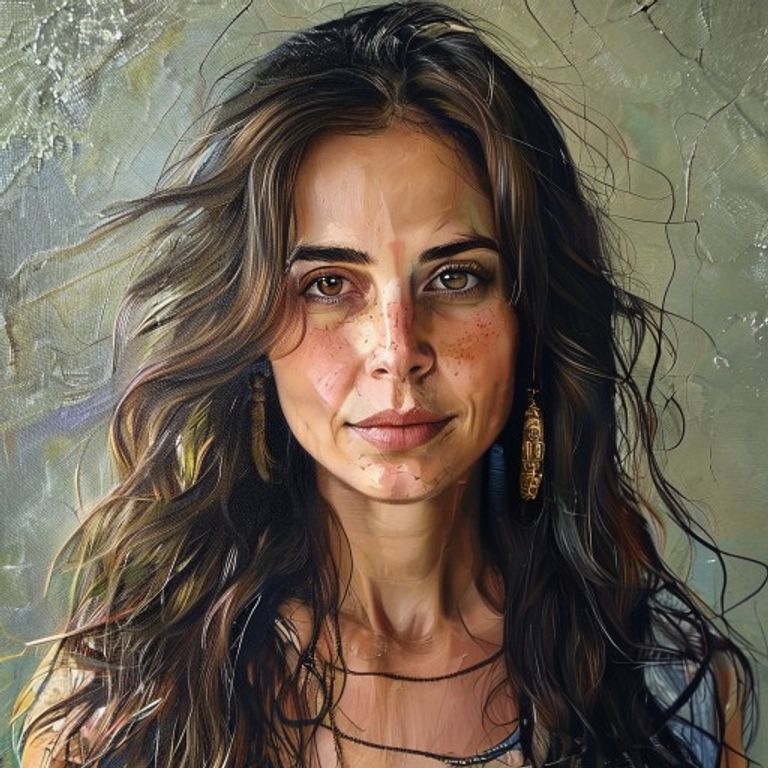
This municipality in the state of Rondônia is a center of intellectual production in the Zona da Mata, home to writers who use prose to describe the challenges of education and the construction of a unique identity in newly explored lands.
The Name That Came From Letters: An Investigation into the Literary Scene of Rolim de Moura (RO)
Some cities' very names are unwritten poems. Rolim de Moura, in Rondônia, carries the mark of an intellectual in its name—which, for an Amazonian city of recent colonization, is already an omen. But does the omen hold true? The answer, as we shall see, is both fascinating and melancholic.
This investigation set out in search of Rolim de Moura's letters. What we found was a territory of paradoxes: a city whose name honors an academic, but whose contemporary literary scene seems almost nonexistent in digital records; a place where intellectual tradition is a distant echo, and current literary production hides in the shadows of self-publishing or silence.
The result is a portrait of significant absences—and, as we will see, sometimes what is not found says more than what is discovered.
1. Roots and Tradition: The Intellectual Patron
Rolim de Moura: The Name That Is a Homage
Before we talk about books published in the city, we must talk about the name that baptizes it. Rolim de Moura is not just any name; it is a tribute to Antônio de Pádua Rolim de Moura (1909-1984), a central figure in the history of education and culture in Rondônia.
A native of Santana do Cariri (CE), Rolim de Moura moved to Rondônia in 1931, during the Federal Territory of Guaporé. He was a teacher, director of school groups, inspector of education, and later, the first rector of the Federal University of Rondônia (UNIR). His impact was so significant that when the village of "Vinte e Cinco" (named so because it was located at km 25 of BR-364) became emancipated in 1983, it was given his name.
There is an interesting metaphysical layer here: the city's patron was a teacher, an intellectual, a rector. He was not a poet—but he lived surrounded by books, educated generations of readers, and structured the state's educational system. Literature, in Rolim de Moura, begins not with a verse, but with a classroom. It is an institutional legacy, not an artistic one—and this distinction will be crucial to understanding what we (do not) find ahead.
The Writers of the Past: A Search Without an Answer
The research for "celebrated and fundamental figures for local literature"—writers born in Rolim de Moura or who produced recognized works there—returned no significant results. There are no local literary academies, no regional anthologies that include names from the city, no literary memory blogs.
This does not mean that no one has ever written in Rolim de Moura. It means that this production, if it existed, has left no digital traces—and, in an era where even the most modest writer has an Instagram profile or a WordPress blog, silence in search engines is a compelling fact.
The local literary tradition, therefore, is a tradition of absence. The patron is an educator, not a poet. The pioneers likely wrote—letters, diaries, memoirs—but none of it reached the public domain. The city has a literary name, but not a literature.
2. The Contemporary Scene: The Silence That Speaks
The Frustrated Search for Local Writers
The directive of this research was clear: to find independent authors, small publishers, fanzines, literary collectives, and poetry readings that animate the city today. Searches were conducted using combinations such as:
-
"writers from Rolim de Moura"
-
"poetry Rolim de Moura"
-
"poetry reading Rolim de Moura"
-
"independent publisher Rolim de Moura"
-
"literary collective Rolim de Moura"
The result was, with rare exceptions, empty.
There are no results pages listing local poets. There are no Instagram profiles dedicated to literature in the city. There is no news of literary events in recent years. There are no registered publishers with addresses in Rolim de Moura.
Alessandro Rolim de Moura: The Great Confusion
The only "writer" consistently associated with the city's name is, paradoxically, someone who never lived there. This is Professor Alessandro Rolim de Moura, a doctor in Classics from the University of Oxford and a professor at the Federal University of Paraná (UFPR).
His surname is a coincidence—and a trap for unwary researchers. Alessandro specializes in Greco-Roman bucolic poetry, author of books such as "Poesia bucólica: Virgílio, Calpúrnio Sículo, Nemesiano" (Editora da Unicamp, 2022) and translator of Hesiod. His work is erudite, academic, with national circulation.
But Alessandro is not from Rolim de Moura. He is merely a homonym. The city that bears the surname "Rolim de Moura" cannot claim him as its writer. It is a cruel irony: the city's name appears in academic curricula, but as the signature of another, an intellectual who may never have set foot in the municipality.
Why the Silence?
The absence of a contemporary literary scene in Rolim de Moura can be attributed to several factors:
-
Youth of the city: Founded in 1983, Rolim de Moura is only 40 years old. It is a city still building its cultural institutions.
-
Lack of infrastructure: Without local universities (UNIR has a campus in Rolim de Moura, but academic production in Literature seems not to have translated into a public literary scene), without libraries with active programming, without bookstores, the literary ecosystem has no foundation.
-
Talent exodus: Potential writers likely migrate to larger cities (Cacoal, Ji-Paraná, Porto Velho) or other states, where they find a publishing market and a reading public.
-
Predominance of oral culture: Rondônia is a state with a strong oral tradition—fishermen's tales, pioneer stories, forest legends. This production rarely translates into books.
The silence, therefore, is not necessarily a failure. It is a diagnosis of an ecosystem in gestation. What does not exist today may exist tomorrow—if there is encouragement.
3. Themes and Works: What is (Not) Written in Rolim de Moura
Invisible Literature
It was not possible to identify literary works published by authors native to or residing in Rolim de Moura. There are no titles to cite, no names to mention.
This does not mean that production does not exist. It means that this production, if it exists, is not digitally indexed—it does not appear in searches, is not in online bookstores, has not been reported by the local press.
Hypotheses for this invisibility:
-
Restricted self-publishing: The author prints 50 copies, distributes them to friends and family, and the book does not reach the market.
-
Publication on obscure platforms: The book is on Amazon KDP or UICLAP, but without promotion, without reviews, without indexed links.
-
Non-literary production: The city may have cordel writers, family memoirists, newspaper chroniclers—genres that rarely leave digital traces.
Probable Themes: An Informed Speculation
Although there are no works to analyze, we can speculate—based on the city's demographic and historical profile—about what the predominant themes would be, if there were an active literary scene:
-
Memory of colonization: Rolim de Moura was born from BR-364, from southern migration, from mining and logging. Local literature would likely address displacement, loss of homeland, and the construction of a new life in the forest.
-
Life in agribusiness: The city is an agribusiness hub (coffee, cattle, soybeans). Literature could explore the tensions between progress and environmental destruction, between rural and urban.
-
Faith and religiosity: Rondônia has a strong presence of evangelical churches and charismatic Catholic movements. Edifying literature (sermons in verse, testimonies) may be an invisible production.
-
Absence as a theme: Metaphorically, the city's literary silence could itself be a theme—the city that has an intellectual name but no poets.
The Predominant Genre: Loss
Without works to classify, the predominant genre in Rolim de Moura's literature is, at this moment, the genre of loss. Loss of memory (what was not recorded), loss of opportunity (what was not written), loss of visibility (what was written but not found).
It is a harsh but necessary diagnosis. An honest investigation cannot invent authors where there are no traces.
Conclusion: The Name That Awaits Verses
Rolim de Moura is a city that carries the name of an intellectual on its shoulders but has not yet learned to transform this legacy into literary production. The patron was an educator—and perhaps local literature is still in the classroom, not on the shelves.
The research did not find what it was looking for. Instead, it found a question: why does a city with such a literary name have no literature?
The possible answers are many: the municipality's youth, lack of incentive, talent exodus, priority given to other forms of expression. But perhaps the simplest answer is also the truest: no one has yet set out to write Rolim de Moura.
There is an opportunity here. Someone, a young person from the city, a migrant who arrived on BR-364, a professor from UNIR, can take this absence and turn it into raw material. They can write the novels, the short stories, the poems that do not yet exist. They can give voice to the city that, until now, only has the name of a scholar—but no letters.
Until then, the literary scene of Rolim de Moura remains like a blank book. It is not an empty book—it is a book waiting.
References
-
MOURA, Alessandro Rolim de. Poesia bucólica: Virgílio, Calpúrnio Sículo, Nemesiano. Campinas: Editora da Unicamp, 2022. (Coleção Bibliotheca Latina). Available at: https://ufpr.academia.edu/AlessandroRolimdeMoura/Books
-
História de Rolim de Moura. Prefeitura Municipal de Rolim de Moura. (Institutional content about the city's patron)
-
Universidade Federal de Rondônia - Campus Rolim de Moura. Institutional data.
Research note: Systematic searches were conducted for combinations of terms such as "writer Rolim de Moura," "poet Rolim de Moura," "book Rolim de Moura," "poetry reading Rolim de Moura," "publisher Rolim de Moura," "literary collective Rolim de Moura" on search engines (Google, Bing), social networks (Instagram, Facebook), and self-publishing platforms (Amazon KDP, UICLAP). The results were negative or irrelevant. This report faithfully records what was (not) found.
This report is part of a series on forgotten literatures of the Legal Amazon. Also read the previous articles on Cacoal and Pimenta Bueno.
⚠️ Research conducted with the aid of Deep Research is subject to referential ambiguity.
🖥️Clean HTML code using a proprietary tool.
References
-
MOURA, Alessandro Rolim de. Poesia bucólica: Virgílio, Calpúrnio Sículo, Nemesiano. Campinas: Editora da Unicamp, 2022. (Coleção Bibliotheca Latina). Available at: https://ufpr.academia.edu/AlessandroRolimdeMoura/Books
-
História de Rolim de Moura. Prefeitura Municipal de Rolim de Moura. (Institutional content about the city's patron)
-
Universidade Federal de Rondônia - Campus Rolim de Moura. Institutional data.
Research note: Systematic searches were conducted for combinations of terms such as "writer Rolim de Moura," "poet Rolim de Moura," "book Rolim de Moura," "poetry reading Rolim de Moura," "publisher Rolim de Moura," "literary collective Rolim de Moura" on search engines (Google, Bing), social networks (Instagram, Facebook), and self-publishing platforms (Amazon KDP, UICLAP). The results were negative or irrelevant. This report faithfully records what was (not) found.
This report is part of a series on forgotten literatures of the Legal Amazon. Also read the previous articles on Cacoal and Pimenta Bueno.
⚠️ Research conducted with the aid of Deep Research is subject to referential ambiguity.
🖥️Clean HTML code using a proprietary tool.



