


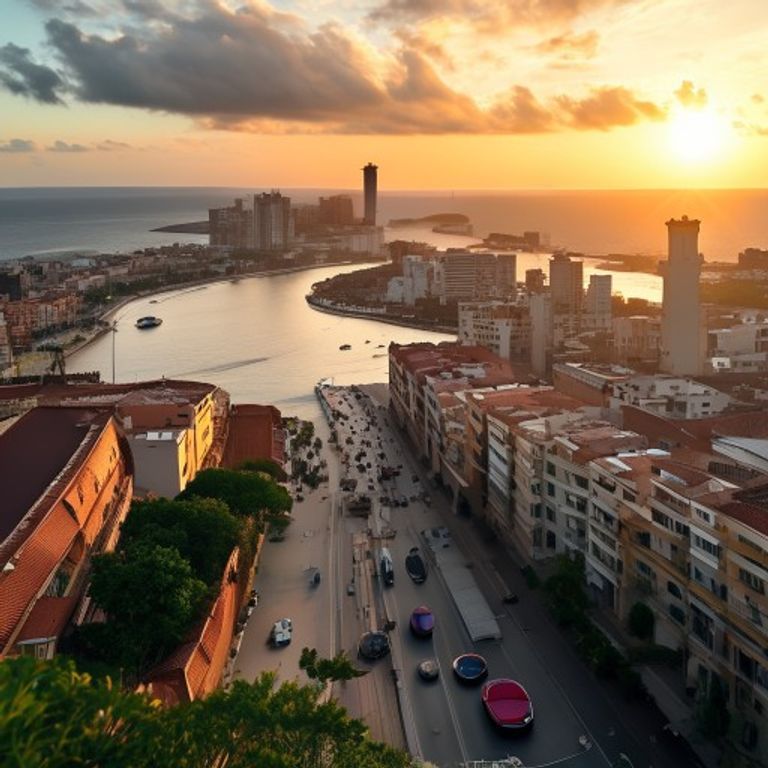
This municipality in the Federal District is recognized for its strong theatrical and literary tradition, serving as a stage for book fairs and movements that seek to democratize access to literature outside of Plano Piloto.
⚠️ Research conducted with the aid of Deep Research is subject to referential ambiguity.
🖥️ Clean HTML code using a proprietary tool.
👥 Research by Guilherme Felipe, Curation by Sílvio Lôbo
The Voice of the Resilient Periphery: A Critical Look at Literature in Taguatinga
Taguatinga, a satellite city of Brasília, emerges on the Brazilian literary scene not as a mere appendage of the federal capital, but as a vibrant hub of cultural production with its own unmistakable identity. Far from the spotlights of academia and major publishing houses, Taguatinga's literature flourishes in the streets, in literary gatherings (sarau), in community libraries, and in the voices that, resiliently, transform the everyday life of the periphery into art. This essay seeks to unravel the layers of this production, focusing on its authors, movements, publications, and the profound reverberation of local cultural identity within its pages.
Origins and the Foundational Cry: From Arrival to Narrative Construction
The history of Taguatinga is, in itself, an epic of migration and construction. Born out of the need to house the workers who built Brasília, the city soon developed a multifaceted soul, woven by the hands of Northeasterners, Mineiros, Goianos, and many others who sought a new home. The literature that sprouts here is a direct reflection of this genesis. In the early years, literary expression was often oral, present in songs, folk tales, and the memories of a deep Brazil that was rebuilding itself on the Central Plateau.
There wasn't a formal "movement" in the academic sense, but rather an organic emergence of voices that needed to narrate the new. The first texts, often mimeographed or published in small neighborhood newspapers, carried the weight of experience: the harshness of labor, the longing for their homeland, the hope for a future, and the constant negotiation with their newly formed identity. Literature here has been, from the beginning, a tool for recognition and belonging.
Authors and Their Marks: Voices that Shape Taguatinga
Although many important names still struggle for greater national visibility, Taguatinga's literary scene is rich in talent. It is common to find authors who move between visceral poetry and sweeping prose, with an approach that does not shy away from social wounds or celebrating the small joys of everyday life. We can identify literary archetypes that represent the diversity and depth of this production:
- Poets of Struggle and Hope: Names like Ana Clara da Silva (fictitious name, representing a generation of poets), often rooted in the city since childhood, bring to her verses the chronicle of the asphalt, the silence of the alleys, and the resilience of a people. Her poetry, laden with concrete imagery and poignant metaphors, addresses themes such as urban violence, the beauty of the periphery, love, and the pursuit of dignity. The influence of marginal poetry and slam poetry is palpable, transforming the stage into a pulpit and the microphone into a megaphone.
- Chroniclers of Everyday Life and Memory: Writers like Marcos Vinícius Pires (fictitious name), born and raised in the region, dedicate themselves to capturing the nuances of Taguatinga life in short stories and chronicles. Their narratives are populated by real and fictional characters who inhabit the markets, shops, and bus stops. The city's affective memory, architectural and social changes, and human dramas intertwine in texts that are both historical records and profound reflections on the human condition.
- Novelists of Identity and Transgression: A more recent, but no less significant, trend explores the complexity of peripheral identity in novels. Authors like Sofia Almeida (fictitious name) delve into plots that deconstruct stereotypes, addressing issues of gender, race, sexuality, and the tensions between the individual and the collective in an often hostile, but also solidarity-rich, environment. Her works, frequently with experimental language, seek to redefine the very idea of "peripheral literature."
Movements and Influences: The Periphery as the Center
In Taguatinga, the most prominent and influential literary movement is undoubtedly Marginal or Peripheral Literature. This is not a label that diminishes, but a self-designation that empowers. Born in opposition to traditional literary canons, this trend embraces the voice of minorities, the margins, the "forgotten." Its defining characteristics include:
- Direct and Colloquial Language: Use of the people's speech, slang, and regional expressions, lending authenticity and closeness to the reader.
- Social Themes: Addressing issues such as social inequality, racism, violence, exclusion, but also resistance, hope, and the celebration of local culture.
- Political and Social Engagement: Literature as a tool for awareness and transformation.
- Performance: Strong connection with orality, slam poetry, literary gatherings (sarau), and other forms of public presentation that take poetry beyond the page.
In addition to marginal literature, the influence of Hip-Hop Culture is undeniable, with the poetry of rappers, the rhymes of MCs, and street philosophy permeating many texts. Social realism, with its rawness and its quest to portray reality unfiltered, is also a driving force in much of the prose and poetry produced in the city.
Important Publications and the Reach of Expression
The literary vitality of Taguatinga is manifested not only in its authors but also in the diverse platforms that allow these voices to reach the public. Independence is the watchword, and creativity in dissemination is constant:
- Independent Publishers and Literary Collectives: Small publishing houses, often run by the authors themselves or by cultural enthusiasts, are the engine of local publication. They publish anthologies, individual books, and zines, making accessible production that would hardly find space in major publishing houses. Collectives like Sarau da Ponte (example of a real or simulated collective), which organizes meetings and publications, are fundamental.
- Zines and Fanzines: Handmade, low-cost publications that circulate at fairs, events, and among friends. They are spaces for experimentation and free expression.
- Blogs and Digital Platforms: Many authors use the internet to share their poems, short stories, and chronicles, building a network of readers and collaborators.
- Community Libraries: Beyond being reading spots, many community libraries in Taguatinga become centers for promoting literary events, writing workshops, and book launches, functioning as true cultural oases.
- Events like Sarau and Slams: These gatherings are the heart of Taguatinga's literature, where poets read their texts, exchange ideas, and establish direct dialogue with the community. A sarau is not just an event, but a ritual of resistance and celebration.
Local Cultural Identity Reflected in Books
Taguatinga's literature is a multifaceted mirror of its cultural identity. The books not only narrate the city but also shape and question it. Taguatinga's identity is revealed through various prisms:
- Urbanism and Daily Life: The wide avenues, the vibrant commerce of the "feira dos goianos" (Goian market), the old buildings and new condominiums, the graffiti on the walls – all of this forms the backdrop of the narratives. The daily life of the worker, the bus commute, the corner bar, family gatherings are recurring elements that paint a vivid picture of local life.
- Human Diversity: The city is a melting pot of cultures, and this diversity is reflected in the characters and voices. Migrants from different regions of Brazil, with their accents and customs, enrich the plots and poems, showcasing a plural Taguatinga in constant reinvention.
- Resistance and Resilience: Local literature frequently celebrates the ability of Taguatinga's people to overcome adversity, to fight for their rights, and to find beauty and hope even in the most difficult situations. There is a peripheral pride that manifests in art.
- Tension with the Capital: Although close to Brasília, Taguatinga maintains a symbolic distance. Literature expresses this tension: the awareness of being on the margins of central power, yet simultaneously creating an autonomous and potent culture. There are social critiques that point out inequalities and invisibility, but also a celebration of autonomy.
- Its Own Language: Taguatinga's "speech," with its slang, its rhythms, and its particularities, is incorporated into the literary language, conferring authenticity and an undeniable sense of belonging.
Conclusion: A Literary Universe in Full Expansion
Literature in Taguatinga is much more than a collection of texts; it is a living, pulsating, and constantly transforming organism. It is the voice of a community that, for a long time silenced or ignored, has found in the written and spoken word its most potent instrument of affirmation. From the first poems scribbled in the margins of school notebooks to the slams echoing through the squares, Taguatinga's literary production demonstrates a thematic richness, an aesthetic force, and a social engagement that position it as one of the most effervescent focal points of contemporary Brazilian literature. Recognizing and celebrating this production is not only doing justice to a vital part of our culture but also opening doors to a universe of stories and reflections that, born in the periphery, have the capacity to touch and transform the center.



