


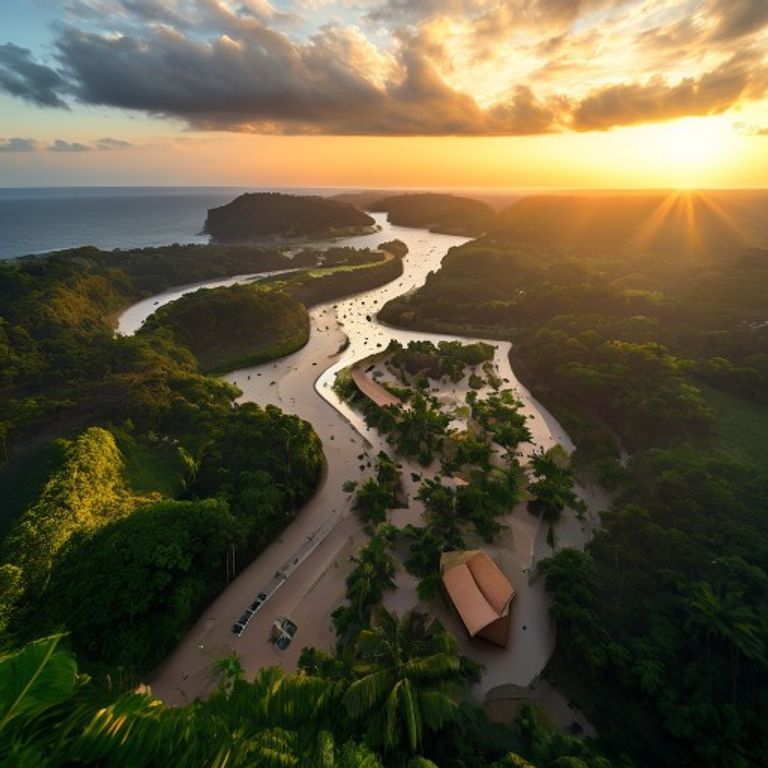
This municipality in the State of Acre is known for its rich oral traditions and legends about giants, fueling regional fantastic literature and serving as a basis for the recording of myths that make up the collective imagination of the Amazon.
⚠️ Research elaborated with the aid of Deep Research is subject to referential ambiguity.
🖥️Clean HTML code using a proprietary tool.
👥 Research by Guilherme Felipe, Curation by Sílvio Lôbo
The Voice of the Forest and the River: An Overview of Literature in Tarauacá
Brazilian literature, vast and multifaceted, finds a unique expression of its identity in every corner of the country. In the heart of the Amazon, specifically in the state of Acre, the municipality of Tarauacá, bathed by the river of the same name, emerges as a space where riverside life, the exuberance of the forest, and the rich cultural tapestry intertwine to give rise to authentic narratives. Although often on the margins of major publishing centers, Tarauacá's literary production is a testament to resilience, memory, and the deep connection of human beings with one of the planet's most vital ecosystems. This essay seeks to outline an overview of Tarauacá's literature, exploring its main exponents, movements, publications, and the indelible mark of local identity.
The Amazonian Context and the First Voices
Tarauacá, like much of Acre, had its history shaped by the rubber boom. This period of intense exploitation and profound social transformations left a legacy of stories, struggles, and memories that inevitably permeated the earliest literary manifestations, even if predominantly oral. The transmission of indigenous legends, tales of rubber tappers, and life accounts from the settlements and camps formed the basis of a rich narrative culture.
The transition to written form, especially in a region with challenges in access to education and infrastructure, was gradual. The first "publications" often materialized in mimeographed pamphlets, small school newspapers, or handwritten notebooks, circulating in restricted circles. These documents, precursors to formal literature, already carried the weight of the landscape, the mysticism of the forest, and the pains and joys of a people in formation.
Main Authors and Themes: Narrators of the Land
Identifying major "literary movements" or a robust canon of exclusively Tarauacá-born authors on the national scene is a challenge, given the historical marginalization of Amazonian production. However, it is possible to identify voices that, born or based in Tarauacá, contribute to the rich Acrean literature, bringing to light the specificity of their region.
Many of Tarauacá's writers are teachers, journalists, or cultural activists who find in writing a means to record local history, culture, and dilemmas. Although names like Aníbal Diniz and Tito Machado (both from Acre, but not exclusively from Tarauacá) have addressed Amazonian themes with great depth, in Tarauacá, literature often flourishes at a more community level. Authors like Antônio Alves da Silva, known for his short stories and chronicles depicting the region's daily life and landscapes, or poets like Maria de Fátima Lima, who sings of the beauty and challenges of the Tarauacá River and its people, are examples of emerging voices, though not always with great national projection.
Recurring themes include:
- Living Nature: The forest, the river, the fauna, and the flora are not just settings but intrinsic characters in the narratives. The symbiotic relationship between humans and nature, its beauties and dangers, is a central theme.
- The Rubber Tapper Legacy: The memory of the rubber boom, the figures of the rubber tappers, their ways of life, their struggles, and the environmental and social impact of this activity are inexhaustible sources of inspiration.
- Riverside and Indigenous Identity: Life on the riverbanks, riverside communities, their customs, superstitions, and, increasingly, the voices and perspectives of local indigenous peoples (Kaxinawá, Jaminawá, Katukina) are gaining space, challenging stereotypes and promoting cultural appreciation.
- Legends and Mysticism: Popular imagination, filled with legends of the river dolphin, Iara, Curupira, and other forest entities, permeates fiction and poetry, lending a tone of magical realism to local production.
- Social Challenges: Issues such as deforestation, poverty, migration, land struggles, and the pursuit of sustainable development are frequently addressed, revealing concern for the region's future.
Important Publications and the Role of Local Institutions
Despite the difficulties, literature in Tarauacá finds channels for dissemination. Important publications often come in the form of:
- Local Anthologies: Edited by cultural secretariats, schools, or literary associations, which gather short stories, poems, and chronicles from various regional authors.
- Independent Productions: Books by local authors published artisanally or with the support of small regional publishers, reaching a more restricted but vital audience for the circulation of ideas.
- Cultural Newspapers and Magazines: Although scarce, small periodicals or cultural supplements still serve as platforms for poems and short stories.
- Digital Media: Blogs, self-publishing platforms, and social networks have become important tools for Tarauacá authors to promote their work, reaching a wider audience.
Institutions such as the Municipal Secretariat of Culture and Tourism of Tarauacá, local schools, and residents' associations play a crucial role in fostering reading and writing through literary contests, workshops, and cultural events that encourage the production and consumption of local literature.
Cultural Identity Reflected in Books
Tarauacá's literature is, above all, a mirror of the region's cultural identity. It celebrates the fusion of indigenous, caboclo, and riverside knowledge, creating a unique voice in the Brazilian landscape. Books born in or inspired by Tarauacá are an invitation to immerse oneself in a universe where:
- Time flows at the river's pace: Narratives often reflect a different perception of time and space than in metropolitan areas, more tied to natural cycles.
- Orality is a foundation: The strength of stories told, of legends passed down through generations, is perceptible in the cadence and structure of many written texts.
- Resistance is an intrinsic theme: Whether resistance against environmental exploitation, cultural loss, or the adversities of life on the frontier, local literature is a record of a continuous struggle.
- Biodiversity is sacred: There is a deep respect for the forest and its inhabitants, often with a tone of denunciation against its destruction and exploitation.
Through these works, readers are transported to a Tarauacá that is both real and imaginary, historical and mythical, allowing for a deeper understanding of the particularities and cultural richness of a people living in harmony (and sometimes in conflict) with the grandeur of the Amazon.
Conclusion
Tarauacá's literature, although not enjoying the same prominence as the production from major urban centers, is vital for the preservation of the memory, culture, and identity of a unique region of Brazil. It is the voice of the rivers, the forests, the rubber plantations, and the peoples who inhabit these lands. By giving space to these narratives, the Brazilian literary scene is enriched with authentic perspectives that challenge oblivion and celebrate diversity. It is a fertile ground where the future promises to reveal even more talents and stories that, like the waters of the Tarauacá River, flow with the strength and beauty of their origin.



