


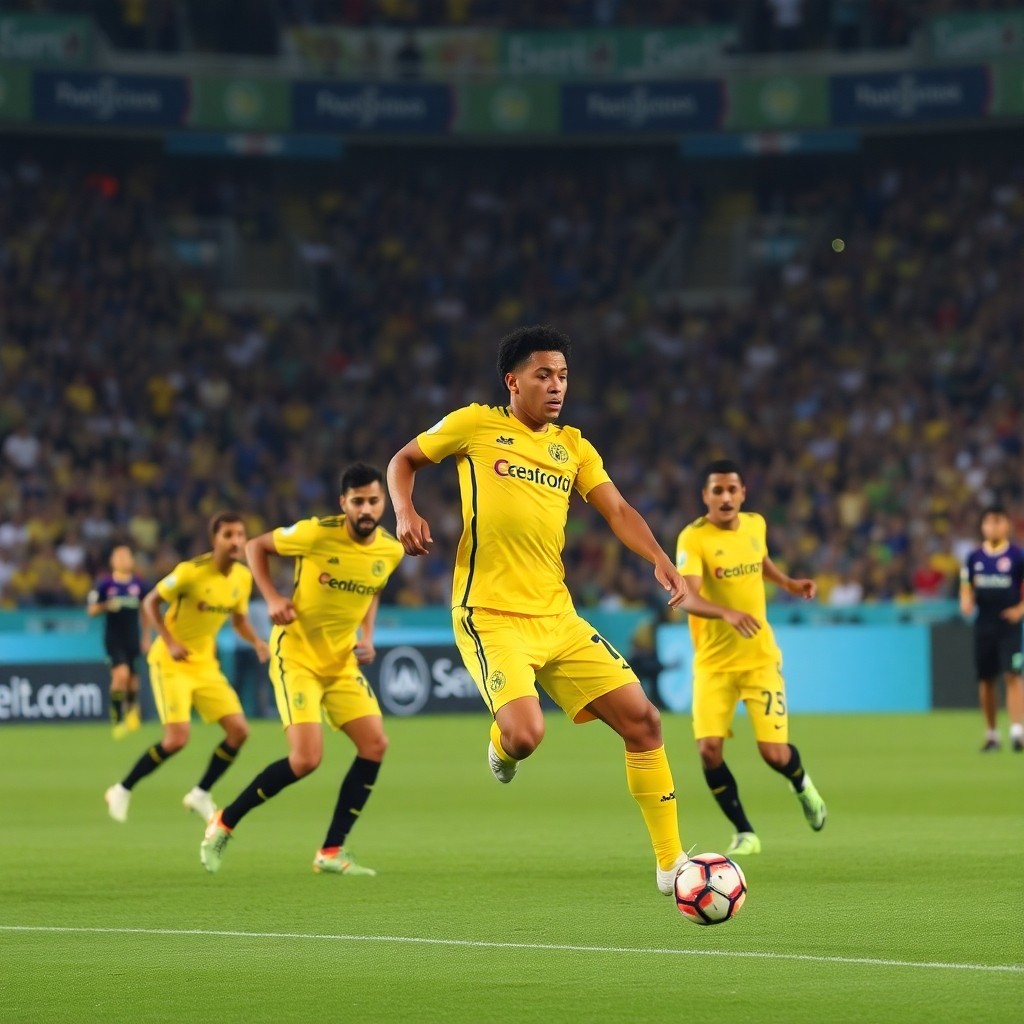
Greek football lives under the eternal tension between myth and reality, balancing on the tightrope that separates the divine glory of 2004 from the subsequent ordeal of international isolation. Two decades after the greatest underdog story in European football history, the Hellenic national team — the once-feared and now nostalgic Ethniki — seeks to redefine its tactical and cultural identity in a vastly changed global landscape. Far from being just a sports team, the Greek national team reflects the social fractures, economic crises, and resilience of a country that learned to cultivate defensive pragmatism as a form of art and survival. Under the command of new technical leadership and driven by a generation that shines in the continent's top leagues, Greece is trying to emerge from competitive ostracism, proving that its history in the beautiful game goes far beyond a single, miraculous summer in Lisbon.
1. Origins and Formation of National Identity
To understand the soul of Greek football, one must go back to the late 19th century, when the sport was introduced to the country by British sailors and communities of the Hellenic diaspora in Asia Minor, particularly in Smyrna and Constantinople. The founding of the first Greek clubs was not a mere act of entertainment, but an extension of class assertion and national identity in a geopolitically fragmented territory. Clubs like Panathinaikos, founded in 1908 in the capital Athens, represented the urban bourgeoisie and the intellectual elite, while Olympiacos, born in 1925 in the port of Piraeus, channeled the pride of the working class, dockworkers, and the socially marginalized. This primitive socioeconomic cleavage established the foundations of a fierce domestic rivalry, which historically hindered the cohesion of a unified identity for the national team.
The Influence of Refugees and Cultural Fragmentation
The geopolitics of the early 20th century deeply shaped the structure of Greek football. The Asia Minor Catastrophe in 1922 and the subsequent population exchange between Greece and Turkey brought over a million Greek refugees to the mainland. This traumatized population contingent founded its own clubs, such as AEK (Athletic Union of Constantinople) in Athens and PAOK (Pan-Thessalonian Athletic Club of Constantinople) in Thessaloniki. These clubs carried with them an identity of resistance, melancholy, and cultural pride. Football thus became a mosaic of highly polarized regional and class rivalries. When the Hellenic Football Federation (EPO) was founded in 1926, it inherited a scenario where club loyalty overwhelmingly outweighed any sense of belonging to the national team, which was viewed with suspicion and disinterest by most of the population.
Isolation and the First Steps on the International Stage
For decades, the Greek national team remained on the periphery of European football. The country was devastated by World War II and, shortly thereafter, by a bloody Civil War (1946-1949), factors that significantly delayed the development of national sports infrastructure. While Western Europe modernized its training methods and game tactics, Greece remained amateur and tactically naive. The rare moments of brilliance were individual, driven by natural talents emerging from the dirt pitches of Athens and Thessaloniki, but lacking collective support and proper physical preparation.
The Panagoulias Era and the Baptism of Fire
The first major leap in quality occurred under the leadership of legendary coach Alketas Panagoulias. With a paternalistic yet disciplined leadership style, Panagoulias achieved what many considered impossible: unifying the players of Olympiacos, Panathinaikos, and AEK under the same flag. The reward came with the historic qualification for the 1980 European Championship, held in Italy. Although Greece was eliminated in the group stage, the campaign — which included a heroic draw against West Germany, the eventual tournament champions — showed that the country possessed the raw material to compete at the highest level. Panagoulias would also guide Greece to its first World Cup in 1994, in the United States. However, inadequate preparation and the federation's administrative disorganization resulted in a resounding fiasco: three defeats, ten goals conceded, and none scored. The tournament exposed the immense tactical and physical distance that still separated Greek football from the global elite, leaving a deep scar that would require a complete conceptual revolution to heal.
2. Golden Era, Great Campaigns, and Eternal Idols
The beginning of the 21st century held the most unlikely and cinematic chapter in the history of modern football for Greece. In the autumn of 2001, the Hellenic Federation made the bold decision to hire German coach Otto Rehhagel. Known for his tactical pragmatism and inflexible personality, "König Otto" (King Otto) found a locker room fractured by chronic club rivalries and players accustomed to a lack of professionalism. Rehhagel immediately realized that Greece would never beat the European superpowers by playing flashy, offensive football. The solution was to design an anachronistic yet surgical tactical system: an ultra-organized defense based on aggressive man-marking, the use of a classic sweeper, and maximizing set-pieces and quick counter-attacks.
The 2004 Epic: The Miracle of Lisbon
The 2004 European Championship, held in Portugal, began with Greece rated by bookmakers as one of the biggest underdogs of the tournament (80 to 1). However, in the opening match, the Hellenes shocked the world by defeating the Portuguese hosts 2-1. What many considered a fluke turned into an implacable triumphal march. After overcoming the group stage, Rehhagel's Greece eliminated Zinedine Zidane and Thierry Henry's France in the quarterfinals, thanks to a monumental header by Angelos Charisteas. In the semifinals, the feared Czech Republic of Pavel Nedvěd was toppled in extra time with a silver goal by defender Traianos Dellas.
In the grand final in Lisbon, Greece met Portugal again, which featured young prodigy Cristiano Ronaldo and veteran Luís Figo. With a defensive display that bordered on geometric perfection, the Greeks nullified all Portuguese attacks. In the 57th minute, after a precise corner kick by Angelos Basinas, Charisteas rose higher than the Portuguese defense to head the ball into the back of the net. Referee Markus Merk's final whistle sealed the biggest surprise in football history, turning Athens into an arena of Dionysian celebration and immortalizing that group of athletes as modern demigods.
The Tactical Structure of Hellenic Pragmatism
The success of 2004 was not luck; it was the triumph of extreme tactical discipline over disorganized individual talent. Rehhagel used a variation of the 1-4-4-2, where Traianos Dellas acted as the classic sweeper, covering the backs of central defenders Mihalis Kapsis and Giannis Goumas (or right-back Giourkas Seitaridis, who performed relentless man-marking on opposing wingers). In midfield, Theodoros Zagorakis — voted the tournament's best player — dictated the pace with his combativeness and positional intelligence, supported by the tireless Kostas Katsouranis and the refined Giorgos Karagounis. In attack, Charisteas's physical presence served as a reference to hold the ball and allow the midfielders to push up. It was a style of football criticized by the international press for being "ugly" and "retrograde," but which proved tactically insurmountable.
Continuity with Fernando Santos and the 2014 World Cup
After Rehhagel's departure in 2010, the Greek federation made the wise decision to hire Portuguese coach Fernando Santos. With a similar tactical style, but with greater emphasis on defensive ball possession and space control, Santos managed to keep Greece competitive. Under his command, the national team reached the quarterfinals of the 2012 European Championship and achieved its best-ever World Cup performance in 2014, in Brazil. On Brazilian soil, Greece overcame a difficult group and advanced to the round of 16, where they were dramatically eliminated by Costa Rica on penalties. Players like defender Sokratis Papastathopoulos, striker Georgios Samaras, and the eternal captain Giorgos Karagounis kept the flame of Hellenic competitiveness alive, based on collective sacrifice and mental resilience.
- Antonis Nikopolidis: The gray-haired goalkeeper whose security between the posts was fundamental in keeping Greece from conceding goals throughout the entire knockout stage of Euro 2004.
- Theodoros Zagorakis: The tireless captain, symbol of the physical commitment and leadership that unified the Hellenic locker room.
- Traianos Dellas: Nicknamed the "Colossus of Rhodes" by Rehhagel, he was the defensive pillar and the author of the goal that secured the spot in the 2004 final.
- Angelos Charisteas: The striker of decisive goals, responsible for finding the net against Spain, France, and Portugal.
- Giorgos Karagounis: The player with the most caps in the national team's history (139), known for his unwavering grit, long-range shots, and technical leadership for over a decade.
3. Rivalries, Crises, and Power Behind the Scenes
Behind the ephemeral glow of international achievements, Greek football has always been plagued by chronic administrative instability and endemic violence that frequently spills over from the stands into the country's political spheres. The relationship between major clubs and state power in Greece is historically symbiotic and highly toxic. Owners of prominent clubs are often shipping magnates, media conglomerate owners, and figures with immense local and national political influence. This concentration of economic and political power turns the Greek Super League into a private geopolitical chessboard, where the integrity of the sport is constantly called into question.
The Koriopolis Scandal and Loss of Credibility
In 2011, Greek football was shaken by the "Koriopolis" scandal, a massive investigation that revealed a network of match-fixing, referee bribery, money laundering, and extortion involving club officials from various divisions, referees, and members of the Hellenic Football Federation (EPO) itself. Wiretaps obtained by the Greek intelligence service exposed explicit conversations about choosing "friendly" referees to ensure specific results. The scandal not only destroyed the credibility of the domestic league but also directly affected the national team, creating a climate of widespread distrust and driving away crucial sponsors for the development of youth categories.
The Armed Pitch Invasion and FIFA Intervention
The peak of the institutional crisis occurred in March 2018, during a decisive classic between PAOK and AEK in Thessaloniki. Outraged by the disallowance of a goal in the final minutes of the match, PAOK owner, Greek-Russian tycoon Ivan Savvidis, invaded the pitch surrounded by private security guards, with a pistol visibly holstered at his waist. The shocking images went around the world and forced the Greek government to temporarily suspend the national championship. FIFA and UEFA intervened directly in the administration of the country's football, threatening Greece with exclusion from all international competitions if deep structural reforms were not implemented to combat violence and corruption behind the scenes of the federation.
The Post-2014 Abyss and the Faroe Islands Humiliation
The administrative disintegration of the federation had an immediate and devastating effect on the national team's performance after the 2014 World Cup. Fernando Santos's departure marked the beginning of an era of amateur decisions and misguided coaching choices. Renowned Italian coach Claudio Ranieri was hired to lead the transition, but his tenure lasted only four months and culminated in one of the greatest humiliations in European football history: a 1-0 home defeat to the semi-amateur Faroe Islands national team in the Euro 2016 qualifiers. Ranieri was fired immediately, but the damage was done. Greece lost to the Faroe Islands again in the return leg, finished last in its group, and began a long period of absence from major international tournaments.
In the following years, the Greek national team became a laboratory for failed experiments, with coaches like Sergio Markarián, Michael Skibbe, John van 't Schip, and Gustavo Poyet trying, without success, to restore the team's competitive dignity. The lack of a long-term sports project, combined with the constant interference of club officials in player call-ups, turned the national team environment into a direct reflection of the polarization and chaos that govern domestic football.
4. The Current Moment: Tactics, Generation, and Challenges
After years of stagnation and accumulated frustrations, the Greek national team is experiencing a moment of tactical and generational transition under the command of experienced Serbian coach Ivan Jovanović. Hired with the mission to restore competitiveness and modernize the team's style of play, Jovanović inherited a squad that, although individually talented, still carried the psychological trauma of the painful penalty shootout elimination against Georgia in the Euro 2024 playoffs. The current manager's great challenge is to find the ideal balance between the historical defensive solidity of Hellenic football and the need to propose offensive play in a contemporary international scenario that demands dynamism and physical intensity.
The Transition to a Proactive Model
Historically dependent on a three-center-back system or extremely low defensive blocks, current Greece has sought to structure itself in a modern 4-2-3-1 or 4-3-3, prioritizing compactness between lines and rapid offensive transition down the flanks. Under Jovanović's leadership, the team is trying to abandon a purely reactive stance to adopt a medium-high pressing defense, forcing the opponent into errors in their own defensive half. The build-up play is qualified, utilizing the technical ability of modern center-backs and the mobility of midfielders capable of breaking lines through vertical passes.
The Pillars of the Current Squad
The backbone of the contemporary Greek national team is formed by athletes who play at a high level in the major European football leagues, bringing with them essential international tactical baggage for the group's maturation:
- Kostas Tsimikas (Liverpool): The left-back brings physical intensity, excellent crossing ability, and the experience of competing weekly at the most demanding level of world football. He is one of the team's main offensive outlets.
- Konstantinos Mavropanos (West Ham): The central defender combines imposing physical strength, recovery speed, and excellent timing in the air, being the legitimate heir to the lineage of great Greek defenders.
- Anastasios Bakasetas (Panathinaikos): The captain and brain of the team. Acting as a classic playmaker, Bakasetas possesses a formidable mid-range shot and is primarily responsible for playmaking and psychological leadership on the pitch.
- Vangelis Pavlidis (Benfica): A modern center-forward, intelligent in his hold-up play and extremely lethal inside the penalty area. Pavlidis represents the evolution of the Greek striker, combining physical strength with technical refinement.
- Christos Tzolis (Club Brugge): A young left-winger with great speed and tight dribbling, responsible for providing verticality and unpredictability to the Hellenic offensive sector.
The Historic Victory at Wembley and the Emotional Factor
The greatest indicator of the rebirth of Greek football occurred in October 2024, during the UEFA Nations League. Facing the powerful England national team in a packed Wembley, Greece delivered a perfect tactical display and won 2-1, with two historic goals from Vangelis Pavlidis. The match was charged with a deeply emotional atmosphere, taking place just one day after the tragic death of the national team's right-back, George Baldock, who drowned in Athens. The heroic victory not only isolated Greece at the top of its Nations League group but also served as a collective catharsis, proving that this group of players possesses the emotional resilience necessary to overcome extreme adversity and compete on equal terms against the biggest powers on the planet.
5. Talent Development, Structure, and Future
For the current rebirth of the Greek national team not to be just another temporary spasm of competitiveness, the country faces the urgent challenge of restructuring its youth categories and modernizing its sports infrastructure. Historically, the major Greek clubs — Olympiacos, Panathinaikos, AEK, and PAOK — prioritized signing veteran foreign players over developing local talent. This short-term policy resulted in a generational bottleneck that weakened the national team for over a decade. However, winds of change are beginning to blow in Hellenic football, driven by structural reforms and unprecedented achievements in youth categories.
The Youth Revolution and Olympiacos's Youth League Title
The greatest milestone of this structural change occurred in the 2023-2024 season, when the Olympiacos U-19 team brilliantly won the UEFA Youth League (the Champions League for the category), defeating giants like Internazionale, Bayern Munich, and, in the grand final, Milan 3-0. This unprecedented achievement for Greek football revealed to the world a generation of athletes who are technically refined, tactically mature, and mentally strong. Names like midfielder Christos Mouzakitis and striker Charalampos Kostoulas were quickly integrated into the Olympiacos first team and are already beginning to carve out their spaces in the senior national team call-ups.
Olympiacos's success forced the country's other major clubs to invest heavily in their own training academies. PAOK, for example, developed one of the most modern training centers in Eastern Europe in Thessaloniki, focusing on scouting young talent in the Macedonia and Thrace regions. This decentralization of athlete development is crucial to feeding the national team with players accustomed from an early age to the rigors of high-intensity modern football.
The Export Market and the Changing Profile of the Greek Athlete
If in the past the Greek player exported to the major European leagues was almost exclusively a physical and rustic central defender, the current market demonstrates an appreciation for Hellenic athletes with much more technical and versatile profiles. Creative midfielders, fast wingers, and mobile center-forwards have been signed by clubs in the top leagues of England, Germany, Italy, and Portugal. This early exposure to different tactical cultures and levels of competitiveness accelerates the maturation process of young athletes, directly benefiting the national team, which now has a more diverse squad adaptable to different game scenarios.
The Infrastructure Challenge and the Search for a Permanent Home
Despite advances in athlete development, Greece still suffers from a lack of infrastructure consistent with the demands of modern football. The national team spent years without a permanent "home," wandering between the obsolete Olympic Stadium of Athens (OAKA), the cauldron of Georgios Karaiskakis (owned by Olympiacos), and smaller stadiums in Crete and Thessaloniki. This lack of territorial identity weakened the connection between the team and local fans. The inauguration of the modern OPAP Arena (Agia Sophia Stadium), owned by AEK, in 2022, offered a new world-class alternative to host national team matches, but the federation still needs to advance in the construction of a unified and modern national training center for all its youth categories.
The future of Greek football depends directly on the ability of its officials to maintain focus on sustainable development, shielding the national team from the political disputes that historically paralyze the local championship. If it can align the innate passion of its people with administrative professionalism, tactical modernization, and continuous investment in youth categories, Greece will have all the tools necessary to stop being the eternal underdog of 2004 and consolidate itself as a constant, competitive, and respected presence on the world football stage.



