


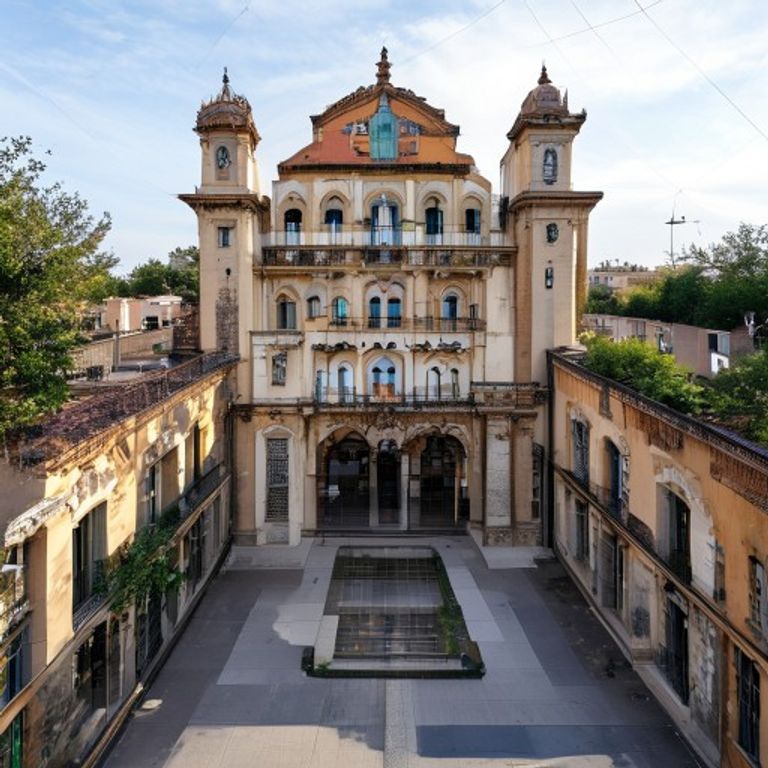
The Instituto Atlético Central Córdoba, affectionately known as "La Gloria" or "Albirrojo", is one of the most traditional and historically rich institutions in Argentine football. Based in the Alta Córdoba neighborhood, in the province of Córdoba, the club currently competes in the Liga Profesional de Fútbol (Argentine First Division), experiencing a period of sporting consolidation and institutional reconstruction following its celebrated return to the elite at the end of 2022, once again positioning itself as an inexhaustible source of world-class talent.
The Cradle of Glory: Origins, Railways, and the 1918 Foundation
The history of Instituto Atlético Central Córdoba is inextricably linked to the railway expansion that transformed Argentina's demographics and economy at the turn of the 19th to the 20th century. On August 8, 1918, at the facilities of the Ferrocarril Central Argentino (Central Argentine Railway), a group of workers and railway employees led by Guillermo Ostwald gathered with a clear purpose: to create an institution that would promote sports and the social integration of the working class.
Initially named Instituto Central Córdoba F.C., the club was born under the aegis of worker mutualism. Shortly thereafter, to reflect the institution's openness to other sports and the non-railway civil community, the name was changed to the definitive Instituto Atlético Central Córdoba. The colors chosen for the kit — red and white vertical stripes — were inspired by the heritage of local football pioneers and symbolized passion (red) and the purity of the sport (white).
The club quickly established its headquarters in the heart of the Alta Córdoba neighborhood, a working-class and residential district that would shape the institution's cultural identity. Instituto was not just a football club; it functioned as a social and cultural hub where dances, gymnastics activities, and community gatherings paved the foundation for an extremely loyal and territorial fanbase.
The Temple: El Monumental de Alta Córdoba
The pride of Alta Córdoba materialized in cement and iron with the construction of its stadium, officially named Estadio Juan Domingo Perón, but universally known as "El Monumental de Alta Córdoba". Inaugurated on August 15, 1951, the stadium's construction was supported by financial aid obtained through a loan granted during the government of then-president Juan Domingo Perón, which explains the official name.
With a current capacity of approximately 32,000 spectators, the Monumental is famous for its cauldron-like atmosphere. Located between Jujuy, Calderón de la Barca, Sucre, and Lope de Vega streets, the stadium has undergone several renovations over the decades, including the installation of a modern lighting system and the remodeling of its stands to meet the standards required by the Argentine Football Association (AFA). It is a monument of urban resistance, embedded in the fabric of its home neighborhood.
The Golden Era: The 70s Squad and the Birth of Legends
The 1970s marked Instituto's definitive entry onto the Argentine national football map. Until then confined to the prestigious yet regional Liga Cordobesa de Fútbol tournament, the club managed to qualify for the AFA's former Torneo Nacional in 1973. It was the beginning of a golden era that enchanted the country with its attractive, offensive, and technically refined football.
The 1973 campaign was Instituto's calling card to the nation. Under the technical command of Humberto Maschio, the team featured a phenomenal attacking line. It was during this period that world football met two young men who would change the history of the Argentine National Team: Mario Alberto Kempes and Osvaldo Ardiles.
Kempes, nicknamed "El Matador", was a powerful, fast striker with devastating finishing ability. Alongside him in midfield played Ardiles, "Pitón", an intelligent, cerebral playmaker with impeccable technique. Both were fundamental in helping Instituto go toe-to-toe with the giants of Buenos Aires (Boca Juniors, River Plate, and Independiente). The impact of this generation was so profound that both Kempes and Ardiles would become the pillars of the Argentine National Team that won the country's first World Cup in 1978, with Kempes finishing as the top scorer and best player of the tournament.
In 1979, Instituto achieved one of its best historical campaigns by reaching the quarterfinals of the Torneo Nacional, being eliminated by Ángel Labruna's legendary River Plate after two memorable draws. The nickname "La Gloria" was definitively consolidated in that decade, reflecting the fans' pride in a style of football that combined aesthetic beauty and extreme competitiveness.
The Paulo Dybala Phenomenon and the 2011/2012 Season Battle
If the 1970s revealed Kempes and Ardiles, the 21st century proved that Instituto's youth academy (known as "La Agustina") continued to be a breeding ground for stars. In the 2011/2012 season of the Primera B Nacional (the Argentine second division), the club was the protagonist of one of the most contested and media-covered championships in the country's football history, due to the historic relegation of River Plate.
Under coach Darío Franco, Instituto presented an ultra-offensive and modern style of football, led by a 17-year-old who stunned Argentina: Paulo Dybala. Nicknamed "La Joya" (The Jewel) by the Cordoban press due to his precocious talent, Dybala broke records that belonged to Mario Kempes, becoming the youngest player to score a goal for the club and the first to play 38 consecutive matches in a professional tournament.
Despite leading the championship for most of the rounds with attractive football, Instituto eventually suffered from the pressure in the final stretch. The team finished in third place, behind River Plate and Quilmes, and missed out on direct promotion. In the playoffs (Promoción), they were defeated by San Lorenzo de Almagro. Despite the bitter taste of not achieving promotion, that team went down in club history for the quality of play, and Dybala was sold directly to Palermo, Italy, beginning his successful international career in Europe and with the Argentine National Team.
The Rebirth and Current Moment (2022-2024)
After years of frustration in the second division and serious economic-financial problems that threatened the club's stability, Instituto began a process of deep restructuring under the presidency of Juan Manuel Cavagliatto. The management focused on modernizing the club's infrastructure, paying off historical debts, and strengthening the youth divisions.
The peak of this reconstruction process occurred at the end of 2022. Under the technical direction of Lucas Bovaglio, Instituto had a solid campaign in the Primera Nacional. In the "Reducido" tournament playoffs, the team overcame Estudiantes de Caseros in the final. After a goalless draw in Caseros, the return leg at the Monumental de Alta Córdoba ended 1-1, with a goal from defender Fernando Alarcón. Having had a better campaign in the regular season (sporting advantage), "La Gloria" secured the long-awaited return to the Primera División after a 16-year absence.
The 2023 season marked the year of consolidation in the elite. With targeted signings and the maintenance of a solid core, Instituto not only avoided relegation with ease but also flirted with qualification for international cups. Coach Diego Dabove took charge of the team in mid-2023, bringing pragmatism and defensive solidity.
In 2024, Instituto consolidated itself as a difficult team to beat, boasting a competitive performance in both the Copa de la Liga Profesional and the regular First Division tournament. Financially sound, the club reached historical records of active members (surpassing the 40,000 mark) and continues to invest in the modernization of the Estadio Juan Domingo Perón and in scouting new talent at La Agustina.
Cordoban Rivalries: Identity and Territory
Football in the province of Córdoba is characterized by intense, folkloric, and deeply territorial rivalries. Instituto is part of an ecosystem of high-voltage emotional classics:
1. The Classic against Club Atlético Belgrano
This is considered one of the most traditional matchups in the province. The rivalry with Belgrano (representative of the Alberdi neighborhood) dates back to the first decades of the 20th century. It is a clash that pits two of Córdoba's largest fanbases against each other. The matches are marked by great social and cultural rivalry between Alta Córdoba and Alberdi, characterizing it as the most balanced and contested classic in the interior of the country.
2. The Clash with Club Atlético Talleres
Talleres and Instituto play matches of enormous media and technical appeal. During the 1970s and 1980s, this classic defined the dominance of Cordoban football on the national stage, as both teams had squads full of national team players. It is a fierce sporting rivalry, fought inch by inch for the hegemony of the province.
3. The Neighborhood Classic with Racing de Córdoba
Historically, Instituto's true "Neighborhood Classic" (Clásico de Barrio) is against Racing de Nueva Italia. Due to the geographical proximity between the Alta Córdoba and Nueva Italia neighborhoods, matches between the two clubs mobilized the north and northeast zones of the city of Córdoba. Although the clashes have become less frequent in recent decades due to the different divisions in which the teams competed, the classic maintains its romantic and traditional character in the memory of older fans.
Great Idols and Coaches Who Defined an Era
- Mario Alberto Kempes: Developed by the club, "El Matador" played for Instituto between 1972 and 1974. His physical power and goal-scoring instinct projected the club to a national level before his transfer to Rosario Central and subsequent consecration at Valencia in Spain.
- Osvaldo Ardiles: The elegant midfielder defended Instituto's colors in the 1970s. A world champion in 1978, Ardiles is the ultimate symbol of the technical and intelligent football that defines the institution's identity.
- Paulo Dybala: A product of the La Agustina youth academy, Dybala restored the fans' pride in the 2011/2012 season, projecting the club's name globally before shining at Juventus, Roma, and the 2022 World Champion Argentine National Team.
- Daniel "Miliki" Jiménez: An implacable and folkloric center-forward of the 90s and 2000s. He is one of the greatest goalscorers in the club's history in AFA tournaments, being the hero of the 1999 promotion.
- Claudio Sarría: Known as "Capé", he was the classic number 10, talented and decisive in the 1999 promotion campaign. An idol revered for his refined technique.
- Ernesto "Loco" Corti: A midfielder of grit and dedication who defined an era in the 80s, representing the spirit of the albirrojo fan on the pitch.
- Gerardo "Tata" Martino (Coach): Had a notable stint as the club's coach at the turn of the millennium (2000-2001), helping to shape an offensive playing identity that would influence later work in his career.
- Darío Franco (Coach): Commander of the 2011/2012 team that enchanted the country with vertical and ultra-offensive football, leaving a lasting tactical legacy at the club.
Gallery of Titles and Notable Campaigns
Instituto has a rich history of achievements at the regional level and important promotion titles in Argentine professional football under the AFA:
Official National Titles (AFA)
- Primera B Nacional (Second Division): 2 titles (1998/1999 Season and 2003/2004 Season)
- Campeonato de Primera Nacional - Reducido de Ascenso: 1 title (2022)
Regional Titles (Liga Cordobesa de Fútbol)
Before the creation of unified national tournaments, the Liga Cordobesa was one of the strongest and most competitive leagues in Argentina. Instituto won the local championship on several occasions:
- Primera División de la Liga Cordobesa: 9 titles (1925, 1927, 1928, 1961, 1966, 1972, 1990, 2017, 2018)
- Liga Cordobesa - Segunda División: 4 titles (1919, 1920, 1941, 1946)
Notable Campaigns
- Torneo Nacional 1979: Quarterfinals (Eliminated by champion River Plate without losing either of the two playoff matches).
- Primera B Nacional 2011/2012: 3rd place in the regular phase (one of the highest point totals in club history, with 70 points earned in a tournament of exceptional technical level).
Researched Sources
- La Voz del Interior: Historical archive of sports coverage and special features on Instituto's centenary and the return to the first division in 2022.
- Asociación del Fútbol Argentino (AFA): Official match records, historical league tables, and regulations for the 1999, 2004, and 2022 promotion tournaments.
- "Instituto Atlético Central Córdoba - 100 años de Gloria": Historical and documentary record book on the foundation, railway connection, and evolution of the Alta Córdoba club.
- El Gráfico: Classic articles and interviews with Mario Alberto Kempes and Osvaldo Ardiles detailing Instituto's campaign in the 1973 Torneo Nacional.
- Diario Olé: Recent journalistic coverage on the management of Juan Manuel Cavagliatto and the team's performance under Diego Dabove in the Liga Profesional de Fútbol (2023-2024).



