


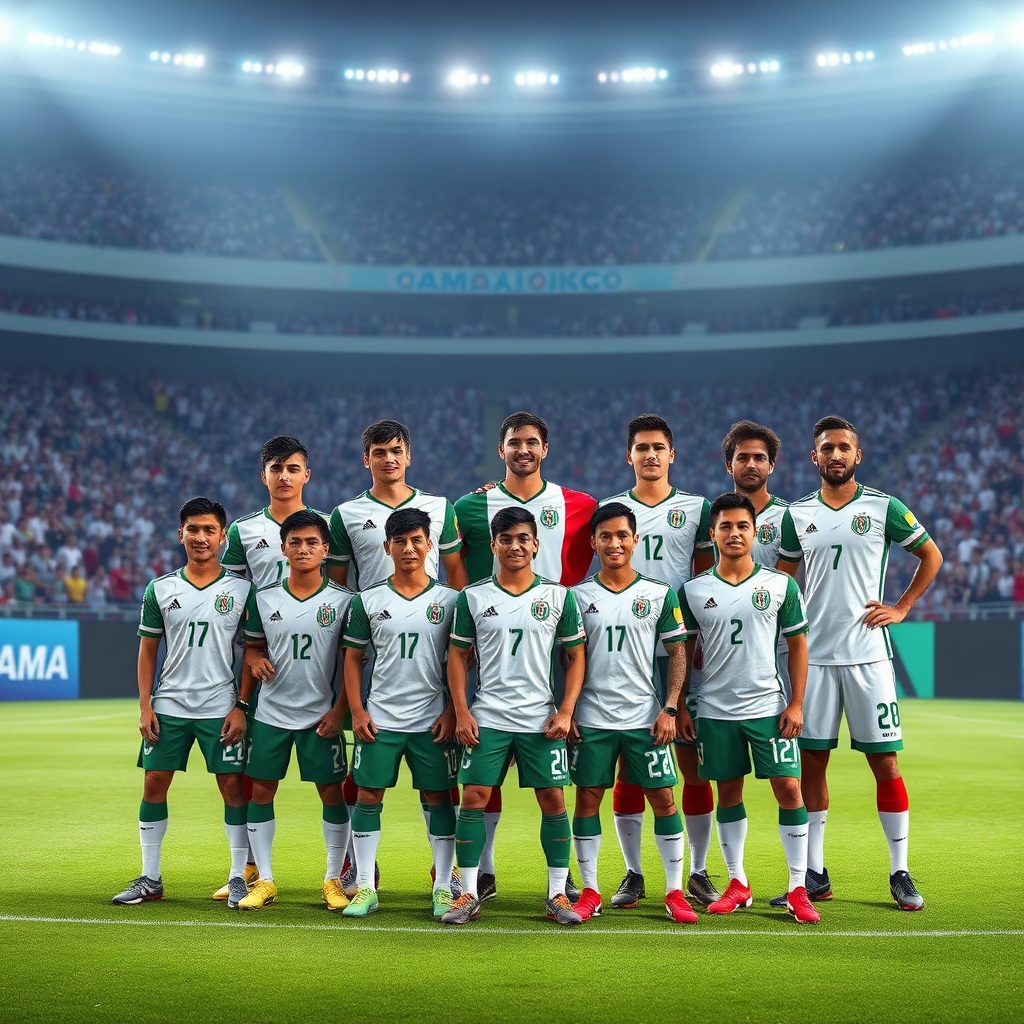
Mexican football inhabits a unique dimension on the global stage: a territory suspended between the grandeur of its popular passion and the glass ceiling of its own structural limitations. Owner of one of the richest leagues on the continent and a fanbase capable of colonizing stadiums around the globe, Mexico carries the historical burden of being the giant of a Confederation that often anesthetizes its development, while simultaneously finding itself barred from the elite club of world football. It is a national team defined by the obsession with the "fifth match" — the World Cup quarter-finals that have become an almost insurmountable psychological and sporting barrier. On the eve of co-hosting the 2026 World Cup, Aztec football faces one of its deepest identity crises, divided between the urgent need for tactical renewal and the shackles of a commercial system that is highly profitable, yet sportingly conservative. This dossier delves into the guts of a fascinating football culture, where the ball is a religion, but the gods seem to condemn their faithful to an eternal unfulfilled promise.
1. Origins and Formation of National Identity
The genesis of football in Mexico does not differ substantially from the pattern of the sport's dissemination across Latin America, but it carries unique nuances linked to the industrial revolution and British immigration. In the late 19th century, specifically in the region of Real del Monte and Pachuca, in the state of Hidalgo, English miners introduced the game. The Pachuca Athletic Club, founded in 1901, emerged as the pioneering landmark of this process. Initially, football was an aristocratic and foreign activity, restricted to clubs from British and Spanish colonies, such as Real Club España and Asturias. However, the Mexican Revolution (1910-1920) profoundly altered the country's social fabric, and football began to be seen by the post-revolutionary State as a tool for social cohesion, public health, and, crucially, the construction of a modern national identity.
As the urban masses appropriated the sport, the need for national representation became evident. The founding of the Mexican Football Federation (FMF) in 1922 and the subsequent affiliation with FIFA in 1929 paved the way for the country's participation in the inaugural World Cup in 1930, in Uruguay. On that historic afternoon of July 13, 1930, at the Pocitos Stadium in Montevideo, Mexico had the honor of playing the tournament's opening match against France. Although the 4-1 defeat highlighted the technical gap compared to the Europeans, Juan Carreño's goal entered eternity as the first Mexican goal cry in World Cups. The tournament established Mexico as a regular participant, but it also revealed a competitive inferiority complex that would accompany the national team for decades, characterized by dignified performances, but lacking in practical results.
The true catalyst for the identity of Mexican football, however, lies in the domestic club rivalry that shaped the character of the national player. The dichotomy between Club Deportivo Guadalajara (Chivas) and Club América synthesizes the soul of the country. Chivas, with its strict policy of fielding only Mexican players, became the bastion of nationalism, popular pride, and the identity of the "people." In contrast, América, based in the capital and later acquired by the Televisa media empire, represented cosmopolitanism, financial power, and openness to the external market. This tension between local purism and global ambition transferred to the national team, creating a constant debate about the ideal style of play: should Mexico seek European tactical sophistication or embrace the grit and technique of its popular essence?
During the 1950s and 1960s, the Mexican national team, affectionately known as El Tri (due to the three colors of the national flag), consolidated itself as the dominant force in North America, Central America, and the Caribbean (CONCACAF). However, this regional hegemony contrasted with frustrations at the global level. It was in this era that the legendary figure of Antonio "La Tota" Carbajal emerged. The goalkeeper became the first athlete in history to play in five World Cups (from 1950 to 1966), a feat that symbolized the longevity and resilience of a football that, although lacking major international achievements, displayed unwavering pride. Carbajal was the reflection of a Mexico that resisted bravely on the most imposing stages of the planet, paving the way for the country to finally establish itself as an elite host.
2. Golden Era, Great Campaigns, and Eternal Idols
The definitive turning point for Mexican football occurred in 1970, when the country hosted the World Cup for the first time. The construction of the imposing Azteca Stadium, a concrete cathedral designed by architect Pedro Ramírez Vázquez to house more than 100,000 spectators, redefined global sports infrastructure standards. Under the scorching heat and altitude of Mexico City, the national team, led by Raúl Cárdenas, reached the quarter-finals for the first time in its history. The elimination against Italy (4-1) did not diminish the cultural impact of the event: Mexico had proven capable of organizing the greatest show on Earth and competing at a high level. Sixteen years later, in 1986, after Colombia's tragic withdrawal due to economic problems and the devastating 1985 earthquake in the Mexican capital, the country hosted the tournament again, consolidating the Azteca as the ultimate temple of world football, the stage for the consecrations of Pelé and Diego Maradona.
In the 1986 World Cup, under the tactical direction of Serbian Bora Milutinović, Mexico presented what many consider its best collective version. With a solid defensive system and the genius of Manuel Negrete — author of an anthological volley goal against Bulgaria in the round of 16 —, El Tri reached the quarter-finals undefeated. The elimination on penalties against West Germany, in Monterrey, sealed the fate of that generation, but established an aesthetic and competitive standard. The great star of that era, however, was Hugo Sánchez. The "Pentapichichi," multi-champion and relentless top scorer for Real Madrid, was the personification of the Mexican player who had reached the top of the world. Ironically, Hugo's relationship with the national team was always complex, marked by clashes of ego with officials and the excessive demands of a fanbase that expected from him the same devastating performance he displayed at the Santiago Bernabéu.
The 1990s marked Mexico's transition to international competitive maturity, driven by the invitation to participate in the Copa América starting in 1993. In the Ecuador edition, under the command of Miguel Mejía Barón, the Aztecs surprised the continent by reaching the final, being defeated only by Gabriel Batistuta's Argentina 2-1. That team introduced the world to charismatic and technically refined figures:
- Jorge Campos: The sweeper-keeper who revolutionized the position with his self-designed multicolored uniforms, his impressive agility under the posts, and an uncommon ability to play with his feet, often acting as a striker for his clubs.
- Claudio Suárez: "El Emperador," a defender of unique elegance, impeccable positioning sense, and silent leadership, who for years held the record for international appearances for the national team.
- Alberto García Aspe: The engine of the midfield, known for his vocal leadership, precision in long passes, and an extremely powerful left-footed shot.
The pinnacle of this era of affirmation occurred in 1999, with the conquest of the Confederations Cup. In front of an Azteca Stadium packed with 110,000 fans, Mexico defeated the Brazil of a young Ronaldinho Gaúcho 4-3 in an epic final. The hero of the night was Cuauhtémoc Blanco, the "anti-defender" par excellence. Raised in the humble neighborhoods of Tepito, Blanco represented the cunning, creativity, and irreverence of Mexican street football. His signature move, the "Cuauhtemiña" — in which he trapped the ball between his ankles and jumped between two opponents —, was the pure manifestation of audacity against European tactical rigor. Blanco became a cultural icon, the imperfect hero whom the people idolized.
In the 21st century, leadership and technical excellence found their maximum exponent in Rafael Márquez. The "Kaiser of Michoacán" combined the class of a midfielder with the firmness of an elite central defender, being a fundamental piece in the multi-champion Barcelona of Frank Rijkaard and Pep Guardiola. Márquez achieved the historic feat of captaining Mexico in five consecutive World Cups (2002 to 2018), serving as the tactical and moral pillar of a national team that became accustomed to passing the group stage, but always hit the same limit. Alongside him, Javier "Chicharito" Hernández emerged as the greatest goalscorer in the history of the national team. With his sharp goal-scoring instinct, intelligent positioning in the box, and stints at giants like Manchester United and Real Madrid, Chicharito divided opinions but etched his name indelibly into the history of the national sport.
3. Rivalries, Crises, and Behind-the-Scenes Power
The geopolitics of football in North America is defined by the intense rivalry between Mexico and the United States. Historically, the confrontation was marked by an abysmal disparity in favor of the Mexicans, who viewed their northern neighbors with sporting disdain. However, starting in the late 1990s, with the development of Major League Soccer (MLS) and the massive investment by the US in athlete development, the scenario changed drastically. The birth of the "Dos a Cero" ghost — a scoreline repeated systematically by the Americans in crucial clashes on US soil — wounded Aztec pride. The peak of this rivalry occurred in the round of 16 of the 2002 World Cup, in South Korea, when the United States eliminated Mexico 2-0, in one of the most painful defeats in the history of Mexican football, exposing the team's emotional vulnerability in moments of extreme pressure.
Beyond the field rivalries, the history of Mexican football is inseparable from administrative scandals and the oligarchic control of large media corporations. For decades, the Mexican Football Federation operated under the direct influence of Televisa and, later, in a power-sharing arrangement with TV Azteca. This television duopoly dictated game times, coach call-ups, and even the structure of the national championship to maximize television audiences, often to the detriment of long-term sporting planning. The most emblematic case of systemic interference and corruption occurred in 1988, in the scandal known as the "Cachirules." The FMF deliberately fielded players over the age limit allowed in the qualifiers for the 1989 U-20 World Cup. The farce was discovered, and FIFA severely punished Mexico with the suspension of all its national teams from international competitions for two years. As a direct consequence, the country was banned from the 1990 World Cup in Italy, depriving a brilliant generation — which included Hugo Sánchez in his physical prime — of competing in the tournament.
Another controversial gear of the Mexican system was the "Pacto de Caballeros" (Gentlemen's Pact), an informal and extra-contractual agreement between the owners of Liga MX clubs. Under this mechanism, even if a player's contract with his club had expired, he could not sign with any other Mexican team without the consent and financial compensation to his previous club. This practice, which flagrantly violated the guidelines of the Bosman Law and the basic labor rights of athletes, functioned for years as a barrier to the free movement of players and discouraged the export of talent to Europe, as clubs artificially inflated internal market prices. The gradual abolition of this pact, under strong pressure from international players' unions, only occurred recently, but the scars of a cartelized market still shape the dynamics of local football.
This corporate structure and questionable sporting decisions flow directly into the collective trauma known as the curse of the "fifth match." Since 1994, Mexico has established an admirable consistency by qualifying for the round of 16 of every World Cup until 2018. However, in all these seven consecutive editions, the team was eliminated exactly at this stage, often in dramatic and psychologically devastating ways:
- 1994 (Bulgaria): Elimination on penalties after a tense draw, marked by coach Mejía Barón's decision not to put Hugo Sánchez on the field.
- 1998 (Germany): Mexico opened the scoring with Luis Hernández, but retreated excessively and allowed the German comeback in the final minutes with goals from Klinsmann and Bierhoff.
- 2006 (Argentina): A tactically perfect match under the command of Ricardo La Volpe, decided only in extra time by an anthological and unlikely goal from outside the box by Maxi Rodríguez.
- 2014 (Holland): The fateful "No era penal" episode, in which Arjen Robben drew a controversial penalty in stoppage time, converted by Huntelaar, after Mexico had led the score until the 88th minute.
This repetitive pattern of near-success generated a psychological barrier that transcends tactics, becoming a collective mental block that the national team carries in every World Cup cycle.
4. The Current Moment: Tactics, Generation, and Challenges
The cycle for the 2022 World Cup represented the exhaustion of a model. Under the command of experienced Argentine coach Gerardo "Tata" Martino, the Mexican national team presented bureaucratic, predictable, and aging football. The elimination in the group stage in Qatar — the first time the country did not advance to the round of 16 since 1978 — provoked a national catharsis and exposed the need for a deep reconstruction. Martino was harshly criticized for his tactical rigidity, insisting on a 4-3-3 system that stifled the creativity of technical players and exposed the slowness of a defensive line worn down by time. The absence of young talents ready to take the lead revealed the generational abyss that had opened in previous years.
After the turbulent and very short stint of Diego Cocca in the position, the Mexican Football Federation sought a homegrown solution with the appointment of Jaime "Jimmy" Lozano, who had won the bronze medal with the Olympic team in Tokyo 2020. Lozano tried to rejuvenate the team and rescue the style of play historically appreciated by the Mexican fan: ball possession, quick triangulations on the flanks, and dynamic offensive transitions. However, the technical limitations of the current squad and the pressure for immediate results in the CONCACAF Nations League and the 2024 Copa América showed that the problem went beyond the bench. Lozano's dismissal opened space for the return of Javier "El Vasco" Aguirre for his third stint as the savior of the nation, this time having none other than Rafael Márquez as his assistant coach and designated heir for the 2030 cycle.
Tactically, current Mexico seeks to balance defensive solidity with the ability to create clear goal-scoring chances, one of the team's biggest problems in recent years. The team is often structured in a flexible 4-2-3-1 or 4-3-3, where the role of Edson Álvarez is vital. The West Ham midfielder acts as the team's anchor, a defensive midfielder of great physical imposition, excellent at anticipation, and capable of dropping between the center-backs to qualify the ball exit — a classic movement inherited from the "Lavolpiana" school. However, the midfield suffers from the lack of a classic creative playmaker, a "number 10" capable of dictating the rhythm of the game and breaking compact defensive lines with vertical passes, a chronic deficiency since the physical decline of Andrés Guardado and Héctor Herrera.
In the offensive sector, the great dilemma revolves around the center-forward position. The rise of Santiago Giménez, a young striker who stood out at Feyenoord in the Netherlands, brought hope for renewal. Giménez is a modern, mobile striker with excellent presence in the box and the ability to finish with a single touch. However, the transition of his success in European football to the national team has been marked by fluctuations, often due to the lack of quality supply coming from the wings. He competes for the starting spot with Henry Martín, from América, a striker with more physical characteristics, excellent in hold-up play and defensive pressure on the opponent's ball exit, preferred by coaches who seek a more direct game and physical combat.
Tactical Structure of Modern Mexico
- Defensive Line: Defense composed of four players, prioritizing full-backs with the ability to support the attack, although often vulnerable in defensive recovery against fast wingers.
- Holding Midfield: A double defensive pivot to ensure protection in front of the box, freeing the more advanced midfielders to press high in the opponent's half.
- Offensive Transition: Excessive dependence on individual plays on the flanks, seeking crosses into the box or the diagonal for mid-range finishing.
5. Talent Formation, Structure, and Future
The great paradox of Mexican football lies in the contrast between the success of its youth teams and the difficulties of its senior national team. The country is a global power in youth categories, boasting two U-17 World Cup titles (2005, in Peru, with the generation of Carlos Vela and Giovani dos Santos; and 2011, at home) and an Olympic gold medal won at the London 2012 Games, after defeating Neymar's Brazil in the final at Wembley. These achievements prove that Mexico produces raw material of the highest technical quality. However, the process of transitioning these young talents to elite professional football is interrupted by structural barriers of the Liga MX itself, which prioritizes immediate financial return to the detriment of sporting development.
One of the main obstacles is the Liga MX competition format. With two short tournaments per year (Apertura and Clausura) that culminate in a knockout phase (Liguilla), clubs live under constant pressure for immediate results. This generates a huge risk aversion on the part of coaches, who prefer to field experienced foreign players rather than give minutes of play and space for mistakes to young promises from the youth categories. Furthermore, the elimination of the relegation and promotion system in the Mexican league removed the competitive pressure from the teams at the bottom of the table, but also stagnated the development market, creating a comfortable, financially stable, but sportingly complacent league.
Another crucial factor is the economic aspect. Liga MX is one of the richest leagues in the world outside of Europe, financed by large corporations and robust sponsors. Clubs like Tigres, Monterrey, América, and Cruz Azul pay astronomical salaries, equivalent to those of medium and large clubs in European leagues. Consequently, the Mexican player has few financial incentives to leave the comfort of his home country and venture into second-tier European leagues (such as the Dutch, Portuguese, or Belgian), which serve as a springboard to the elite of world football. When European clubs show interest in young Mexican talents, they run into the inflated transfer values demanded by Liga MX clubs, which have no financial need to sell their jewels for low prices. The result is a national team composed mostly of athletes who play in the domestic market, limiting exposure to the level of tactical and physical intensity of European football.
With an eye on the 2026 World Cup, which will be played on North American soil, Mexico faces the urgent challenge of breaking this vicious cycle. The Federation has sought partnerships and calendar reformulations, including the controversial Leagues Cup — a joint tournament with the MLS —, in an attempt to increase the international competitiveness of its teams. However, the true revolution needs to occur internally, with the re-establishment of rules that encourage the use of young native players (such as the old 20/11 Rule) and a change in the mentality of clubs regarding the export of talent. The Azteca Stadium will undergo historic renovations to become the only stadium to host three World Cup openers, but the big question that echoes from Tijuana to Yucatán is whether, in 2026, the Mexican national team will finally have the sporting tools and mental strength necessary to go beyond its historical ceiling and assume its rightful place in the elite of world football.



