


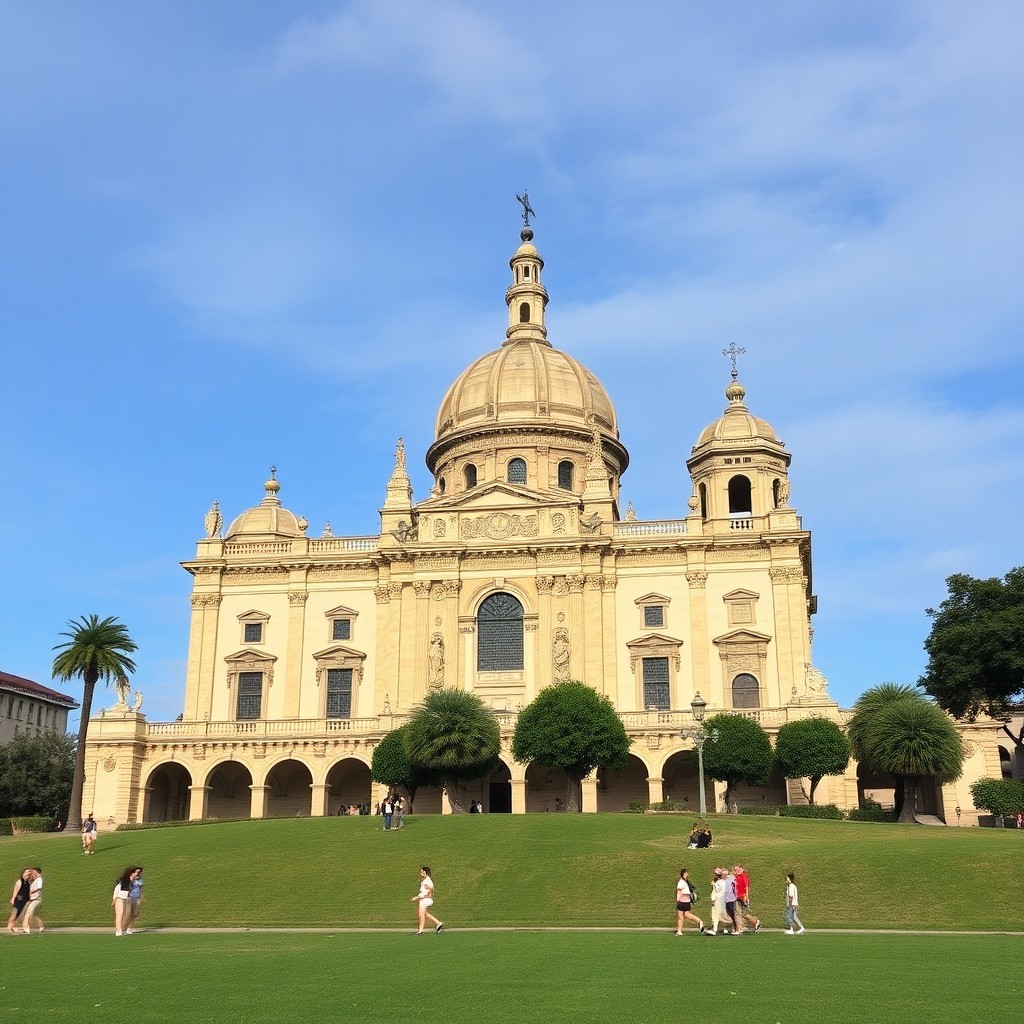
Club Atlético San Telmo, affectionately nicknamed "El Candombero," is one of the most unique and culturally rich institutions in Argentine football. Currently competing in the Primera Nacional (the country's second division), the club is experiencing a moment of sporting reconstruction and institutional prominence, balancing the dream of returning to the elite with the challenges of enduring in the mystical and feared Isla Maciel, its historic stronghold that divides the physical and social borders between the Federal Capital and the Province of Buenos Aires.
Club History
1. Origins, Foundation, and the Crossing of the Riachuelo
The genesis of Club Atlético San Telmo dates back to March 5, 1904. In the heart of the bohemian and historic San Telmo neighborhood in Buenos Aires, a group of young men led by Francisco Pantarotto decided to found an association that would represent the vibrant local youth. Originally named San Telmo Football Club, the first improvised headquarters operated in a historic house on Piedras Street.
The first colors adopted by the club were white and dark blue. However, urban legend and historical records indicate that, due to a lack of their own uniforms and the similarity to other teams of the time, the club adopted its definitive colors in 1906: dark blue and sky blue in vertical stripes. Oral tradition claims this combination was inspired by the colors of a Swedish-flagged ship or a vessel crossing the waters of the Port of Buenos Aires, although historians point out that the blue and sky blue symbolized the fusion between the Buenos Aires sky and the waters of the Rio de la Plata.
In its early years, San Telmo wandered through various playing fields in the southern zone of Buenos Aires (including grounds in Puerto Madero and in the San Telmo neighborhood itself, at the historic corner of Juan de Garay and Paseo Colón avenues). However, the urban modernization of the Argentine capital and the layout of new avenues expropriated the club from its lands in 1926. Faced with the risk of disappearing, the board made an audacious and definitive move: crossing the Riachuelo.
The club acquired land in the legendary working-class Isla Maciel, located in the Avellaneda district, in the province of Buenos Aires. In 1929, the Estadio Dr. Osvaldo Baletto was inaugurated. This geographical shift permanently shaped San Telmo's identity: a club born in the decadent and bohemian aristocracy of San Telmo, but forged in the industrial, port, and popular toughness of Isla Maciel. It is this duality that explains the nickname "Candomberos," in reference to the Afro-Rioplatense musical rhythm that is very strong in the club's neighborhood of origin.

2. Golden Eras and the 1975-1976 Epic
Throughout its trajectory, San Telmo established itself as a classic entertainer of the lower divisions of Argentine football, alternating between tough campaigns in the Primera C and Primera B. However, the most golden page of the "Candombero" history was written in the mid-1970s.
In 1975, under the technical command of the historic Eduardo "Janito" Janín, San Telmo assembled a working-class yet extremely competitive squad. That year, the Primera B was a tournament of the highest level. The club qualified for the emblematic Torneo Octogonal, which defined promotion to the elite division. In a dramatic campaign, contested point-by-point with major teams like Platense, Lanús, and Central Córdoba, San Telmo emerged as the winner of the octagonal by defeating Platense 2-0 on neutral ground, sealing its historic rise to the Primera División (AFA).
The 1976 season in the elite of Argentine football remains alive in the memory of any club fan. Although San Telmo was relegated at the end of the year due to the cruel point-average system, the team stunned the country's giants:
- The Historic Victory against Boca Juniors: On May 25, 1976, playing at Huracán's stadium (El Palacio Tomás Adolfo Ducó), San Telmo defeated Juan Carlos Lorenzo's legendary Boca Juniors 3-1. The goals were scored by Pedro Coronel (twice) and Camejo. This Boca team would go on to become Argentine and, subsequently, American champions.
- The Triumph against Huracán: San Telmo also recorded a categorical 1-0 victory over César Luis Menotti's Huracán, which featured several national team stars.
After this brief but glorious stint in the elite, the club returned to lower-division football, facing deep financial crises that almost led to bankruptcy in the 80s and 90s, but always sustained by the unwavering passion of its fans in Isla Maciel.
3. Context and Current Moment
Currently, San Telmo competes in the Primera Nacional (the second division of Argentine football). The club managed to return to this elite division of the lower leagues in 2021, after winning an exciting playoff final against Deportivo Madryn on penalties, ending years of exile in the Primera B Metropolitana.
San Telmo's recent season was marked by a rollercoaster of emotions, tactical challenges, and sporting and off-field controversies. Under the technical leadership of experienced coach Alfredo Grelak, the "Candombero" carried out a spectacular campaign in the group stage of the Primera Nacional, defying budget predictions and fighting for the lead of Zone B against interior giants like Aldosivi, Colón de Santa Fe, and Nueva Chicago.
However, the year 2024 was also marked by moments of great investigative and journalistic tension. In June 2024, before a crucial match against Aldosivi in Isla Maciel, an explosive device (a high-power firecracker) was detonated near the visiting locker room, injuring Aldosivi coach Andrés Yllana. The episode resulted in the suspension of the match, a severe punishment from the AFA Disciplinary Tribunal—which deducted 3 points from San Telmo in the standings—and the obligation to play several matches behind closed doors. Despite this hard sporting and psychological blow, Grelak's squad demonstrated resilience, remaining at the top of the table and qualifying for the prestigious Reducido tournament in search of promotion to the First Division.
4. Main Idols and Coaches Who Made History
San Telmo's identity is shaped by men who understood what it means to wear a shirt with such humble origins and strong local belonging:
- Osvaldo Baletto: He was not a player, but the most important president in the club's history. He was responsible for leading the club's physical transition to Isla Maciel and structuring San Telmo socially. The stadium bears his name in fair tribute.
- Pedro Coronel: The Paraguayan striker is an eternal legend. He was the hero of the 1976 victory against Boca Juniors, scoring two goals that are still celebrated in songs in Isla Maciel today.
- Eduardo "Janito" Janín: The technical director who performed the miracle of promotion in 1975. His tactical intelligence and ability to motivate a group of players without millionaire salaries went down in the history of lower-division football tactics in Argentina.
- Claudio "El Chiqui" Tapia: The current president of the Argentine Football Association (AFA) has an emotional connection to the club, having worn the San Telmo shirt in its youth categories and at the beginning of his modest career as a football player before dedicating himself to sports politics.
- Carlos "El Chango" Medina: A midfielder of refined technique and absurd dedication, who personified the club's transition during the most difficult moments of the 1970s.
5. Major Rivalries
San Telmo's rivalry map is drawn by the port geography and the territorial disputes of the southern zone of Buenos Aires and Avellaneda.
The Dársena Classic: San Telmo vs. Sportivo Dock Sud
This is the club's biggest and most visceral classic. The rivalry with Sportivo Dock Sud is purely territorial and based on social identity. Both stadiums are located just a few blocks apart, separated by the mouth of the Riachuelo and the industrial landscape of Avellaneda. It is the hottest classic in lower-division football. Matches between San Telmo and "El Docke" are characterized by heavy policing, enormous popular passion, and a history of clashes dating back to the 1920s. The dispute focuses on knowing who is the true "Owner of Isla Maciel and surroundings."
The Rivalry with Barracas Central
The clash against Barracas Central has deep historical roots. Both institutions were born in very close neighborhoods in the Federal Capital and competed for a century for supremacy in the lower divisions. In recent years, this rivalry has taken on political tension due to the meteoric rise of Barracas Central to the elite of Argentine football, under the protective shadow of AFA power, generating heated debates among San Telmo fans about sporting justice.
The Dispute with Defensores de Belgrano
Considered a "modern classic" of the lower divisions. Although Defensores de Belgrano belongs to the northern zone of the city of Buenos Aires (Núñez neighborhood) and San Telmo represents the extreme southern zone, the fanbases have developed a strong rivalry over the last four decades due to direct clashes in finals, relegation decisions, and fierce disputes in the Primera B Metropolitana.
6. Titles, Achievements, and Notable Campaigns
Below is the official gallery of achievements and historical milestones of Club Atlético San Telmo in the history of Argentine football:
| Competition / Division | Achievements / Status | Years and Seasons |
|---|---|---|
| Primera B (Second Division) | Winner of the Promotion Octagonal Tournament | 1975 (Historic promotion to Primera División) |
| Primera C (Third Division) | Official Champion | 1949, 1956, 1961, 2015 |
| Primera B Metropolitana | Promoted via Play-off (Reclassification Winner) | 2020-2021 (Promotion to Primera Nacional) |
| Primera D (Fourth Division) | Official Champion | 1940 |
| Second Division Competencia Cup | Champion | 1916 |
7. Curiosities and the Mystique of the Dr. Osvaldo Baletto Temple
San Telmo's stadium is considered by Argentine and foreign journalists as one of the most difficult and intimidating football fields in South America. To reach the stadium from Buenos Aires, it is necessary to cross the iconic Nicolás Avellaneda Transporter Bridge or take small boats that cross the polluted river, providing an almost cinematic experience of "football from another era."
Over the years, the club has been a point of cultural resistance. While modern football gives in to multi-purpose arenas and the sanitization of stadiums, Isla Maciel remains intact as a bastion of working-class football, where the chants from the concrete stands echo the harsh social reality of its fans, who make San Telmo not just a football club, but their own homeland of identity and faith.
Researched Sources
- Asociación del Fútbol Argentino (AFA) - Historical Archives of Decisions and Statistics from 1975/1976.
- "History of Club Atlético San Telmo" - Publications by historian Adrián Barros (Estadísticas Candomberas).
- Diario Clarín and Diário Olé - Journalistic coverage of the 2024 incidents and Alfredo Grelak's tactical performance.
- General Archive of the Argentine Nation (AGN) - Photographic and documentary records of the club's transition from the Capital to Isla Maciel in 1926-1929.
- Records of the Club Atlético San Telmo Member Assemblies.



