


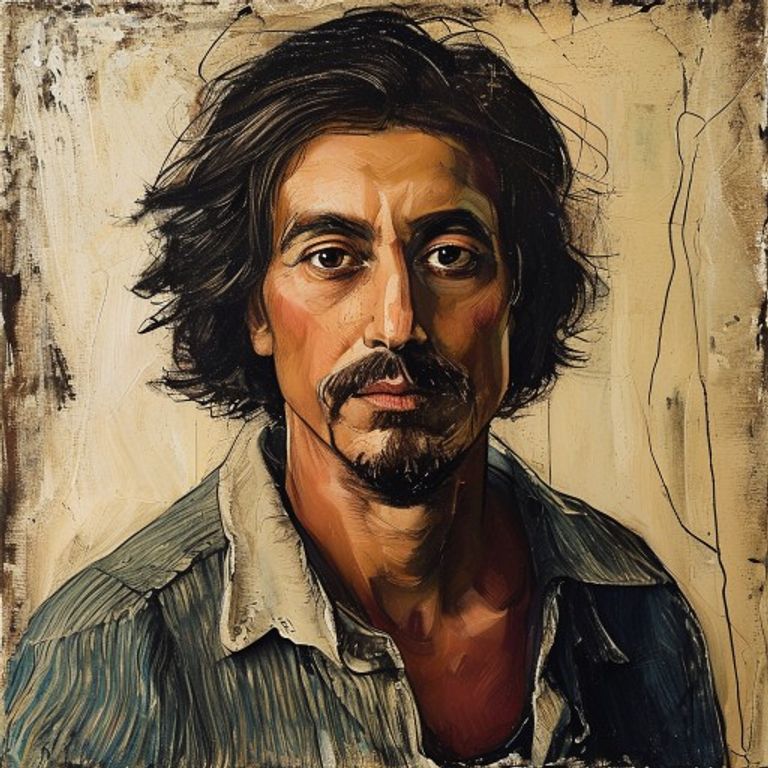
Published in 1930, the volume features 49 poems, bringing together productions by Carlos Drummond de Andrade from 1925 to 1930. It is dedicated to the poet and friend Mário de Andrade, who, in the same period, published "Remate dos Males," a work that would go on to reshape the poetic style of the "Pope of Modernism."
"Alguma Poesia" is a volume written under the impulse of the modernity of 1922. It practices the "poem-joke," uses the colloquialisms advocated by the aesthetic, and cultivates poetry of everyday life, rejecting the Parnassian-symbolist tendencies that had dominated poetry until then. However, Drummond's "poem-joke" is more of an outburst from a shy person trying to drown (disguise) with humor the feelings that embitter him. In its prosaic nature, it hides the search for an authentic and autonomous poetic expression, and by turning to everyday life, it transcends time and space in pursuit of the perennial
and universal.
From the above statements, one can trace a kind of thematic line that Drummond would follow in "Alguma Poesia" and that would remain throughout his poetic trajectory. This line can be broadly identified, based on what the author himself suggests as the thematic direction of his work:
1. The individual - "a contorted self"
This section investigates the poet's formation and his view of the world. Always lucid, he discusses with bitterness, pessimism, irony, and humor what he, an attentive observer, captures of himself and the things around him.
Some poems synthesize the individual's vision, such as the opening poem "Poema de sete faces" (Seven-Faced Poem), in which he foretells his destiny.
2. The family - "the family I gave myself"
One of Drummond's constant themes, present from "Alguma Poesia" to his final verses, is family, his inner experience in Minas Gerais, and the landscape that marks his memory. Contrary to cliché, instead of referring to family as something divinely assigned, the poet uses "that I gave myself" and analyzes his personal relationships, aware
that they are based on a personal perspective. In a very individual way, he portrays the passage of time, as can be observed in "Infância" (Childhood), "Família" (Family), "Sesta" (Siesta), some of the most significant poems in "Alguma Poesia."
3. Loving knowledge - "amar-amaro" (to love-bitterly)
With the wordplay "amar-amaro," a title borrowed from a poem in the book "Lição de Coisas" (Lesson in Things), the poet adds the adjective "bitter" to the noun "love," a recurring sentiment in some of his later poems and books. In "Alguma Poesia," the theme is treated with good doses of humor, satire, or hints of idealism, as in "Toada do amor," "Sentimental," "Quero me casar" (I Want to Get Married), "Quadrilha" (Square Dance).
4. Landscape and travels
A group of poems contains notes on travels, portraying seen and experienced landscapes, but also recalling the influences received from the always subservient Brazilian stance towards supercivilizations, as in "Lanterna mágica" (Magic Lantern), "Europa, França e Bahia."
5. The social and the evolution of times
Drummond constructs poems in which he contemplates the changing times, progress arriving and invading the old landscape, as in "A rua diferente" (The Different Street) or "Sobrevivente" (Survivor).
Published in 1930, the volume features 49 poems, bringing together productions by Carlos Drummond de Andrade from 1925 to 1930. It is dedicated to the poet and friend Mário de Andrade, who, in the same period, published "Remate dos Males," a work that would go on to reshape the poetic style of the "Pope of Modernism."
"Alguma Poesia" is a volume written under the impulse of the modernity of 1922. It practices the "poem-joke," uses the colloquialisms advocated by the aesthetic, and cultivates poetry of everyday life, rejecting the Parnassian-symbolist tendencies that had dominated poetry until then. However, Drummond's "poem-joke" is more of an outburst from a shy person trying to drown (disguise) with humor the feelings that embitter him. In its prosaic nature, it hides the search for an authentic and autonomous poetic expression, and by turning to everyday life, it transcends time and space in pursuit of the perennial
and universal.
From the above statements, one can trace a kind of thematic line that Drummond would follow in "Alguma Poesia" and that would remain throughout his poetic trajectory. This line can be broadly identified, based on what the author himself suggests as the thematic direction of his work:
1. The individual - "a contorted self"
This section investigates the poet's formation and his view of the world. Always lucid, he discusses with bitterness, pessimism, irony, and humor what he, an attentive observer, captures of himself and the things around him.
Some poems synthesize the individual's vision, such as the opening poem "Poema de sete faces" (Seven-Faced Poem), in which he foretells his destiny.
2. The family - "the family I gave myself"
One of Drummond's constant themes, present from "Alguma Poesia" to his final verses, is family, his inner experience in Minas Gerais, and the landscape that marks his memory. Contrary to cliché, instead of referring to family as something divinely assigned, the poet uses "that I gave myself" and analyzes his personal relationships, aware
that they are based on a personal perspective. In a very individual way, he portrays the passage of time, as can be observed in "Infância" (Childhood), "Família" (Family), "Sesta" (Siesta), some of the most significant poems in "Alguma Poesia."
3. Loving knowledge - "amar-amaro" (to love-bitterly)
With the wordplay "amar-amaro," a title borrowed from a poem in the book "Lição de Coisas" (Lesson in Things), the poet adds the adjective "bitter" to the noun "love," a recurring sentiment in some of his later poems and books. In "Alguma Poesia," the theme is treated with good doses of humor, satire, or hints of idealism, as in "Toada do amor," "Sentimental," "Quero me casar" (I Want to Get Married), "Quadrilha" (Square Dance).
4. Landscape and travels
A group of poems contains notes on travels, portraying seen and experienced landscapes, but also recalling the influences received from the always subservient Brazilian stance towards supercivilizations, as in "Lanterna mágica" (Magic Lantern), "Europa, França e Bahia."
5. The social and the evolution of times
Drummond constructs poems in which he contemplates the changing times, progress arriving and invading the old landscape, as in "A rua diferente" (The Different Street) or "Sobrevivente" (Survivor).



