


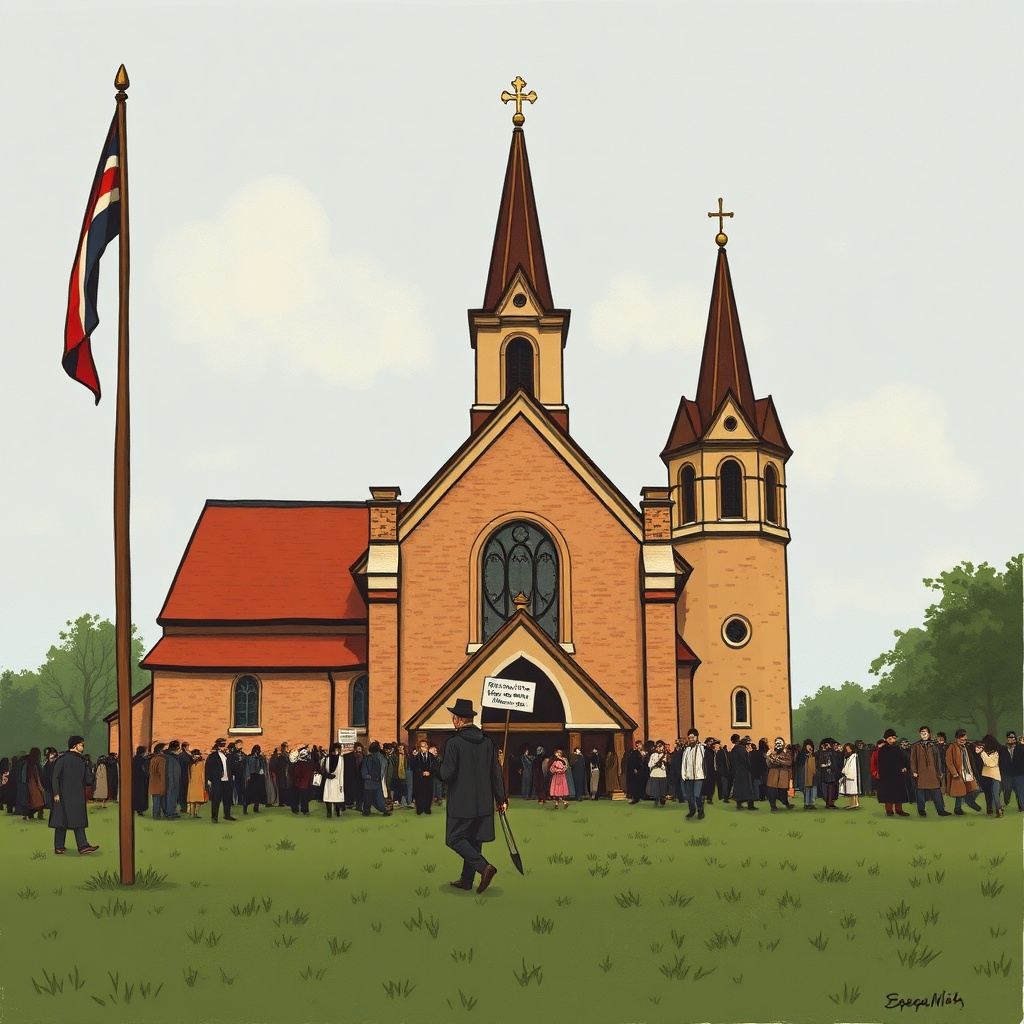
"Traditional Protestantism" is a broad term that encompasses various branches of Christianity that originated from the Protestant Reformation of the 16th century. It is characterized by an emphasis on the authority of the Scriptures, salvation by faith, and the universal priesthood of believers, distancing itself from certain doctrines and practices of the Roman Catholic Church. Its origin dates back to figures such as Martin Luther, John Calvin, and Huldrych Zwingli, and its dissemination has profoundly shaped the religious, cultural, and political landscape of various nations.
Traditional Protestantism: A Sociological, Historical, and Theological Analysis
The term "Traditional Protestantism" covers a complex and diverse spectrum of Christian denominations that share historical roots in the Protestant Reformation of the 16th century. For an in-depth understanding, it is essential to approach it through the lenses of the sociology of religion, history, and theology, maintaining analytical rigor and an impartial stance. This article seeks to outline its fundamental characteristics, origins, beliefs, and structure, and to contextualize its controversies and contemporary relevance, always based on documentary and scientific evidence.
1. Clear Sociological and Theological Definition
Sociologically, Traditional Protestantism can be understood as a set of religious institutions that developed from the church reform movement of the 16th century, distancing themselves hierarchically and doctrinally from the Roman Catholic Church. These groups tend to emphasize individual autonomy in the interpretation of the Scriptures and the believer's direct relationship with God, without the need for traditional ecclesiastical intermediaries. Theologically, the central pillars include:
- Sola Scriptura (Scripture Alone): The Bible is considered the supreme authority in matters of faith and practice.
- Sola Fide (Faith Alone): Salvation is obtained solely through faith in Jesus Christ, not by human works or merits.
- Sola Gratia (Grace Alone): Salvation is a free gift from God, granted by His grace.
- Solus Christus (Christ Alone): Jesus Christ is the only mediator between God and humanity.
- Soli Deo Gloria (Glory to God Alone): All glory must be given to God.
- Universal Priesthood of Believers: All Christians have direct access to God through Christ.
These fundamental principles distinguish Protestantism from other Christian traditions and also from more recent religious movements that may emerge within or outside the Protestant spectrum.
2. Historical Origin, Founders, and Geographic/Cultural Context
The genesis of Protestantism dates back to the early 16th century, in a European context marked by deep crises in the Catholic Church, discontent with practices such as the sale of indulgences, and the flourishing of the Renaissance, which encouraged critical thinking and a return to classical and biblical sources. The starting point is often associated with Martin Luther (1483–1546), a German Augustinian monk who, in 1517, allegedly nailed his 95 Theses to the door of the Castle Church in Wittenberg, criticizing the financial exploitation of faith. Luther translated the Bible into German, making it accessible to a wider audience and strengthening the principle of Sola Scriptura.
Other key figures include John Calvin (1509–1564), a French theologian who systematized Reformed theology in his work "Institutes of the Christian Religion," strongly influencing the development of Reformed churches in Switzerland, Scotland, the Netherlands, and other parts of Europe. Huldrych Zwingli (1484–1531) was another prominent figure in Switzerland, with theological emphases sometimes distinct from those of Luther and Calvin. The movement spread rapidly across Europe, adapting to different cultural and political contexts, leading to the emergence of various denominations, such as Lutherans, Calvinists (Reformed), Presbyterians, Methodists, Baptists, among others.
3. Main Beliefs, Dogmas, Rites, and Practices
Although there is considerable diversity among traditional Protestant denominations, some beliefs, rites, and practices are widely shared:
- Worship of the Triune God: Belief in the Holy Trinity (Father, Son, and Holy Spirit).
- Centrality of Jesus Christ: Believing in Jesus as the Son of God, Savior of humanity, through his death and resurrection.
- Bible as Guide: The reading and interpretation of the Bible are central to spiritual life.
- Sacraments: Generally recognize two sacraments: Baptism and the Lord's Supper (or Eucharist/Communion). The understanding of the nature and meaning of these rites varies.
- Prayer: Individual and communal practice of communication with God.
- Preaching of the Word: The sermon is a central element in services, focused on biblical exposition.
- Ethics and Morals: Strong emphasis on moral principles derived from biblical interpretation, influencing the personal and social life of the faithful.
Rites such as baptism (usually by immersion or sprinkling, at different stages of life) and the celebration of the Lord's Supper (with varying frequency, from weekly to monthly or quarterly) are common. Services usually include hymns, prayers, Bible reading, and preaching. The liturgical structure can vary from very simple to more elaborate, depending on the denominational tradition.
4. Organizational Structure and Leadership Profile
The organizational structure in Traditional Protestantism varies significantly. Some denominations adopt an episcopal model, with bishops overseeing churches in a given region (e.g., some branches of Methodism and Lutheranism). Others follow a presbyterian model, with governance exercised by presbyters (elders) elected at local and regional levels (e.g., Reformed, Presbyterian churches). A third model is the congregational, where each local church is autonomous and makes its own decisions, with voluntary associations for cooperation (e.g., Baptists, some independent churches).
The profile of leadership also differs. Pastors, ministers, reverends, or priests (in some traditions) are the spiritual leaders and preachers. In many traditional denominations, leadership is male, although there is a growing movement for the ordination of women in some of them. Theological training in seminaries is often a requirement for ordained pastoral ministry. In many churches, there is also the figure of deacons and elders who assist in administration and pastoral care.
5. [WARNING/CONTROVERSIES] Factual Analysis of Polemics, Ethical Deviations, or "Destructive Cult" Characteristics
It is crucial to distinguish the various branches of Traditional Protestantism from groups that, although they may have superficial origins or affinities, operate in a destructive manner. The term "Traditional Protestantism" generally refers to established and widely recognized denominations, with a long history and significant social presence, which do not fit the definition of a "destructive cult" according to established sociological and psychological criteria. These criteria include, but are not limited to:
- Coercive control: Psychological and doctrinal manipulation to exert dominance over members.
- Social isolation: Withdrawal from family, friends, and the external society.
- Financial exploitation: Demand for excessive donations or compulsory contributions that impoverish members.
- Abuse of power: Discrimination, physical, sexual, or psychological abuse by leadership.
- Harm to others: Practices that harm the individual, the family, or society.
However, as in any large religious tradition, Traditional Protestantism is not immune to challenges and controversies. Some issues include:
- Internal Theological Debates: Discussions on biblical interpretation, gender issues (such as the ordination of women or LGBTQIA+ individuals), and the role of faith in the public sphere continue to generate debates within denominations.
- Social and Political Positioning: Some more conservative wings of traditional Protestant denominations have been associated with controversial political and social movements, generating polarization and criticism. On the other hand, more progressive wings actively defend social causes and human rights.
- Safety and Well-being Issues: Although rare compared to destructive groups, isolated incidents of negligence or abuse within institutions linked to traditional Protestant churches can occur, and in such cases, legal investigations and accountability are fundamental. Media and oversight bodies play a crucial role in exposing and combating such practices.
It is essential that factual analysis be based on concrete evidence and reports from reliable sources, separating generalizations from specific, proven cases. The vast majority of members and leaders of Traditional Protestantism operate within established ethical and legal frameworks.
6. Social, Cultural Impact, and Contemporary Relevance
The impact of Traditional Protestantism on global society and culture is immeasurable. It played a crucial role in shaping national identities in countries such as the United States, the United Kingdom, Germany, and Scandinavian countries, influencing educational, political, and ethical systems. The emphasis on education, hard work (the "Protestant work ethic," as theorized by Max Weber), and individual responsibility shaped economies and social structures.
In contemporary times, Traditional Protestantism continues to be a relevant religious and social force. Established denominations maintain millions of faithful around the world, and their institutions (schools, hospitals, NGOs) continue to provide significant services. However, the global religious landscape is constantly changing, with the growth of other religions, the rise of secularism, and the emergence of new forms of spirituality. Traditional Protestantism faces the challenge of adapting to these new contexts, maintaining its relevance and message in an increasingly plural and secularized world. Internal diversity and debates about adaptation and mission in contemporary societies define much of its future trajectory.
References and Research Sources
- History of the Protestant Reformation - Martin Luther. Available at: [Search for a reliable source on Luther and the Reformation]
- Luther's influence on Bible translation. Available at: [Search for an academic source on Luther's Bible]
- John Calvin and the Institutes of the Christian Religion. Available at: [Search for a source on Calvin and his work]
- Huldrych Zwingli and the Reformation in Switzerland. Available at: [Search for a source on Zwingli]
- Ecclesiastical Governance Structures: Episcopal, Presbyterian, and Congregational. Available at: [Search for a sociological/historical source on ecclesiastical governance]
- Debate on the ordination of women in Protestantism. Available at: [Search for news or academic articles on the topic]
- Sociological Criteria for Defining a Destructive Cult. Available at: [Search for academic articles or research institute reports on destructive cults]
- Contemporary theological debates in Protestant denominations (gender, LGBTQIA+). Available at: [Search for news or academic articles on internal debates]
- Political positions of conservative and progressive Protestant wings. Available at: [Search for reports from serious news sources]
- Historical impact of Protestantism on Western society. Available at: [Search for academic articles or books on the history and sociology of religion]
- The Protestant Ethic and the Spirit of Capitalism by Max Weber. Available at: [Search for sources on Max Weber's work]
- The social and missionary role of traditional Protestant churches today. Available at: [Search for articles from religious organizations or news on the topic]



