


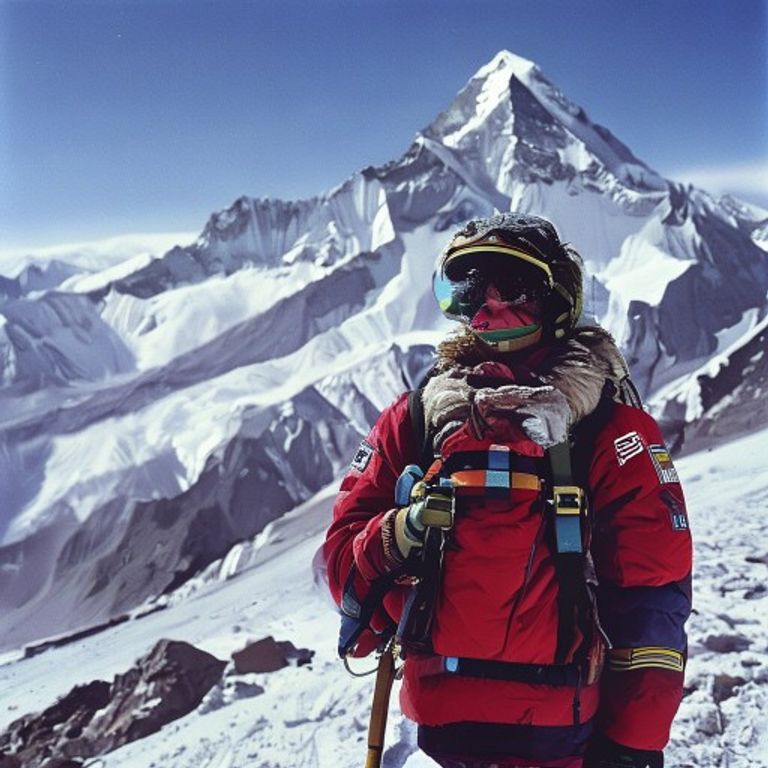
The 1996 Mount Everest disaster occurred on May 10 and 11, 1996, when eight mountaineers caught in a blizzard died on Mount Everest while attempting to descend from the summit.

// Silvio Lobo has no authorship relationship with this content. All rights are reserved to their respective creators!
I really liked this video, but I have no connection with its production.
It is on this site thanks to the video and playlist embedding tool from Google/YouTube itself. (learn more: Embed videos and playlists - YouTube Help (google.com). Video creators/owners can, if they wish, disable the embedding of their own videos.
⚠️ Research conducted with the aid of Deep Research is subject to referential ambiguity.
🖥️Clean HTML code using proprietary tools.
👥 Research by Guilherme Felipe, Curated by Silvio Lobo
1996 - The Most Famous Tragedy on Everest!
The year 1996 is, without a shadow of a doubt, a dark mark in the history of Mount Everest. The climbing season that year became immortalized as "The Most Famous Tragedy on Everest," an event that shocked the world and raised profound questions about the limits of human ambition, expedition safety, and the very nature of high-altitude mountaineering.
The disaster was not an isolated incident, but a series of events that unfolded over a few days, culminating in the deaths of eight climbers, five of whom died on a single day, May 10, 1996. While the death toll is not the highest in Everest's history (which saw 15 deaths in 1996, but the specific May tragedy is the most famous), the way it occurred and the narratives that emerged from it made it particularly memorable and, in many ways, disturbing.
The Main Protagonists and Expeditions
The May 1996 tragedy primarily involved two commercial expeditions that had hired experienced guides to lead their clients to the summit. These were:
- Adventure Consultants, led by Rob Hall, a renowned New Zealand mountaineer with extensive Everest experience.
- Mountain Madness, led by Scott Fischer, an experienced American guide known for his more aggressive and adventurous style.
In addition to these, other expeditions were also present on the mountain, but the focus of attention fell on these two groups due to the magnitude of the losses.
The Sequence of Events and Contributing Factors
The morning of May 10, 1996, dawned with seemingly favorable conditions for the summit attempt. However, several factors combined to create a catastrophic scenario:
- Congestion in the "Death Zone": The growing popularity of Everest and the proliferation of commercial expeditions resulted in a "traffic jam" on the route, especially in the challenging section known as the "Hillary Step." This delayed the teams, consuming precious oxygen and time.
- Lack of Supplemental Oxygen: Some of the reserve and general-use oxygen cylinders were not properly positioned or were insufficient to meet everyone's needs.
- Inaccurate Weather Forecast: A sudden and violent storm hit the mountain without adequate warning. Weather forecasts for Everest, even today, are notoriously difficult to be 100% accurate.
- Questionable Decisions: Guides and clients made decisions that, in retrospect, seem to have been crucial errors. The insistence on continuing the ascent despite delays and limited time, the lack of clear communication between teams, and the underestimation of the dangers are frequently debated points.
- Extreme Fatigue: The combination of high altitude, prolonged physical exertion, and adverse conditions led to exhaustion, impairing judgment and the ability to make rational decisions.
Curious and Strange Points
The 1996 tragedy is full of details that cause strangeness and raise ethical and psychological questions:
- Rob Hall's Watch: One of the most iconic images from the tragedy is Rob Hall's wristwatch, which continued to tick even after his death, still strapped to his abandoned tent. This image became a grim symbol of human fragility against implacable nature.
- Beck Weathers' Survival: One of the most remarkable survivors is Beck Weathers, an American doctor who was presumed dead, abandoned for hours in freezing temperatures, and incredibly managed to recover and descend the mountain. His story of resilience is a testament to willpower, but it also raises questions about the abandonment decisions that were made.
- Divergent Narratives: The stories told by survivors and the accounts in books like Jon Krakauer's "Into Thin Air" (who participated in the Outside Magazine expedition) and Lou Kasischke's "Left for Dead" (from the Adventure Consultants expedition) present different perspectives and sometimes conflicting accounts of the events. This shows how the perception of reality in extreme situations can be subjective and influenced by individual experience.
- "Summit Tourism": The 1996 tragedy intensified the debate about the increasing commercialization of Everest and the rise of expeditions with less experienced clients, driven by expensive guides and the pursuit of fame. The line between elite mountaineering and adventure tourism became increasingly blurred and dangerous.
- The Ghost of "Green Boots": Although not directly linked to the May 1996 tragedy, the legend of "Green Boots," the body of a climber who remained visible on the North Face route for years and became a macabre landmark, illustrates the harsh reality that Everest holds many of its dead. The 1996 tragedy added more names to this tragic list.
The Legacy of the 1996 Tragedy
The deaths of 1996 had a profound impact on how expeditions to Everest are conducted. There was an increased emphasis on:
- Safety: More rigorous safety protocols were implemented, including improved communication, more accurate weather monitoring, and greater caution in ascent and descent decisions.
- Guide Training: The qualification and training of guides came to be seen as even more crucial.
- Regulation: The debate about the need for stricter regulations for commercial expeditions gained momentum.
Despite the advances, Mount Everest remains a place of inherent dangers, and each season brings its own challenges. However, the 1996 tragedy serves as a constant reminder of human fragility, the immense power of nature, and the limits of ambition, echoing as one of the most memorable and frightening moments in the climbing saga of the "Roof of the World."



