


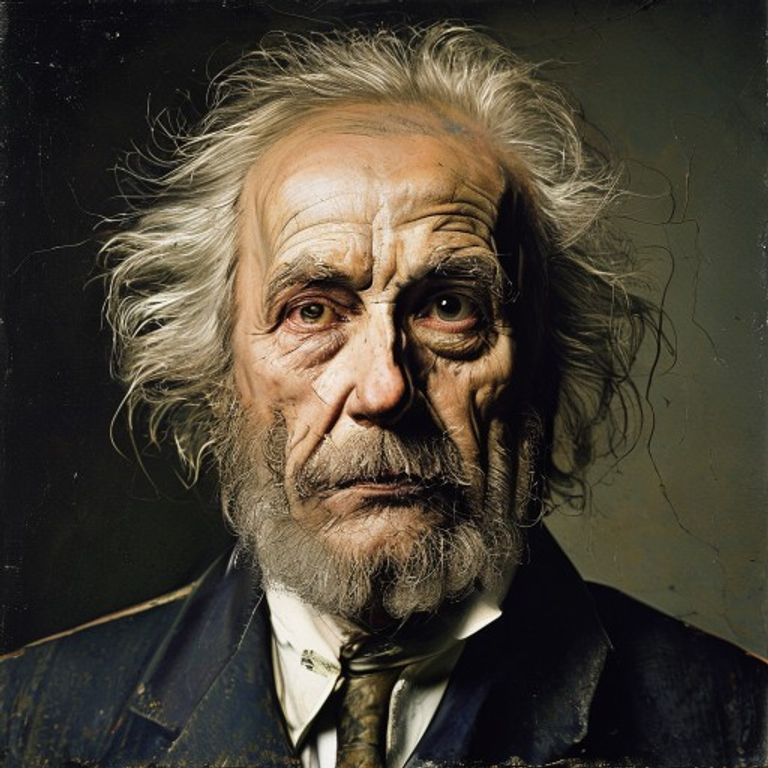
Former Russian spy killed in London in 2006 by Polonium-210 radiation placed in his tea, in one of the most sophisticated political assassinations of the twenty-first century.
⚠️ Research conducted with the aid of Deep Research is subject to referential ambiguity.
🖥️ Clean HTML code using a proprietary tool.
👥 Research by Guilherme Felipe, Curation by Sílvio Lôbo
The Radioactive Poisoning of Alexander Litvinenko: A State Mystery in the Heart of London
On November 1, 2006, the quiet and cosmopolitan city of London became the stage for a crime that would echo through the halls of international power and cast a shadow of doubt over the safety of Russian dissidents abroad. The involuntary protagonist of this tragedy was Alexander Litvinenko, a former agent of the FSB (Federal Security Service of Russia), who claimed to have compromising information about the Kremlin. His slow and painful poisoning with a highly radioactive substance turned an office into a forensic laboratory and a hospital into a center of scientific despair. The mystery of who ordered and who executed this audacious act would only deepen over the years, challenging investigations and fueling speculation.
Timeline of Events
- 2000: Litvinenko flees Russia for the United Kingdom, alleging political persecution and citing reasons for his escape that included the claim that the FSB was orchestrating terrorist attacks in Russia to boost Vladimir Putin's career.
- November 1, 2006: Litvinenko meets with Andrei Lugovoi and Dmitry Kovtun at a London hotel. Later, he meets with Mario Scaramella, an Italian consultant, at a restaurant. It is on this day that exposure to the radioactive substance, later identified as polonium-210, is believed to have occurred.
- November 3, 2006: Litvinenko begins to feel ill, experiencing abdominal pain and other symptoms.
- November 16, 2006: After several days of rapid deterioration and hospitalization, Alexander Litvinenko dies at University College Hospital in London. His death is quickly deemed suspicious due to unusual symptoms and possible exposure to hazardous materials.
- November 20, 2006: Scotland Yard announces that Litvinenko's poisoning was caused by a radioactive substance, later confirmed as polonium-210. The incident gains international prominence.
- 2007: The official British investigation, led by Scotland Yard, advances, focusing on Russian individuals who were in contact with Litvinenko.
- 2015: Judge Robert Owen concludes the British public inquiry, stating in his report that there is a "strong probability" that the Russian state was involved in Litvinenko's assassination. The report identifies Andrei Lugovoi and Dmitry Kovtun as the executors, acting under orders from "parties within the Russian state."
- 2016: The United Kingdom imposes sanctions on Russian individuals and entities linked to the case. Russia vehemently denies any involvement.
- 2021: The European Court of Human Rights finds Russia responsible for Litvinenko's death, ordering the payment of compensation to his family.
Main Theories
The complexity of the Litvinenko case gave rise to several theories, ranging from the highly plausible to the conspiratorial. The official British investigation focused on a few main lines:
Main Theory: Poisoning by Order of the Russian State
This is the central theory supported by the British investigation and the report by Judge Robert Owen. The logic is based on:
- Motive: Litvinenko was a vocal critic of the Russian government, possessing information that could harm prominent figures, including Vladimir Putin. His defection and public accusations created a risk to the regime's image and stability.
- Method: The use of polonium-210, a rare radioactive substance that is difficult to obtain and track, suggests a level of sophistication and resources that points to a state actor. The spread of radioactivity across London was also interpreted as an attempt at intimidation.
- Key Suspects: Andrei Lugovoi and Dmitry Kovtun, individuals with ties to Russian intelligence, were identified as the most likely executors. Scotland Yard gathered evidence that both were in direct contact with Litvinenko on the day of his poisoning and showed traces of radioactivity on their bodies and at the locations they visited.
- Evidence: Traces of polonium-210 were found in several locations frequented by the suspects, including the hotel where they stayed and the restaurant where they met Litvinenko. The amount of polonium used was sufficient to cause death, but not immediately, perhaps allowing the executors to escape.
Alternative and Conspiracy Theories
Although the state theory is the most accepted by British authorities, other hypotheses have been raised:
- Mafia or Common Criminal Involvement: This theory suggests that the poisoning could have been the result of financial or criminal disputes in which Litvinenko was involved. However, the sophistication of the method and the political motivation make this hypothesis less likely in the absence of concrete evidence.
- "False Flag Operation": A conspiratorial strand suggests that the assassination could have been orchestrated by a third party with the goal of blaming Russia and damaging international relations. The origin of the polonium-210 is a crucial point, and speculation about its handling by other intelligence services has been raised.
- Self-Sabotage or Accident: Although unlikely, the possibility that Litvinenko accidentally came into contact with the radioactive material, or even planned an act of self-harm or a "final act" to denounce the Russian regime, was briefly considered but quickly dismissed in the face of evidence of intentional poisoning.
- Paranormal/Supernatural Theories: In cases of such complex mystery, some theories border on the inexplicable. However, for a case with so much scientific and forensic evidence, these are dismissed by formal investigation.
Controversies and Blind Spots
The investigation into the Litvinenko case was not without controversy and points that continue to generate debate:
- Access to Polonium-210: The exact origin and quantity of polonium-210 used remain a question mark. Although the Owen report suggests state involvement, the difficulty in tracking the supply chain of nuclear materials makes this issue a challenge.
- Russian Cooperation: Russia has consistently denied any involvement in the case and refused to extradite suspects Lugovoi and Kovtun, who became Russian citizens and enjoy protection against extradition. This lack of cooperation hindered the obtaining of direct testimony and the conduct of interrogations on Russian soil.
- Ignored or Underestimated Clues: Critics of the investigation point out that some initial leads could have been explored more deeply. For example, Litvinenko's travel to different locations in London on the day of the poisoning raised questions about the logistics and scope of the radioactive contamination.
- "Missing" Evidence: As in many complex cases, there were questions about the integrity of certain evidence. The possibility of contamination or tampering with samples, although generally refuted by forensic experts, fueled skepticism.
- Disinformation and Propaganda: The Litvinenko case became an informational battlefield, with conflicting narratives promoted by different sides, making it difficult to distinguish between facts and propaganda.
Curiosities and Legacy
The case of Alexander Litvinenko transcended crime headlines to become a symbol of the tension between Russia and the West, and a warning about the dangers faced by dissidents and critics of power in authoritarian regimes.
- Cultural Impact: The radioactive poisoning of Litvinenko inspired books, documentaries, and films, exploring the mysteries, political implications, and personal tragedy behind the event. The image of a former secret agent being poisoned with a nuclear toxin on British soil became an icon of modern espionage.
- Forensic Technology: The case boosted the development and application of forensic techniques for the detection of radioactive materials, especially in criminal investigations.
- Current Status: The official British investigation was concluded with the Owen report in 2015. However, Russia continues to deny any involvement, and the suspects remain free in their country. The Litvinenko case remains a painful reminder of the fragility of international justice and persistent geopolitical disputes. The legacy of the case is that of a state mystery which, despite official conclusions, still resonates with unanswered questions and a deep sense of injustice for the family and supporters of Alexander Litvinenko.



