


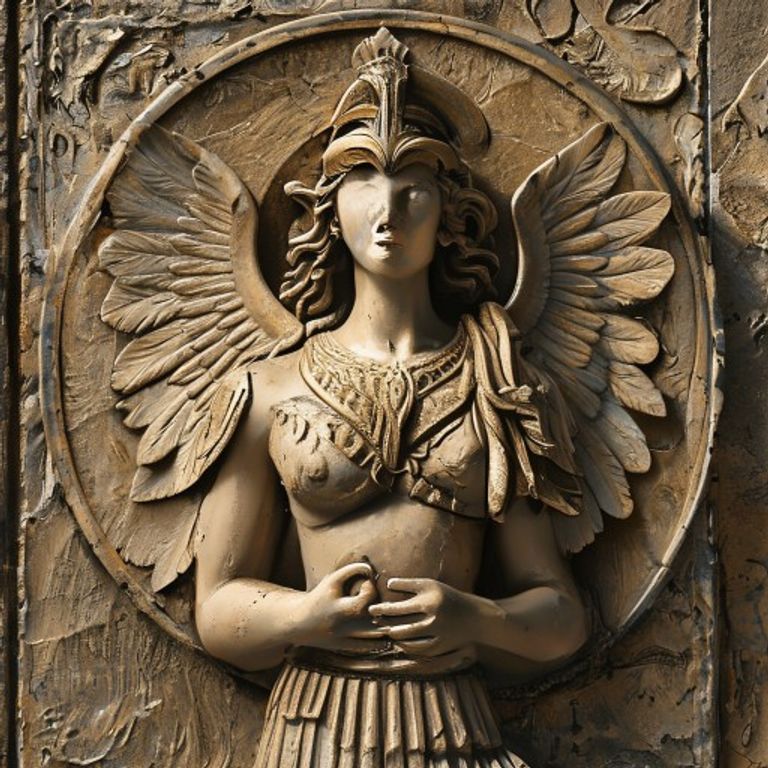
The famous and technologically advanced mythical city described in Plato's dialogues, which allegedly sank into the ocean in a single day and night of misfortune, continues to inspire global underwater hunts.
⚠️ Research elaborated with the aid of Deep Research is subject to referential ambiguity.
🖥️Clean HTML code using a proprietary tool.
👥 Research by Guilherme Felipe, Curation by Sílvio Lôbo
The Enigma of Atlantis: An Investigation into the Myth that Haunts Humanity
For decades, the name Atlantis has evoked images of a lost civilization, of unimaginable technological advancements, and of a cataclysm that submerged it in the ocean depths. More than a mere fairy tale, the story of Atlantis has become one of history's greatest mysteries, fueling fervent debate among archaeologists, historians, geologists, and enthusiasts. This article aims to unravel what is factually proven, what is speculation, and what theories attempt to explain the possible existence and disappearance of this legendary island-continent.
1. The Context and the Incident: Where, When, and How the Mystery Began
The origin of the Atlantis myth dates back to Plato, the renowned Greek philosopher. In his dialogues Timaeus and Critias, written around 360 BC, Plato describes Atlantis as a powerful thalassocracy (maritime power) that existed approximately 9,000 years before his time, meaning about 11,600 years ago.
According to Plato, Atlantis was a large island located beyond the Pillars of Hercules (traditionally identified as the Strait of Gibraltar). The Atlantean civilization was described as highly advanced, possessing rich sources of minerals, including the mysterious orichalcum, a gleaming and valuable metal. Its architecture was grand, with imposing temples and an impressive canal system. The society was ruled by kings descended from the god Poseidon.
The "incident" that marked the end of Atlantis, according to Plato's account, was a cataclysmic event of epic proportions. After a period of moral decline and imperialistic ambition, during which they attempted to invade Athens and the rest of the known world, the gods became enraged. In a single, terrible day and night, violent earthquakes and floods caused the island to sink into the sea, disappearing forever.
It is crucial to note that Plato presents the story of Atlantis as an account passed down through generations, supposedly originating from Egyptian priests who related it to Solon, an Athenian statesman. However, the way Plato narrates it, with vivid details and underlying moralization, raises the question of whether it was a philosophical allegory, a moral fable, or a distorted historical account.
2. Timeline of Events (Based on Plato's Accounts)
The chronological reconstruction of events related to Atlantis is intrinsically linked to the interpretation of Plato's texts, as there are no other contemporary primary sources that corroborate its existence as a proven historical fact.
- Approximately 11,600 BC: According to Plato, Atlantis is founded by the gods and begins its development as a prosperous and technologically advanced power.
- Period of Atlantis's Rise: The civilization flourishes, expands its empire, and demonstrates great skill in engineering, architecture, and metallurgy (including the mysterious orichalcum).
- Moral Decline and Imperialist Ambition: The Atlantean soul becomes corrupted. Seeking to dominate other nations, Atlantis plans and executes a military campaign against Athens and other regions of the Mediterranean.
- The War Against Athens: The Atlanteans face resistance from a virtuous and well-organized Athens, which manages to halt the invasion.
- The Divine Cataclysm: As punishment for their arrogance and wickedness, the gods unleash a colossal natural disaster. Violent earthquakes and devastating floods claim the lives of the Atlanteans and sink the island-continent into the ocean.
- The Disappearance of Atlantis: The island completely vanishes, becoming a legend.
- Approximately 600 BC: Plato, through his dialogues Timaeus and Critias, recounts the story of Atlantis, supposedly based on Egyptian traditions passed down to Solon.
3. Main Theories on the Existence and Disappearance of Atlantis
The absence of concrete archaeological evidence and the allegorical nature of Plato's texts have given rise to a myriad of theories, ranging from scientific rigor to the most audacious speculation.
3.1. Scientific and Archaeological Theories
These theories seek to find factual bases for the myth, either in real geological events or in ancient civilizations that may have inspired Plato.
- The Minoan Theory (Crete): One of the most popular hypotheses suggests that the Minoan civilization, centered on the island of Crete, may have served as inspiration for Atlantis. The Minoan civilization flourished between 2700 and 1450 BC and was known for its advanced architecture, its own writing system, and its maritime dominance. Its decline is linked to the catastrophic eruption of the volcano Thera (Santorini), around 1600 BC, which caused devastating tsunamis and severely affected the region.
- Logic: The eruption of Thera is a proven geological event of massive proportions. The tsunamis could have caused widespread destruction and altered the region's landscape. The advanced Minoan culture, with its writing (Linear A and B) and complex palaces, could have been amplified in later narratives.
- Weaknesses: The chronology does not exactly match the 9,000 years before Plato. The island of Crete, although impacted, did not sink completely.
- The Geology Theory: This hypothesis focuses on geological events that could have led to the disappearance of landmasses. Examples include the flooding of the Black Sea (which occurred about 7,000 years ago, after the end of the last ice age) or the formation of volcanic islands that could have collapsed.
- Logic: Earth is a dynamic planet, subject to extreme geological changes. Large land areas may have been submerged over millennia.
- Weaknesses: Lack of concrete evidence linking these events to a civilization as advanced as the one described by Plato, nor to a location beyond the Pillars of Hercules.
- The South America Hypothesis: Some researchers suggest that Atlantis could have existed in the region of South America, possibly in areas now submerged. Explorer Edgar Cayce, known for his "psychic readings," popularized this idea.
- Logic: It is based on interpretations of ancient texts and supposed "memories" of past lives. The idea is that an advanced civilization could have existed in a part of the world still little explored in Plato's time.
- Weaknesses: Completely devoid of verifiable archaeological or geological evidence. It relies entirely on esoteric interpretations.
- The Antarctica Hypothesis: Another more extravagant theory suggests that Atlantis was, in fact, Antarctica at a time when the continent had a milder climate.
- Logic: It is based on interpretations of ancient maps that supposedly depict Antarctica without ice.
- Weaknesses: Lack of any geological or archaeological evidence to support the existence of an advanced civilization in Antarctica in prehistoric times.
3.2. Alternative, Conspiracy, and Paranormal Theories
These theories tend to embrace the mystery without the constraints of traditional scientific validation, exploring possibilities ranging from technological anachronism to extraterrestrial intervention.
- Atlantis as a Technologically Advanced Civilization (Esoteric): Popular theories in ufology and esotericism propose that Atlantis possessed technologies far beyond our current understanding, including levitation, energy crystals, and even space travel. Its disappearance would be the result of an internal war or a failed experiment.
- Logic: Explains Plato's description of a grand civilization and the possibility of a rapid and total cataclysm. It opens space for speculation about lost knowledge.
- Weaknesses: Total absence of any reliable physical evidence or testimony. Based on beliefs and unverifiable interpretations.
- The Philosophical Allegory Theory: The explanation most accepted by many academics is that Plato used the story of Atlantis as a philosophical allegory. Atlantis would represent an ideal state corrupted by ambition and power, in contrast to a virtuous and democratic Athens.
- Logic: Plato was known for using myths and allegories to illustrate his philosophical points. The story of Atlantis serves as a moral tale about the dangers of arrogance and decadence.
- Weaknesses: If it is an allegory, then the search for a physical location would be fruitless. However, the richness of detail described by Plato may have been inspired by something real.
- The Conspiracy of Silence: Some conspiracy theories suggest that the existence of Atlantis is a known fact by certain elites (governments, secret societies) who actively suppress evidence to maintain control of knowledge.
- Logic: Attempts to explain the lack of discoveries despite expeditions.
- Weaknesses: Without any factual basis, relying on assumptions about global information control.
4. Controversies and Blind Spots in Official Investigations
The investigation into Atlantis is marked by controversies and "blind spots" that hinder the consolidation of scientific consensus.
- The Lack of Concrete Archaeological Evidence: Despite numerous expeditions in potential locations (in the Mediterranean, the Atlantic, the Caribbean, etc.), no definitive archaeological discovery has been made that proves the existence of a civilization as advanced as the one described by Plato.
- The Interpretation of Plato's Texts: The nature of Plato's dialogues – whether they are history, allegory, or a combination – is a constant point of contention. The absence of other contemporary primary sources that corroborate Plato's accounts is a significant obstacle.
- The Anachronistic Chronology: The dating of 11,600 years ago for Atlantis, as reported by Plato, places the civilization in a remote prehistoric period, before the development of many of the technologies and social structures he describes. This raises doubts about historical plausibility.
- Ignored Clues and Disappeared Evidence: Over the decades, reports have emerged of promising discoveries that, for some reason, were not properly investigated or whose evidence "disappeared." Frequently, these reports are mixed with conspiracy theories.
- Conflicting Testimonies: In expeditions and research, different researchers have presented divergent interpretations of findings, or even of witness accounts that, when confronted, could not sustain their original claims.
- The Influence of Mythology and Folklore: It is difficult to separate what may have been a factual inspiration for Plato from the mythological and folkloric substratum that permeated ancient cultures. Many elements described by Plato may be echoes of existing creation and destruction myths.
5. Curiosities and Legacy: The Cultural Impact of Atlantis
The legacy of Atlantis transcends academic debate and has become a pillar of popular culture, influencing literature, cinema, games, and collective imagination itself.
- Inspiration for Science Fiction and Fantasy: The idea of a lost and advanced civilization has fueled countless works of fiction, from adventure novels to fantasy epics and science fiction. The archetype of the "lost continent" has become a recurring theme.
- Explorations and Expeditions: The search for Atlantis has inspired numerous underwater and terrestrial expeditions, driving the development of exploration technologies and deepening our knowledge of the ocean and submerged archaeological sites.
- Symbol of Perfection and Catastrophe: Atlantis represents, for many, an ideal civilization that was tragically destroyed, serving as a warning about the fragility of societies and the dangers of excessive ambition.
- The Current Status of the Case: The "Case of Atlantis" is not a case in the police or judicial sense that can be reopened or shelved. It is a historical mystery and an ongoing debate. Research and speculation about its possible location and origin continue, although the predominant scientific community tends to consider it a Platonic allegory.
- The Continuous Search for Answers: Even if most scientists dismiss the literal existence of Atlantis, the question of what inspired Plato, and whether there were ancient civilizations whose achievements were distorted and amplified in later narratives, continues to intrigue. Geological and archaeological research in potential locations, such as the Mediterranean region and areas affected by major cataclysms, continues in search of clues that may shed light on this millennia-old enigma.
The story of Atlantis, regardless of its factual veracity, resonates deeply within us. It speaks of humanity's quest for knowledge, the fascination with the unknown, and the awareness of the ephemerality of great civilizations. The mystery endures, a reminder that the Earth holds secrets we may never fully unravel.



