


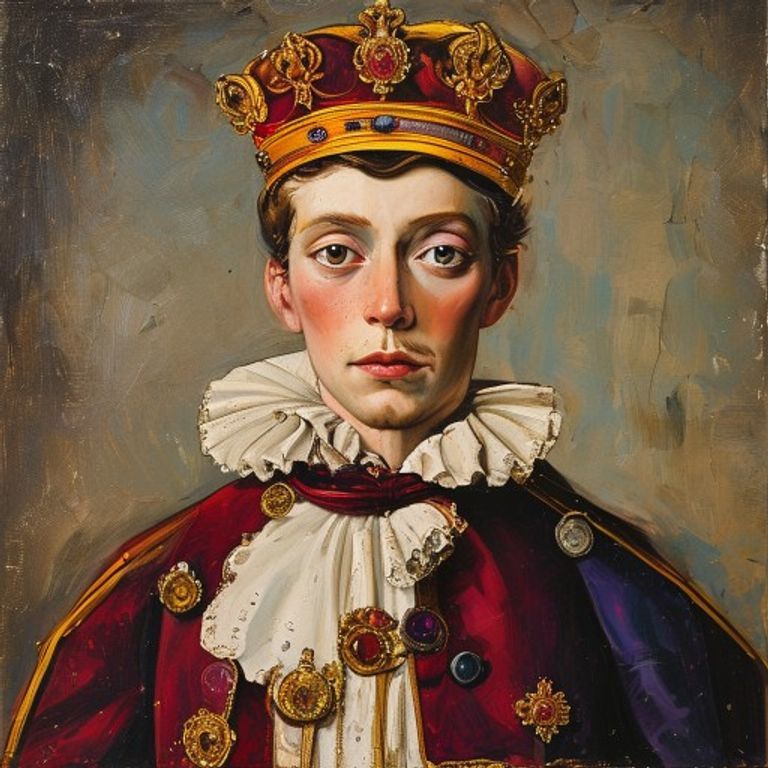
A pioneer of cinema disappeared without a trace after boarding a moving train in 19th-century France.
⚠️ Research conducted with the assistance of Deep Research may be subject to referential ambiguity.
🖥️Clean HTML code using a proprietary tool.
👥 Research by Guilherme Felipe, Curation by Sílvio Lôbo
The Enigma of Louis Le Prince: The Disappeared Father of Cinema
In the twilight of the 19th century, a visionary figure was on the verge of revolutionizing how we perceive time and motion. Louis Le Prince, a French inventor residing in England, is widely recognized as the pioneer of cinematic technology, having created the first moving images in 1888. However, Le Prince's promising trajectory was abruptly cut short by a mysterious disappearance that, to this day, casts a shadow over the history of cinema and fuels speculation of conspiracy and tragedy.
1. The Context and the Incident: A Farewell That Never Happened
The year was 1890. Louis Le Prince was preparing to present his latest innovation to the world: a more advanced film projector capable of displaying his creations to a larger audience. To this end, he planned to travel to the United States, where he hoped to secure the necessary funding to commercialize his invention. On September 16, 1890, Le Prince boarded a train at the Dijon station in France, bound for Paris, from where he would depart for London and then America.
The purpose of the trip was to visit his brother, Albert Le Prince, in Dijon, before heading to London to meet his children, Adolphe and Marie, who were studying in England. According to reports, he intended to make a brief stop in Dijon and continue his journey to Paris the following day. However, he never arrived in Paris. The passenger who was supposed to board in Dijon vanished without a trace, and his journey to the United States, and into history, never materialized.
2. Timeline of Events
- October 1888: Louis Le Prince films his first moving images, such as "Roundhay Garden Scene" and "Leeds Bridge."
- August 1890: Le Prince demonstrates his system in London, attracting the attention of investors.
- September 16, 1890: Le Prince departs from Dijon for Paris, with the intention of subsequently traveling to the United States. This is the last time he is seen by eyewitnesses.
- September 18, 1890: Le Prince's family in London begins to worry about his silence.
- October 1890: The French police initiate an investigation but find few clues. Le Prince's body is never found.
- 1891: Le Prince's children, Adolphe and Marie, attempt to retrieve his belongings and documents, but without success.
- Later Years: Le Prince's invention is overshadowed by the work of other inventors, such as the Lumière brothers and Thomas Edison, who gain greater recognition and patenting.
3. The Main Theories
The absence of a body and concrete evidence has opened a range of possibilities, from the most prosaic to the most fantastic. We analyze the most prominent hypotheses here:
a) Accidental Death or Suicide
This is perhaps the most straightforward theory, although it lacks definitive proof. The idea is that Le Prince, for some personal or financial reason, may have suffered an accident during his journey or chosen to end his own life. However, there are no records indicating he suffered from depression or was in significant financial difficulty at the time, and his apparent excitement about the trip to the US contradicts a picture of despair.
b) Planned Murder
This is the theory that fuels the mystery the most. Several suspects and motives have been raised:
- Rivals in the Film Industry: The most popular hypothesis suggests that Le Prince's competitors, possibly linked to Thomas Edison, had an interest in silencing the inventor to gain control of cinematic technology. Edison had already shown interest in developing a similar device and had faced Le Prince in patent disputes in the future. The idea is that Le Prince was murdered to prevent him from presenting his revolutionary projector.
- Crimes of Opportunity: A common robbery or a crime of passion cannot be entirely ruled out, although there is no evidence pointing to such a scenario. The discreet nature of his disappearance, without signs of struggle or theft, weakens this hypothesis.
- Family Involvement: Some speculations, though less substantiated and harder to accept, have even suggested the involvement of his own family, perhaps due to financial disputes or inheritance. Le Prince's son, Adolphe, was involved in patent issues after his father's disappearance, which fuels some of these conspiracy theories.
Proven Fact: The French police conducted searches and interrogations but found no evidence of murder. Reports from the time indicate a lack of any solid clues.
c) Voluntary Escape and Change of Identity
An alternative theory suggests that Le Prince, for unknown reasons (perhaps to avoid debts, pursuers, or simply to start a new life), orchestrated his own disappearance. This would explain the absence of a body and the possibility that he continued to live elsewhere under a new identity. However, this hypothesis would require an unusual level of planning and discretion for the time, and there are no records to support it.
d) Bizarre Accident and Memory Loss
Less common, but not impossible, is the idea of an accident that resulted in amnesia or a state of confusion that prevented Le Prince from identifying himself or returning to his normal life. However, this would not explain the lack of any trace of him after boarding the train.
e) Paranormal or Supernatural Theories
In cases of deep and unresolved mystery, the inexplicable often gives way to paranormal explanations. Although lacking any scientific basis, theories have emerged that Le Prince was abducted by aliens or involved in some kind of temporal experiment that caused him to disappear from our reality. These hypotheses are purely speculative and based on beliefs, not investigative facts.
4. Controversies and Blind Spots
The official investigation into Louis Le Prince's disappearance is marked by flaws and omissions, fueling conspiracy theories:
- Lack of Comprehensive Searches: The searches conducted by the French police were limited and yielded no concrete clues. The absence of a body suggests that the searches may not have been efficient enough or that the disappearance occurred in a hard-to-reach location or one that was never considered.
- Edison's Pressure?: Persistent rumors suggest that Thomas Edison may have exerted influence to hinder the investigation or to prevent Le Prince from presenting his work. However, there is no declassified official documentation to prove such interference.
- Inconsistent Reports: Some accounts of Le Prince's final days present minor inconsistencies, which may have made it difficult to form a clear picture of events. The lack of direct witnesses to the exact moment of his disappearance is a crucial point.
- The Adolphe Le Prince Case: Years after his father's disappearance, Adolphe Le Prince, his son, became involved in a legal dispute with the Edison Company over patents related to the cinematograph. Some historians view this dispute as an indication that the Edison Company might have had an interest in discrediting or eliminating Le Prince, or that Adolphe might have had information about his father's fate. However, there is no definitive proof that Adolphe was involved in his father's death or disappearance, or that Edison was actively involved in a murder plot.
- Lost Evidence: It is possible that crucial documents for solving the case have been lost over time, whether due to negligence, intentional destruction, or simply the passage of years.
5. Curiosities and Legacy
Louis Le Prince's disappearance not only prematurely ended the career of a genius inventor but also cast a shadow over the paternity of cinema. His achievements, such as the first moving images, were overshadowed by the work of other inventors who managed to patent and commercialize their technologies. This historical irony adds a layer of tragedy to the mystery.
Current Status: The case of Louis Le Prince remains officially unsolved. Although it has not been formally reopened due to a lack of new evidence, the fascination with the mystery has never diminished. Historians, filmmakers, and enthusiasts continue to investigate and debate the few available clues, seeking to unravel what truly happened to the man who took the first steps towards the art form that would shape the 20th century.
Le Prince's legacy, despite being obscured by his disappearance, is undeniable. His early films, preserved in archives, are a testament to his genius and a glimpse into the future he was about to create. The enigma of his end, however, continues to be one of the most intriguing unsolved stories in the history of technology and art.



