


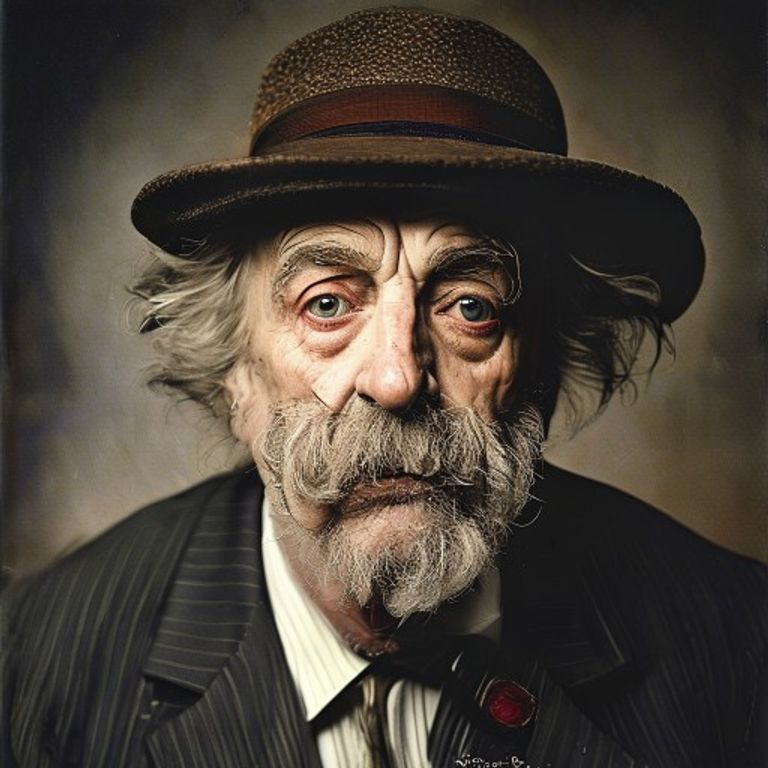
The British doctor convicted of killing fifteen of his elderly patients with morphine, although subsequent investigations estimate he may have caused over two hundred deaths.
⚠️ Research prepared with the aid of Deep Research is subject to referential ambiguity.
🖥️ Clean HTML code using a proprietary tool.
👥 Research by Guilherme Felipe, Curation by Sílvio Lôbo
The Doctor of Death: Deciphering the Enigma of Harold Shipman
In an era where medical science boasts unprecedented advances and trust in healthcare institutions is a pillar of society, the case of Harold Shipman erupts like a sinister shadow, challenging our understanding of human nature and the efficacy of control systems. What appeared to be a simple case of medical misconduct evolved into one of the greatest serial murder scandals in modern history, leaving a trail of doubt and a legacy of terror.
1. The Context and the Incident: The Shadow in Hyde
The epicenter of the Harold Shipman mystery lies in the quiet town of Hyde, in Greater Manchester, England. For decades, Shipman, an apparently respected and dedicated family doctor, managed the healthcare of thousands of patients. However, the apparent normalcy hid a macabre secret. The "incident" that triggered the official investigation was not an isolated event, but rather an accumulation of suspicions that, for years, were conveniently ignored or misinterpreted.
The first sparks of distrust emerged around the late 1990s, when an alarmingly high number of deaths among Shipman's patients began to catch the attention of other healthcare professionals and local authorities. The way these deaths occurred, often sudden and without clear medical explanations for the grieving families, began to weave a web of speculation.
2. Timeline of Events: The Dark Chronology
Reconstructing the events that led to the discovery and conviction of Harold Shipman is crucial to understanding the magnitude of his reign of terror and the systemic failures that allowed him to continue for so long.
- 1970s-1990s: Harold Shipman establishes his medical practice in Hyde, gradually gaining the community's trust. During this period, it is presumed he began administering lethal doses of substances to his patients.
- Mid-1990s: An increasing number of deaths of Shipman's patients, often elderly and previously healthy, begins to raise suspicions among other doctors and the coroner's office.
- March 1998: Assistant doctor Linda Reynolds expresses concerns about the high mortality rate among Shipman's patients and the frequency with which he was the last to see them before they died.
- April 1998: The police initiate a preliminary investigation, but initially focus on a possible case of medical malpractice.
- June 1998: The death of Kathleen Grundy, an 81-year-old patient, becomes a turning point. Shipman is the doctor who declares her death. A subsequent will, left by Grundy, names Shipman as the primary beneficiary of her fortune, which raises serious red flags.
- September 1998: Shipman is arrested and formally charged with murder.
- January 2000: The trial of Harold Shipman begins. He is charged with 15 murders, but evidence suggests a much higher number.
- November 2000: Shipman is convicted of 15 murders and sentenced to life imprisonment without the possibility of parole. The court suggests he may have been responsible for up to 200 deaths.
- January 2004: Harold Shipman dies in his prison cell at age 57, under circumstances many still consider suspicious, allegedly by suicide.
3. Main Theories: Unraveling the Motivations
The motivations behind Harold Shipman's heinous acts remain one of the most enigmatic and debated aspects of the case. Several theories have been proposed, ranging from forensic and psychological explanations to darker, conspiratorial speculations.
Official and Forensic Theories:
- The Power of the Drug: The theory most accepted by authorities and confirmed by forensic analysis is that Shipman used his position and medical knowledge to administer lethal doses of opiates, such as morphine, to his patients. The speed at which death occurred and the lack of obvious signs made post-mortem discovery extremely difficult. Forensic reports, including the analysis of tissue samples and medical records, corroborated the use of such substances.
- The Will as a Trigger: In the specific case of Kathleen Grundy, the theory is that Shipman murdered her to gain control over her substantial inheritance. The discovery of the will, which benefited him directly, was the cornerstone of his arrest. This theory suggests a financial motive for at least some of his actions.
Psychological and Behavioral Theories:
- Munchausen Syndrome by Proxy (Inverted): Some psychiatrists and criminologists speculate that Shipman may have suffered from an inverted form of Munchausen Syndrome by Proxy, where the individual causes harm to others to gain medical attention and admiration, or to exercise control. The apparent satisfaction in being the "savior" and the last to see patients in their final moments could fuel this psychological need.
- Egomania and Absolute Control: Another line of thought suggests that Shipman was driven by a deep sense of egomania and an insatiable desire for control. The ability to decide on the life and death of his patients, without being detected, may have fueled a superiority complex and a feeling of omnipotence.
- The Pathology of Evil: In its rawest form, some argue that Shipman simply possessed a predisposition for evil, a latent sadism that found fertile ground to manifest within the trust and anonymity provided by his profession. The apparent lack of remorse in his statements reinforces this possibility.
Alternative and Conspiracy Theories:
- Involvement of Other Doctors or Pharmacists: Although there is no concrete evidence, less substantiated speculations suggest that Shipman could have had accomplices, such as other healthcare professionals or even pharmacists who provided the means for his crimes without questioning.
- A "Consortium" of Murders: Some bolder conspiracy theories suggest that Shipman may have been part of a larger group of killers, or that his actions were facilitated by a hidden network. These theories lack any factual basis and are widely dismissed by experts.
- Paranormal/Supernatural Phenomena (Highly Speculative): Although extremely unlikely and without any scientific support, in cases of deep mystery, some esoteric speculations can arise. However, in this context, the explanation lies firmly in the realm of psychopathy and human criminality.
4. Controversies and Blind Spots: Failures in the Safety Net
One of the most disturbing aspects of the Harold Shipman case is not just his acts, but the systemic failures that allowed them to persist for so long. Several blind spots and inconsistencies raised questions about the efficacy of initial investigations and medical oversight.
- The Absence of an Effective Alert System: The fact that multiple doctors and coroners expressed concerns about the deaths of Shipman's patients without a more robust investigation being initiated at an earlier stage is a serious failure. The lack of an integrated communication and alert mechanism between healthcare professionals and authorities was a crucial blind spot.
- The Difficulty in Investigating Natural Deaths: The presumption that the deaths of elderly patients and those with pre-existing medical conditions were natural made it difficult to identify a pattern. The discreet nature of Shipman's methods, which left no obvious traces, made the task even more challenging for coroners.
- The Will as the Only Initial Clue: The investigation initially focused on the case of Kathleen Grundy due to the suspicious will. The extent of the crimes was only revealed as other victims' families came forward with their own suspicions, which indicates that, without this specific element, Shipman could have remained unpunished for longer.
- Evidence Removed or Destroyed: Although not officially confirmed, the concern about the possible destruction of evidence by Shipman over the years is a possibility. His medical knowledge could have allowed him to eliminate incriminating traces.
- The Role of the Medical Society: There was criticism regarding the initial resistance of some sectors of the medical community to accept the possibility that one of their peers could be a serial killer. The defense of the profession and the initial shock may have delayed action.
5. Curiosities and Legacy: The Scar on Public Consciousness
The Harold Shipman case left an indelible mark on British society and the global imagination. His legacy is a grim reminder of the fragility of trust and the human capacity for evil.
- The Deadliest Doctor: Harold Shipman is widely considered the most prolific serial killer in the United Kingdom, and one of the most notorious in the world. The number of his potential victims is estimated in the hundreds, surpassing many criminals who have become notorious.
- The "Shipman Report": After his conviction, an extensive investigative report, known as the "Shipman Report," was published. It detailed the circumstances of his deaths, the systemic failures, and made recommendations to prevent future cases. This report is a crucial document for understanding the magnitude of the case.
- Impact on Legislation and Medical Oversight: The case led to significant reforms in death registration laws, procedures for investigating suspicious deaths, and the oversight of doctors in the United Kingdom. The creation of a more robust alert system and the emphasis on communication between healthcare professionals were direct results.
- The Fear in Hyde: For the community of Hyde, Shipman's legacy is one of fear and distrust. The idea that a doctor, in whom they placed their lives, was actually a predator, generated a deep trauma that persists to this day.
- Current Status: The Harold Shipman case is considered a solved crime in terms of his conviction and death. However, the exact number of his victims and the totality of his motivations may forever remain shrouded in a veil of mystery, fueling the fascination and horror that surround him. The case has not been reopened, but it serves as a permanent reference point for the study of serial crimes and systemic failures.
The Harold Shipman case forces us to confront the darkness that can reside beneath the most respectable facade. It reminds us that the truth, however shocking, often lies between the lines, in silent doubts, and in the failures of our own institutions. The shadow of the "Doctor of Death" looms as a grim warning, a reminder that vigilance and distrust, in healthy doses, are essential tools for the protection of society.



