


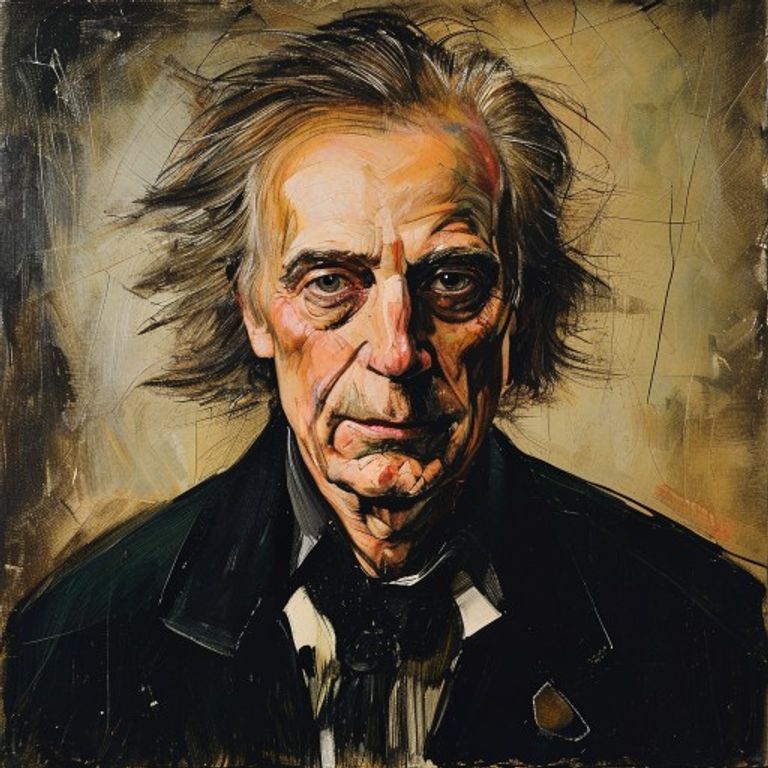
The legendary music producer convicted of the murder of actress Lana Clarkson at his mansion in 2003, claiming she had committed accidental suicide.
⚠️ Research conducted with the aid of Deep Research is subject to referential ambiguity.
🖥️ Clean HTML code using a proprietary tool.
👥 Research by Guilherme Felipe, Curation by Sílvio Lôbo
The Murmur of the Pot of Gold: The Enigmatic Case of Lana Clarkson and Phil Spector
The night of February 3, 2003, at the gates of Phil Spector's opulent mansion in Alhambra, California, became the stage for one of the darkest mysteries in the music industry. The death of actress Lana Clarkson, then 40, under circumstances that the iconic music producer described as accidental, cast an indelible shadow over Spector's reputation and left behind a trail of unanswered questions, despite a long and troubled legal process.
Timeline of Events: A Crucial Account
- Early Night, February 3, 2003: Lana Clarkson, facing financial and professional difficulties, is seen in public for the last time, frequenting the House of Blues bar in West Hollywood. Witnesses state that she met Phil Spector at the venue.
- Early Morning, February 4, 2003: Around 5 a.m., Alhambra police receive an anonymous call from inside Spector's mansion. Upon arrival, they find the lifeless body of Lana Clarkson in the foyer chair, with a gunshot wound to the mouth. Phil Spector is found in the same room, holding a gun.
- Initial Investigation: Phil Spector is detained. He claims that Clarkson "kissed the gun" and that the shooting was accidental. The weapon, a .38 Special pistol, is seized.
- Statements and Testimony: Spector's drivers and employees are questioned. One of his drivers, Leonardo Daidone, reports hearing three gunshots and being instructed by Spector to tell the police that Clarkson had shot herself.
- Years of Investigation and Trials: The case drags on for years, marked by delayed trials, jury changes, and an atmosphere of intense media speculation.
- Second Trial, 2009: After an inconclusive first trial in 2007, Phil Spector is finally convicted of the involuntary manslaughter of Lana Clarkson.
- Sentencing and Death: Phil Spector is sentenced to 19 years in prison. He passes away on January 16, 2021, at a hospital in Stockton, California, while serving his sentence.
The Main Theories: Unraveling the Enigma
The complexity of the Spector case allows for a range of interpretations, from the most factual to the most fantastic. Rigorous analysis, however, must separate what is proven from what is inferred.
Official Theory: Involuntary Manslaughter
The theory that prevailed in the trial is that Phil Spector shot Lana Clarkson unintentionally during an argument or a moment of emotional instability. The presence of the gun in his hand and reports of gunshots heard by witnesses support this hypothesis. The idea of a "kiss on the gun" is viewed by the prosecution as an invention to mask a violent act, even if not intentionally lethal.
Autopsy and Forensic Theory: The Improbable Accident
Spector's defense, during the trials, attempted to argue that the nature of Clarkson's wound, with the bullet penetrating deeply into the mouth, could indicate a self-inflicted shot. However, forensic reports, especially those analyzing the distance of the shot and the bullet's trajectory, were crucial for the prosecution, indicating that a point-blank shot fired by Clarkson at herself was less likely given the body's position and the amount of gunpowder found on her hands (considered by some to be insufficient for a self-inflicted shot). The force of the shot, capable of propelling the bullet with the observed energy, is also a key point.
Conspiracy and Coercion Theory: The Power of Silence
This theory, often raised by Spector's defenders or those skeptical of the justice system, suggests that the official narrative may have been influenced by the producer's fame. The hypothesis is that the official investigation may have been incomplete, with clues ignored or manipulated to reach a conclusion that "served" the public narrative, or that there was pressure to close the case quickly. However, the lack of concrete evidence supporting deliberate manipulation makes this a difficult speculation to prove.
Paranormal or Supernatural Theory: Echoes of the Mansion
Spector's mansion, like many old and opulent residences, was the scene of various stories and rumors. Some theorize about the influence of "forces" or "energies" in the fatality, speculations that find no support in any physical or scientific evidence, but which fuel the mystical and dark aura surrounding the case.
Controversies and Blind Spots: Cracks in the Official Narrative
The investigation and trials that followed the Spector case were filled with controversies that made it difficult to obtain an absolute truth:
- The Anonymous Call: The origin and exact content of the call that alerted the police remain obscure. The lack of clarity about who called and what was said initially may have influenced the first moments of the investigation.
- Evidence of Prior Violence: Reports from other women who claimed to have been assaulted or threatened by Spector throughout his life were presented as evidence of his violent temper. The admission of these witnesses, while relevant to the defendant's character, brought debates about their impact on determining guilt in Clarkson's specific case.
- The Murder Weapon: Although the weapon was recovered, the detailed forensic analysis of its possession and handling by Spector and Clarkson before the fatal shot was the subject of intense debate among experts, with divergent conclusions on some points.
- The Driver's Testimony: The statement by Leonardo Daidone, Spector's driver, about being instructed to lie to the police, was a crucial point for the prosecution. However, his credibility and the accuracy of his memories were questioned by the defense.
- The "Famous" Absence of Fingerprints: The alleged absence of Clarkson's fingerprints on the gun, or the small amount of them, was a point of contention. The defense argued that this indicated she did not handle it, while the prosecution maintained that the absence could be explained by the nature of the event and the cleaning that might have occurred.
Curiosities and Legacy: An Echo That Does Not Cease
The Phil Spector case transcended the courts, becoming a landmark in popular culture and a case study in law and journalism:
- The Threatened Musical Legacy: Phil Spector was a musical genius, creator of the "Wall of Sound," responsible for hits by artists such as The Ronettes, Ike & Tina Turner, and John Lennon. His death and the scandal that surrounded him cast a permanent shadow over this work, forcing the public to confront genius with tragedy.
- The Impact on Clarkson's Career: Lana Clarkson, despite having had a modest career in Hollywood, with appearances in low-budget films and TV series, involuntarily became the face of one of the most talked-about mysteries in the entertainment industry.
- The Symbolization of the "Hollywood Curse": For many, the Spector case personified the dangers and excesses of life in Hollywood, where glamour can mask darkness and self-destruction.
- The End of an Era: The conviction and subsequent imprisonment of Spector marked a dark final point for a figure who shaped the popular music of the 20th century. His legacy is now inextricably linked to the memory of Lana Clarkson and the controversy that surrounded his final moments.
- The Continuity of the Mystery: Despite the conviction, the "murmur" surrounding what really happened that night at Spector's mansion has not completely dissipated. The complex nature of the evidence, the conflicting narratives, and the enigmatic personality of Phil Spector himself ensure that the case continues to be a topic of fascination and debate, a dark reminder that not all historical mysteries receive a complete and satisfactory resolution.



