


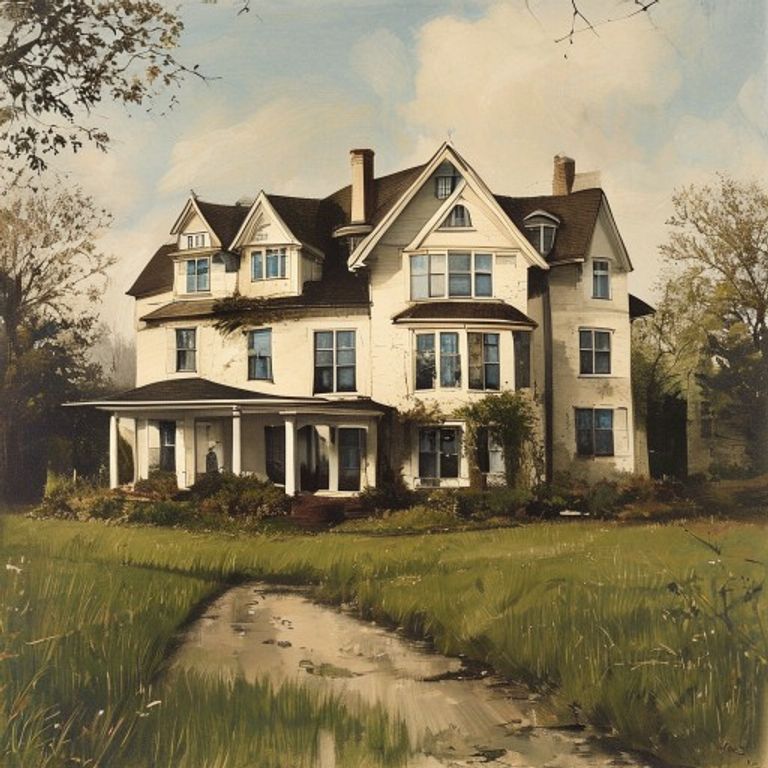
A family fled their newly purchased home in New York weeks after moving in, claiming to have been terrorized by demonic phenomena.
⚠️ Research conducted with the assistance of Deep Research is subject to referential ambiguity.
🖥️Clean HTML code using a proprietary tool.
👥 Research by Guilherme Felipe, Curation by Sílvio Lôbo
The Amityville Mystery: The House That Whispers Secrets
On November 13, 1974, the quiet town of Amityville, on Long Island, New York, was the scene of a brutal crime that, decades later, continues to echo as one of the most chilling unsolved mysteries in American history. The mass murder of the DeFeo family cast a sinister shadow over the charming house at 112 Ocean Avenue, turning it into a magnet for the supernatural and opening an abyss of speculation about the truth behind the events.
1. The Context and the Incident: Where, When, and How the Mystery Began
The crime occurred in the early morning of November 13, 1974. Ronald DeFeo Jr., then 23 years old, shot and killed his parents, Ronald DeFeo Sr. and Louise DeFeo, and his four younger siblings: Dawn, Allison, Marc, and John. The victims were found in their respective bedrooms, killed by rifle shots from a .35 caliber rifle. What made the case instantly grim was not just the brutality of the act, but the apparent lack of resistance from the victims, who, according to forensic reports, were killed while sleeping. Ronald DeFeo Jr. himself was later arrested and convicted of the murders.
The mystery, however, truly began to form in December 1975, when the Lutz family, consisting of George, Kathy, and their three children, bought the house at a significantly low price. Just over a month after moving in, in January 1976, the Lutzes hastily abandoned the residence, claiming they were being terrorized by supernatural forces. Their allegations, detailed later in the book "The Amityville Horror" by Jay Anson, catapulted the case to international stardom, adding a layer of paranormal terror to the original tragedy.
2. Timeline of Key Events
- November 13, 1974: Mass murders of the DeFeo family at 112 Ocean Avenue.
- 1975: Ronald DeFeo Jr. is tried and convicted of the six murders.
- December 1975: The Lutz family purchases the house.
- January 1976: The Lutzes abandon the house after claiming paranormal experiences.
- 1977: Publication of "The Amityville Horror" by Jay Anson, detailing the alleged experiences of the Lutz family.
- Following Years: Numerous books, films, and documentaries explore the case, solidifying Amityville's status as a landmark of supernatural horror.
3. Main Theories
The Amityville case is divided into two distinct narratives, each with its own theories and explanations:
Theories about the DeFeo Murders (Proven Facts and Police Hypotheses)
- Official Theory (Confession and Conviction of Ronald DeFeo Jr.): The most straightforward explanation, supported by forensic evidence and the trial, is that Ronald DeFeo Jr. was the sole perpetrator of the murders. The motive alleged by the prosecution and corroborated by the defense at times was DeFeo Jr.'s desire to inherit the family fortune and, possibly, involvement with the mafia. Police reports describe the crime scene and DeFeo Jr.'s subsequent confession.
- Theory of Involvement of Other People: Despite DeFeo Jr.'s conviction, rumors and some statements from family members and friends suggest the possibility of accomplices, or even that DeFeo Jr. did not act alone. The speed and precision with which the murders occurred raise questions about his solitary capacity.
- Theory of an External Enemy/Mafia: A speculative line of investigation, which was never proven, suggests that the murders may have originated from criminal activities of the father, Ronald DeFeo Sr., and that DeFeo Jr. may have been used or pressured.
Theories about the Paranormal Events at the Lutz House (Speculation and Paranormal Narrative)
- Supernatural/Demonic Theory (Lutz Narrative): The main theory propagated by the Lutzes and immortalized in Anson's book. They describe a series of terrifying events: demonic voices, apparitions, moving objects, drastic temperature changes, inexplicable flies, and a malevolent presence that forced them to flee. This theory is based on the belief that the house was built on an ancient Native American sacrifice site or the scene of other tragic events that created negative energy.
- Fraud/Profit Theory: This is the most skeptical and widely accepted hypothesis outside the circle of supernatural believers. It is argued that the Lutz story was fabricated or exaggerated for profit from the book and its adaptations. Jay Anson, the author, for example, had never written a book before. There are reports that the Lutzes admitted, in private conversations, that the story contained fictional elements.
Psychological Trauma and Suggestion Theory: Another rational explanation is that the Lutz family, already under the stress of moving into a house marked by a violent crime, was influenced by the publicity itself and the inherent fear of the location. Fear, combined with suggestion, could have led to altered perceptions and interpretations of everyday events as supernatural.Geographic Location Influence Theory (Winds and Currents): Some researchers have investigated geological or atmospheric anomalies in the area that could have generated strange phenomena, such as unusual noises or temperature variations, which were misinterpreted.
4. Controversies and Blind Spots
The Amityville case is rife with inconsistencies and gray areas that fuel debate to this day:
- Conflicting Testimonies: Over the years, some members of the DeFeo family and even friends of the Lutzes have presented slightly different versions of events, raising doubts about the complete truthfulness of all narratives.
- Admission of Fabrication: Reports suggest that, in private conversations, the Lutzes themselves admitted to exaggerating or inventing some of the paranormal events to make the story more marketable.
- Lack of Concrete Evidence for the Supernatural: Despite the Lutzes' claims, there has never been incontestable physical or scientific evidence proving the presence of paranormal forces in the house. Most of the "evidence" presented by the Lutzes were subjective accounts.
- Ignorance of Initial Clues: At the time of the DeFeo murders, the police investigation focused on finding the culprit within the family. The possibility of external influences or a deeper disturbance in the house was not widely explored at the time, until the Lutzes brought the paranormal narrative to light.
The Story of the Lutz's Dog: In some versions of the story, the Lutz family dog, Harry, reacted aggressively to an invisible presence in the house. However, later reports and testimonies contradict the intensity or constant occurrence of these reactions.
5. Curiosities and Legacy
The cultural impact of the Amityville Case is undeniable. The story transcended real crime and paranormal narrative to become an icon of pop culture horror.
- The Book and Film Phenomenon: "The Amityville Horror" became an international bestseller, spawning a film franchise that explores the house and its alleged curses. The 1979 film, starring James Brolin and Margot Kidder, is a classic of the horror genre.
- The House's Status: The house at 112 Ocean Avenue has changed owners several times since the events. Its new residents have generally tried to maintain a low profile, away from the harassment of curious onlookers and ghost hunters. The house's appearance has been altered over the years to try to "rid" itself of its sinister association, but the myth persists.
- The Legacy of Doubt: The Amityville Case exemplifies humanity's fascination with the inexplicable and the thin line between objective reality and subjective perception. It continues to be a fascinating case study for investigators, psychologists, and paranormal enthusiasts, serving as a reminder that, sometimes, the truth is stranger (or more convenient) than fiction.
Reopening or Shelving: The original DeFeo murder case was resolved with the conviction of Ronald DeFeo Jr. However, the paranormal aspect of the case was never officially investigated by law enforcement authorities as a supernatural event, remaining in the realm of speculation and popular belief. There are no official reports of the case being reopened to investigate the paranormal events.
The Amityville Case is a complex mosaic of human tragedy, police mystery, and, for many, supernatural horror. The house at 112 Ocean Avenue may have changed owners and appearance, but the whispers of its dark past seem to have never completely silenced.



