


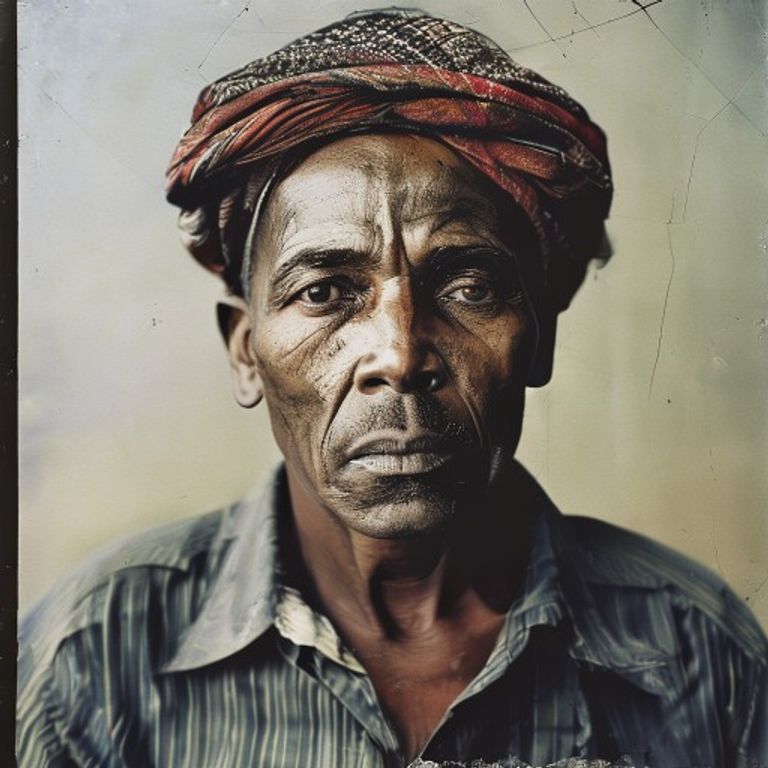
The institutionalized racial segregation regime that was in force between 1948 and 1994, depriving the black majority of basic political and social rights.
⚠️ Research prepared with the aid of Deep Research is subject to referential ambiguity.
🖥️ Clean HTML code using a proprietary tool.
👥 Research by Guilherme Felipe, Curation by Sílvio Lôbo
The Silenced Enigma: Unraveling the "Apartheid Case" in South Africa
By [Your Name], Senior Investigative Journalist. South Africa, the stage for one of the most brutally segregationist regimes of the 20th century, holds in its archives not only the painful history of Apartheid but also mysteries that defy logic and investigation. Among them, the "Apartheid Case" – a generic term that encompasses a constellation of crimes, disappearances, and injustices that, in many respects, remain unsolved, echoing like a ghost in the pages of recent history. This article aims to delve into the intricacies of one of these enigmas, focusing on a specific incident that encapsulates the opacity and violence of the era, and which, despite years of investigations and truth commissions, still leaves questions without definitive answers.
1. The Context and the Incident: Where, When, and How the Mystery Began
The mystery in question does not refer to a single isolated event, but to a pattern of systematic repression that characterized the Apartheid regime. However, an emblematic case that served as a trigger for many investigations and the subsequent search for justice was that of the disappearances and murders of anti-apartheid activists, perpetrated by state security forces, often under the aegis of covert operations. In a context of intense political repression, draconian laws, and an intrinsically biased judicial system, resistance to the regime was met with relentless brutality. The period between the 1960s and 1980s was particularly dark, with the State employing tactics of intimidation, torture, murder, and forced disappearance to silence any opposition. The incident outlined here, although it cannot be attributed to a single moment, is the story of families who, after decades, are still searching for the whereabouts of loved ones, and of a State that, in many cases, failed to provide complete answers. The mystery is not in *whether* the crimes happened – these are facts proven by countless reports and testimonies – but rather in the identity of the perpetrators in many cases, in the exact motivations behind certain actions, and in the final location of many of the disappeared.
2. Timeline of Key Events
Reconstructing a timeline for the "Apartheid Case" is a challenge due to its diffuse nature. However, we can outline a general overview of the events that led to the creation of an environment conducive to these mysteries: * 1948: The National Party comes to power and formally implements the Apartheid system, deepening racial segregation and political repression. * 1960s-1980s: Peak period of state violence. Political activists, such as members of the African National Congress (ANC) and other resistance movements, are targets of arbitrary arrests, torture, murders, and disappearances. Covert operations by units such as the Special State Security Force are widely documented as being responsible for many of these acts. * 1990: The South African government, under international and internal pressure, begins the process of dismantling Apartheid. Nelson Mandela is released after 27 years in prison. * 1994: South Africa holds its first multiracial democratic elections. The Truth and Reconciliation Commission (TRC) is established. * 1995-1998: The TRC hears thousands of testimonies about human rights violations committed during Apartheid, including cases of disappearances and murders. Many confessions from perpetrators are obtained in exchange for amnesty. * Post-TRC: Despite the TRC's efforts, many cases remain unsolved, with families still seeking answers and justice.
3. Main Theories
Explanations for the unresolved crimes under Apartheid vary widely, from the most grounded and provable to the most speculative.
-
Scientific and Police Theories (Most Likely):
These theories are based on forensic evidence, witness testimonies, and confessions. The logic is straightforward: state repression was systematic and many crimes were committed by state agents. The main explanations for the lack of resolution include:
- Covert Operations and Protection of Agents: Security forces operated with a high degree of secrecy. Many agents acted under superior orders, and the regime's structure guaranteed protection and cover-ups, making it difficult to identify and prosecute the masterminds and executors.
- Destruction of Evidence: In some cases, there are suspicions that crucial evidence was deliberately destroyed or hidden to prevent accountability.
- Lack of Resources and Political Will Post-Apartheid: Although the TRC was a milestone, resources for exhaustive investigations were limited, and the initial priority was the democratic transition.
- Third-Party Intervention: In some incidents, there is speculation about the participation or influence of foreign intelligence services, which might have had an interest in destabilizing opposition movements.
-
Alternative and Conspiracy Theories:
These theories expand on official explanations, often pointing to broader corruption networks or hidden interests.
- Actions of Informants and Double Agents: The penetration of informants into resistance organizations is a historical fact. Some theories suggest that these informants were responsible for betrayals that led to deaths and disappearances, without their true mentors being identified.
- Connections to Organized Crime: There is speculation about how some elements within the security forces may have benefited from or become involved in organized crime activities, using political repression as a facade or tool.
- Concealment of Information Post-Apartheid: A less common but present line of thought suggests that some individuals who rose to power after 1994 may have had involvement, direct or indirect, with the events, and would have an interest in keeping certain information classified.
-
Paranormal Theories (Highly Speculative):
Although there is no concrete evidence, the atmosphere of terror and the inexplicable nature of some disappearances have led to speculations that border on the supernatural. It is important to emphasize that these theories lack scientific basis and are largely the result of folklore and hopelessness.
- Energetic Phenomena or Cursed Locations: In some areas where deaths and disappearances occurred, legends arise about "negative energies" or "curses" that would explain the events. These interpretations have no scientific support.
- Mass Disappearances Without Clear Rational Explanation: In cases where there are no traces of a struggle, bodies, or confessions, the human mind tends to seek explanations outside the ordinary. However, the most likely explanation remains the cover-up and deliberate destruction of evidence.
4. Controversies and Blind Spots
Official investigations into Apartheid crimes, although they brought many facts to light, are full of controversies and blind spots that fuel the mystery:
- Inconsistencies in Testimonies: The TRC, despite its success, heard tens of thousands of testimonies. Some confessions presented significant contradictions, which raises the question of complete veracity or manipulation to obtain amnesty.
- Ignored or Minimized Leads: Reports declassified later revealed that some leads regarding covert operations and the identity of executors were disregarded or intentionally underestimated during the official investigations of the time.
- Missing or Destroyed Evidence: In several cases, witness reports indicate that bodies were hidden, burial sites kept secret, and crucial documents, such as records of covert operations, were destroyed. A notorious example is the disappearance of the body of Ahmed Timol, which was initially declared a suicide, but subsequent TRC investigations indicated that he was murdered by torture.
- The Role of the Judiciary: During Apartheid, the judicial system was often seen as an arm of the State, rather than a guardian of justice. Cases involving activists were often concluded with arbitrary sentences or without in-depth investigation into the circumstances of the death or disappearance.
- The Lack of Full Accountability: Despite the confessions, many masterminds of crimes and high-ranking officials were never brought to justice, which leaves a feeling of impunity and mystery about the extent of the complicity.
5. Curiosities and Legacy
The cultural impact of the "Apartheid Case" – the set of crimes and mysteries emanating from the regime – is profound and lasting.
- The Legacy of Distrust: The lack of complete answers in many cases has fueled a legacy of distrust regarding state institutions and justice for the communities most affected by the repression.
- Cinema and Literature: The dark history of Apartheid and its mysteries have inspired countless films, books, and documentaries that attempt to give voice to the victims and expose the truth. The case of Steve Biko, the murdered activist, is a prominent example.
- Ongoing Efforts to Seek Truth: Activist groups and victims' families continue to push for more investigations and the opening of classified archives. The search for truth is a continuous struggle.
- Current Status: Many of the human rights violations committed during Apartheid were formally investigated by the TRC. However, the reopening of criminal cases against perpetrators who did not obtain amnesty is rare. Declassified archives continue to emerge, offering new pieces to the puzzle. The "Apartheid Case," in its entirety, remains an ongoing process, a testament to the complexity of the transition to democracy and the difficult journey toward justice and reconciliation. The mystery lies not only in the unknown identities but in the very difficulty of healing the wounds of a past that refuses to be completely buried.



