


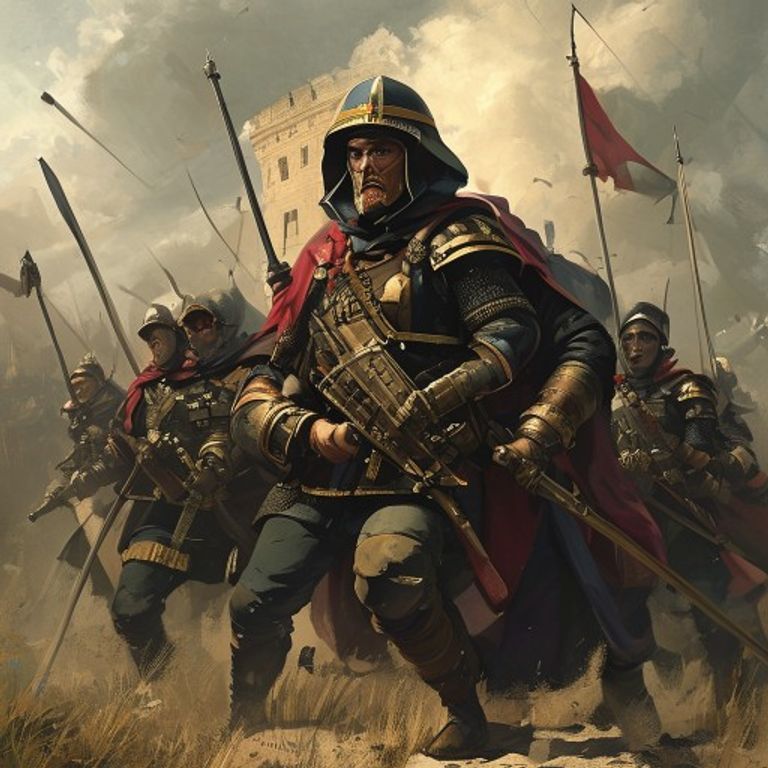
The largest confrontation fought by the Brazilian Expeditionary Force in World War II, resulting in the capture of a strategic position in the Italian Apennines in 1945.
⚠️ Research conducted with the aid of Deep Research is subject to referential ambiguity.
🖥️ Clean HTML code using a proprietary tool.
👥 Research by Guilherme Felipe, Curation by Sílvio Lôbo
The Enigma of the Battle of Monte Castello: Where history was lost in the fog of war
Military history is filled with heroic feats and tragedies, but some chapters become notorious not only for the combat itself, but for the mysteries that surround them. The Battle of Monte Castello Case, which took place during World War II in Italy, is one of those enigmas that, decades after the end of the conflict, still challenges historians, investigators, and the general public. What really happened in that cold February of 1944, and why were so many lives lost under circumstances that border on the inexplicable? This article aims to unravel the layers of uncertainty that hang over one of the darkest and least understood confrontations of the Italian campaign.
1. The Context and the Incident: Where, when, and how the mystery began
The Battle of Monte Castello was part of the Allied Winter Offensive in Italy, a massive effort to break the Gothic Line, the formidable German defensive line that stretched from coast to coast across the country. Monte Castello, a crucial strategic point in the Apennines, dominated the Reno River valley, and its conquest was seen as essential for the Allied advance toward the north. The fight for the mountain, a rocky cliff of difficult access, was brutal and prolonged. The mystery does not lie in the intensity of the combat, which was documented, but rather in a series of subsequent events and reports that seem contradictory or incomplete, culminating in a disproportionately high number of casualties and witness accounts that suggest something more sinister than a simple military confrontation.
The incident that gave rise to the main mystery occurred in February 1944. Allied forces, predominantly composed of the Brazilian Expeditionary Force (FEB), encountered fierce German resistance. However, the nature and exact cause of a large portion of the Allied casualties, particularly in a specific phase of the battle, remain the subject of intense debate.
2. Timeline of Events
Reconstructing the timeline is crucial to understanding the evolution of the mystery:
- Late 1943 - Early 1944: Preparations for the Allied offensive in Italy. The Gothic Line is established by the Germans, with Monte Castello as a key defensive point.
- February 18, 1944: Official start of the Battle of Monte Castello. Brazilian troops, after months of training and marching, begin the attacks to capture the hill.
- February 19-21, 1944: Intense fighting in the Monte Castello region. Reports describe fierce attacks and counter-attacks, with high costs for both sides.
- End of February 1944: The conquest of Monte Castello is finally achieved by the Allies, but at a very high price.
- Post-battle: The first inconsistencies and questions arise regarding the number of casualties, the causes of some deaths, and the effectiveness of the tactics employed. Official reports begin to be compiled, but some gaps and ambiguities are noted.
3. The Main Theories
The Monte Castello case has generated a myriad of theories, ranging from rational and military explanations to more speculative hypotheses.
Scientific and Investigative Theories (Most Likely)
- Adverse Weather Conditions and Hostile Terrain: The Monte Castello region is known for its severe climate, especially in winter. Thick fog, snow, and ice may have hindered visibility and communication, leading to tactical errors, ambushes, and accidents. The steep and rocky terrain also favored the defense and increased the risk of falls and serious injuries.
- Combat Tactics and Planning Errors: The FEB, newly arrived at the European front, faced an experienced and well-positioned enemy. The theory suggests that the lack of combat experience in such a challenging theater of operations, combined with possible intelligence failures regarding German defenses, may have led to inadequate tactics, resulting in significant losses. Reports from the time mention difficulties in coordination and artillery support, which could have exacerbated the problems.
- Friendly Fire: Amidst the chaos of battle, under conditions of poor visibility and extreme stress, friendly fire is a real possibility. The confusion of the battlefield, with units moving in different directions and the difficulty of identifying targets, could have led to accidental fire against one's own troops.
Alternative, Conspiracy, or Paranormal Theories
- Experimental or Unconventional Weapons: A less proven line of speculation suggests that the Germans could have used some type of experimental weapon at Monte Castello, or that combat conditions were affected by some small-scale chemical or biological agent. This theory, while attractive to mystery lovers, lacks concrete evidence in historical reports or forensic analysis.
- Paranormal or Energetic Phenomena: Some soldiers' accounts mention feelings of disorientation, apparitions, or strange sensations in the Monte Castello area. These experiences, often attributed to the trauma of war, led to speculation about the presence of anomalous energies or even paranormal activities. However, science and formal investigation rarely validate these explanations without a more robust body of evidence.
- A Deliberate "Error" or Cover-up: More daring conspiracy theories suggest that losses could have been intentionally underestimated or that a crucial failure in operations was deliberately hidden so as not to shake the morale of the troops or the nation. The compartmentalized nature of military information during the war and the scarcity of detailed records for some phases of the combat fuel these speculations.
4. Controversies and Blind Spots
The investigation of the Battle of Monte Castello Case is marked by a series of controversies and blind spots that fuel the mystery:
- Discrepancies in Official Reports: Different sources and army reports present slightly different casualty numbers for the same period or event. This inconsistency, although common in war contexts, raises questions about the accuracy of the record and the possible omission of data.
- Lost or Uncollected Evidence: In many phases of the battle, the rapid movement of troops and the instability of the terrain may have prevented the proper collection of forensic evidence or detailed testimonies from all those involved. The main focus was the advance, and meticulous documentation of every specific incident was not always the priority.
- Conflicting Witness Testimonies: Accounts from soldiers who participated in the battle, when gathered decades later, sometimes present distinct versions of crucial events. Human memory, especially under the traumatic stress of war, is known to be flawed and susceptible to distortion.
- The "Fog" of Communication and Intelligence: The efficiency of Allied communication and intelligence in the Monte Castello region is a question mark. The difficulty in obtaining accurate information about enemy positions and the difficulty in maintaining stable communication lines contributed to an environment of uncertainty that, according to military experts, may have been a key factor in the losses.
5. Curiosities and Legacy
The Battle of Monte Castello Case transcended military annals, becoming a symbol of bravery, but also of the complexity and costs of war. Its cultural impact is notable:
- The Symbol of the FEB: Monte Castello became one of the most important landmarks of Brazil's participation in World War II, symbolizing the determination and sacrifice of the "pracinhas" (Brazilian soldiers). The conquest of the mountain is celebrated as a feat of great importance for the FEB.
- Inspiration for Cultural Works: The battle inspired books, films, and documentaries, which, while celebrating heroism, also explore the uncertainties and mysteries that surround it, keeping the case alive in the collective memory.
- Current Status: The Battle of Monte Castello has not been formally reopened as a criminal or judicial investigation case. However, historians and researchers continue to analyze available documents and accounts, seeking to fill the gaps and offer new perspectives on the events. The mystery, although not officially "solved," remains a reminder of the complexity of war and the difficulties in fully unraveling the truths behind major conflicts. The "fog" of Monte Castello continues to be a historical enigma, where proven facts intertwine with speculation, forcing us to question the limits of our knowledge about the past.



