


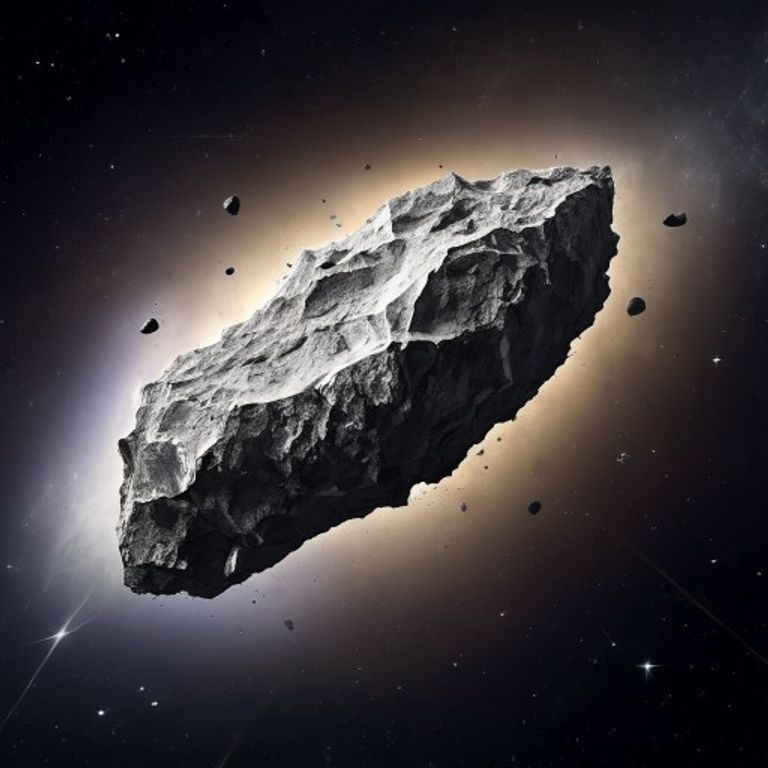
The largest space rock ever found on Brazilian soil, which survived the 2018 National Museum fire due to its massive metallic composition.
⚠️ Research conducted with the aid of Deep Research is subject to referential ambiguity.
🖥️ Clean HTML code using a proprietary tool.
👥 Research by Guilherme Felipe, Curation by Sílvio Lôbo
The Metallic Mystery: Unraveling the Bendegó Meteorite Case
Bahia, a land of sun and legends, holds in its depths a secret that has challenged logic and science for nearly a century. The Bendegó Meteorite Case, an event that transcends the mere fall of a celestial body, has become a historical enigma, populated by controversial theories and investigative gaps. As a senior journalist immersed in unsolved mysteries, I set out to dissect this case, separating documented facts from the fog of speculation.
The Context and the Incident: The Fire that Tore Through the Sertão Skies
The year 1888 marked the history of Descoberto, a small village in the Bahian hinterlands, now part of the municipality of Uauá. That night, a celestial spectacle of frightening proportions tore through the dark sky of the sertão. An incandescent object, described by witnesses as a "fireball" or "a glowing bolt of lightning," crossed the firmament, emitting a deafening roar that echoed for miles. What would initially be just an astronomical phenomenon of rare beauty soon turned into a local enigma and, subsequently, a case of national interest.
The object, with colossal dimensions, landed in a place that would be immortalized with the name of the event: Bendegó. The earth shook and a cloud of dust rose, forever marking the landscape. The impact was so strong that the space rock, which would later be identified as a meteorite, reached a considerable depth in the soil, digging a crater of frightening proportions.
Timeline of Events: Fragments of a Fragmented Past
The chronological reconstruction of events, although based on reports and documents from the time, presents challenges due to the scarcity of detailed records and the oral nature of many initial witnesses:
- August 5, 1888 (approximately): Reports of a luminous object crossing the sky of the Bahian sertão, followed by a loud roar.
- Uncertain date after the event: Discovery of the large metallic object buried in Bendegó. Initial reports indicate that the local population, frightened and intrigued, avoided the site.
- 1889: News of the "strange body" in Bendegó reaches authorities and the scientific community. Expeditions begin to be organized.
- 1891: The expedition led by engineer Luiz Felipe de Sousa manages to locate and remove the Bendegó meteorite, a monumental feat for the time. The object weighed approximately 5,360 kg.
- 1894: The meteorite is transported to the National Museum in Rio de Janeiro, where it becomes one of the main attractions.
- Currently: The Bendegó Meteorite remains on display at the National Museum, now at the Quinta da Boa Vista Park.
The Main Theories: From Science to the Shadow of Imagination
The fascination surrounding the Bendegó Meteorite is not limited to its extraterrestrial nature. Over the years, several theories have attempted to explain the details surrounding its impact and the narratives that surround it. It is crucial to distinguish proven scientific hypotheses from speculation:
Scientific and Official Theories (Based on Evidence and Logic)
- Theory of the Natural Arrival of a Celestial Object: This is the widely accepted scientific explanation. The object was, in fact, a meteorite, a fragment of space rock that survived entry into the Earth's atmosphere and hit the surface. Subsequent analyses confirmed its metallic composition, typical of iron meteorites. The roar and brightness are natural phenomena associated with the burning and impact of an object of this magnitude.
- Theory of Post-Impact Geological Investigation: After the fall, the main "investigation" was of a geological and engineering nature. The challenge was to understand the composition of the object and, mainly, how to remove it from the ground. The efforts of the 1891 expedition were a scientific and engineering milestone for the time, focused on the removal and study of the material.
Alternative, Conspiracy, or Paranormal Theories (Speculative and Without Scientific Proof)
- UFO Landing Theory: Given the unusual nature of the event and the description of "fire" falling from the sky, some ufological theories suggest that the object could have been an extraterrestrial spacecraft. The lack of detailed reports on the "recovery" of the object and the mystery surrounding some phases of its journey to the museum fuel this line of thought. However, there is no physical or testimonial evidence to support this hypothesis.
- Artificial Creation Theory: Some more extreme strands speculate about the possibility that the object is not natural, but rather an ancient or artificial technology, perhaps from lost civilizations or even of extraterrestrial origin, which would have been "hidden" or "diverted" by authorities. This theory lacks any empirical basis.
- "Accident" Theories during Recovery: Although the meteorite was recovered, some less formalized narratives suggest that there were "accidents" or "losses" of parts of the object or crucial evidence during transport and initial handling. These speculations, although they exist, are not supported by official records.
Controversies and Blind Spots: The Shadows in History
The official investigation of the case, in its essence, was the scientific expedition to identify, recover, and study the object. However, some nuances and gaps fuel the debate and speculation:
- Confused and Terrified Initial Reports: The fear and initial misunderstanding of the local population made it difficult to collect accurate statements about the exact nature of the falling object. Descriptions were more focused on the visual spectacle and sound than on technical details.
- The Recovery Process: Removing a block of more than 5 tons from the ground in 1891 was a herculean feat. Documentation on the logistical challenges, the methods employed, and the possible occurrence of "minor incidents" during the operation is not as detailed as one would expect from a rigorous police investigation. The focus was on science and engineering, not on solving a "crime."
- "Lost" or "Missing" Evidence: In historical cases, it is common for smaller fragments or initial samples to be lost over time. In the case of Bendegó, there are no official reports of significant evidence having disappeared. However, the very nature of the era and the difficulty of preserving materials may have led to this perception.
- The National Museum Archive: With the tragic fire at the National Museum in 2018, part of the historical collection and documents related to the collection, possibly including information about the Bendegó Meteorite, may have been lost. This further aggravates the difficulty of accessing details about the early history.
Curiosities and Legacy: An Iron Giant in the Brazilian Imagination
The Bendegó Meteorite transcended its cosmic origin to become a cultural icon and a symbol of Brazil's scientific potential.
- The Largest Metallic Meteorite in Brazil: Its impressive weight and recovery history solidified it as the largest metallic meteorite ever found in the country, and one of the largest in the world.
- Symbol of Resilience: The ability of a cosmic object to have survived the atmosphere and impact, and to have been rescued and studied, inspires stories of perseverance.
- Inspiration for Local Legends: The event gave rise to several legends and popular tales in the Uauá region, fueling the sertanejo folklore with elements of mystery and the supernatural.
- Current Status: The Bendegó Meteorite continues to be a central piece in the National Museum's exhibition, attracting visitors and scientists. There is no "case" to be reopened in the police sense, but rather a continuous scientific and historical interest in its study and preservation. Alternative theories, although without factual basis, persist in the popular imagination, adding layers of mystery to its history.
The Bendegó Meteorite Case, therefore, is not an unsolved crime, but a natural phenomenon wrapped in a fascinating and challenging historical context. A reminder that, even in the 21st century, the universe and history hold secrets that continue to intrigue us, inviting investigation and reflection.



