


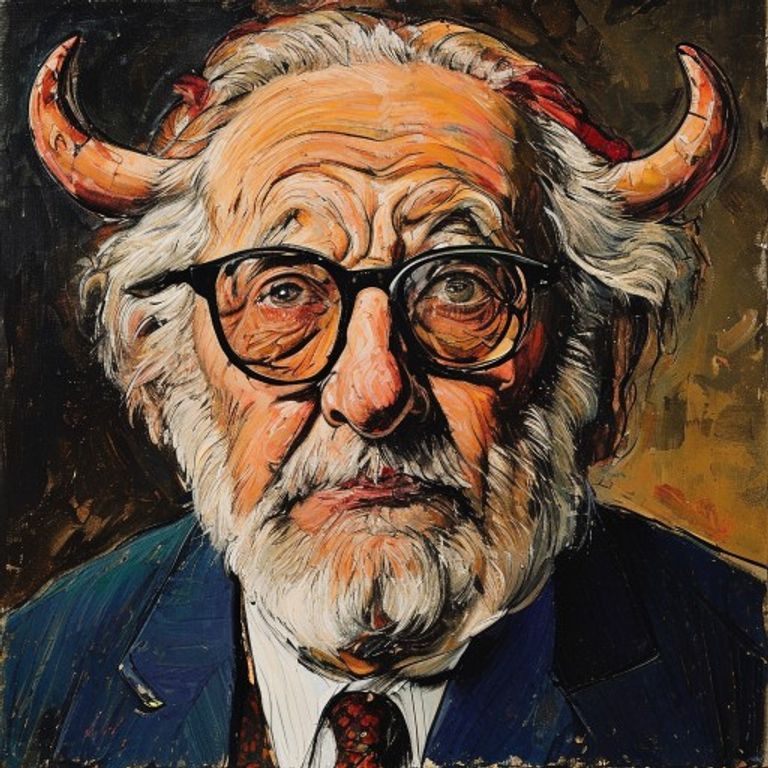
The mastermind behind the largest Ponzi scheme ever recorded, which defrauded investors of billions of dollars for decades until he was turned in by his own sons in 2008.
⚠️ Research prepared with the aid of Deep Research is subject to referential ambiguity.
🖥️ Clean HTML code using a proprietary tool.
👥 Research by Guilherme Felipe, Curation by Sílvio Lôbo
The Phantom Empire of Bernard Madoff: A Fraud Plot Revealed
The Bernard Madoff case is not a mystery in the traditional sense of a crime without a known perpetrator or a paranormal enigma. It is, rather, an epic of colossal proportions regarding the audacity of financial fraud and the systemic failure that allowed a devastating Ponzi scheme to thrive for decades, deceiving investors of all calibers and leaving a trail of despair and ruin. The revelation of this phantom empire, which collapsed with a deafening crash in December 2008, unearthed not a riddle to be solved, but the shocking reality of a meticulously constructed deception machine.
The Context and the Incident: The House of Cards Collapses
The epicenter of Bernard Madoff's fraud was located in New York, with the headquarters of Bernard L. Madoff Investment Securities LLC, a revered name in the financial world, especially in the options trading market. For nearly 50 years, Madoff built an impeccable reputation, cultivating relationships with philanthropists, hedge funds, and high-net-worth individual investors. The promise was of consistent and surprisingly stable returns, a beacon of safety in a sea of volatility. The incident that exposed the entire farce was not an unexpected anonymous tip, but a self-inflicted implosion, driven by the global financial crisis of 2008. With the stampede of investors trying to redeem their funds, Madoff, unable to sustain the withdrawals with real returns, confessed to his sons, Mark and Andrew Madoff, that his business was "one big lie." The confession, followed by his arrest on December 11, 2008, marked the end of an era of financial illusion.
Timeline of Events: The Chronology of Dishonesty
The complexity of Madoff's fraud makes a linear timeline challenging, as the foundation of the scheme spans decades. However, the crucial events that led to his downfall are well-documented:
- 1960s/1970s: Start of operations for Bernard L. Madoff Investment Securities LLC. Early evidence suggests the Ponzi scheme may have begun to form during this period, although the scale and sophistication were much smaller.
- 1980s - Early 2000s: The Ponzi scheme expands exponentially. Madoff attracts investors with the promise of average returns of 10-12% per year, with low volatility. He operates an investment fund separate from his stock trading activity, where most of the fraud occurred.
- 2000s: Warning signs begin to emerge. Reports from the SEC (Securities and Exchange Commission), which oversees financial markets, indicate failures to investigate Madoff, despite several tips and previous investigations.
- 2005: Harry Markopolos, a financial analyst, submits a detailed report to the SEC, arguing that Madoff's business was a Ponzi scheme. The report is largely ignored.
- September - December 2008: The 2008 global financial crisis hits the financial market, increasing pressure on Madoff's funds. Clients begin requesting mass redemptions.
- December 10, 2008: Madoff confesses to his sons, Mark and Andrew, that his business was a fraud.
- December 11, 2008: Bernard Madoff is arrested at his Manhattan apartment.
- June 29, 2009: Madoff pleads guilty to 11 criminal charges, including fraud, money laundering, and perjury.
- June 29, 2009: Madoff is sentenced to 150 years in prison, the maximum possible penalty.
- March 14, 2021: Bernard Madoff passes away in prison at age 82.
Key Theories: Unraveling the Architecture of Fraud
In the Madoff case, the central mystery does not lie in the identity of the perpetrator, but in the engineering of the fraud and the mechanisms that allowed for its longevity. Theories focus on how he maintained the facade and the extent of complicity.
Classic Ponzi Fraud Theory (Police/Financial Hypothesis):
This is the official and widely accepted theory. The logic is simple: Madoff did not invest his clients' funds. Instead, he used money from new investors to pay the promised returns to older investors. The business was essentially a bank with empty promises. The need to maintain a constant flow of new capital was crucial. The lack of real investments and the need to "recycle" money to honor payments created an unsustainable system that would inevitably collapse. The structure of the fraud is detailed in numerous official reports and in Madoff's testimony during his trial.
Complicity and Omission Theory (Investigative Hypothesis):
This theory focuses on who knew what and when. The main controversy lies in the failure of regulatory agencies, such as the SEC, to detect and stop the scheme years earlier. Theories explore:
- Gross Negligence: The SEC repeatedly failed to properly investigate complaints against Madoff, ignoring evidence and listening to Madoff and his lawyers. Internal SEC reports after the collapse admitted significant failures.
- Tacit or Explicit Collusion: A more conspiratorial hypothesis suggests that some figures within or connected to the SEC may have been complicit, receiving benefits or simply choosing to turn a blind eye in exchange for favors or to protect the market's reputation. There is no concrete evidence for this theory beyond the deep frustration of victims and independent analysts.
- Lack of Market Transparency: The complexity and opacity of some hedge funds and investment structures made oversight more difficult, allowing Madoff to operate in a gray area.
"Perfect Bubble" Theory (Advanced Financial Theory):
Some financial analysts argue that Madoff exploited investor psychology and the self-referential nature of the financial market. He knew how to "read" the market and investors' desires for safety and consistent returns, creating a "bubble of confidence" so solid that it became difficult to question. His reputation as an influential member of the financial community and philanthropic institutions conferred an aura of almost inviolable legitimacy.
Alternative Theories (Speculative):
Although the Ponzi fraud is the most logical and proven explanation, bolder speculations have emerged:
- Money Laundering for Criminal Organizations: Some speculate that the scheme may have served as a front for large-scale money laundering for criminal organizations or even intelligence agencies. The scale of the scheme and Madoff's network of contacts fuel this speculation, but concrete proof is lacking.
- Involvement of Powerful Third Parties: Madoff's network included prominent figures in business and politics. The speculative theory suggests that powerful individuals may have benefited or, at the very least, known about the fraud and benefited from its perpetuation.
It is crucial to note that alternative theories lack robust documentary evidence and remain in the realm of speculation, contrasting with the proven facts of the Ponzi scheme and regulatory failures.
Controversies and Blind Spots: The Cracks in the Protective Wall
The Madoff case is full of controversies, mainly focused on the failures of supervisory institutions and the apparent blindness of many in the financial market.
- The Ignored SEC Investigations: This is the most glaring blind spot. Since the 1990s, the SEC received multiple complaints and conducted investigations into Madoff's practices. However, these investigations were superficial, lacking depth, and frequently concluded that there was no evidence of fraud. Internal SEC reports, such as the one from 2009, admitted "critical failures" and "errors in judgment."
- The "Selective Blindness" of the Financial Community: Many investors and fund managers who placed their money with Madoff were experienced and knew the market. The question that lingers is: why didn't they question the consistently high returns and the apparent lack of risk? The answer lies in a combination of overconfidence, greed, and belief in Madoff's impeccable reputation.
- The Role of Auditors and Lawyers: The responsibility of auditors and lawyers in maintaining the integrity of financial institutions is questioned. The degree of knowledge and involvement, or lack thereof, of these professions in the fraud is still subject to analysis.
- The Disappearance of Digital Evidence: As in many complex fraud cases, there were allegations and concerns about the disappearance or difficulty in recovering certain digital evidence.
Curiosities and Legacy: Scars on the Financial World
The Bernard Madoff case left deep scars on the financial world and the collective psyche regarding trust and regulation.
- Cultural Impact: Madoff's story has become synonymous with large-scale fraud, inspiring books, documentaries, and even a television miniseries. The name "Madoff" has become an adjective to describe fraudulent schemes.
- The Legacy of Distrust: The case shook confidence in financial institutions and regulatory agencies. It spurred debates about the need for greater transparency, stricter regulation, and more effective investor protection mechanisms.
- Asset Recovery: A massive and ongoing effort is underway to recover lost assets and compensate victims. Funds have been recovered through lawsuits against Madoff Securities and third parties who benefited from the scheme. However, full recovery is unlikely for most victims.
- Current Status: The case has not been reopened in search of a mystery to be solved, as the main perpetrator was identified, tried, and convicted. The focus is now on asset recovery and the ongoing analysis of regulatory failures to prevent something similar from happening again. The death of Bernard Madoff in 2021 closed a physical chapter of history, but the legacy of his actions continues to resonate.
The Bernard Madoff case serves as a grim reminder that, even at the pinnacle of financial credibility and sophistication, greed and audacity can weave a web of deception that eventually unravels with devastating consequences.



