


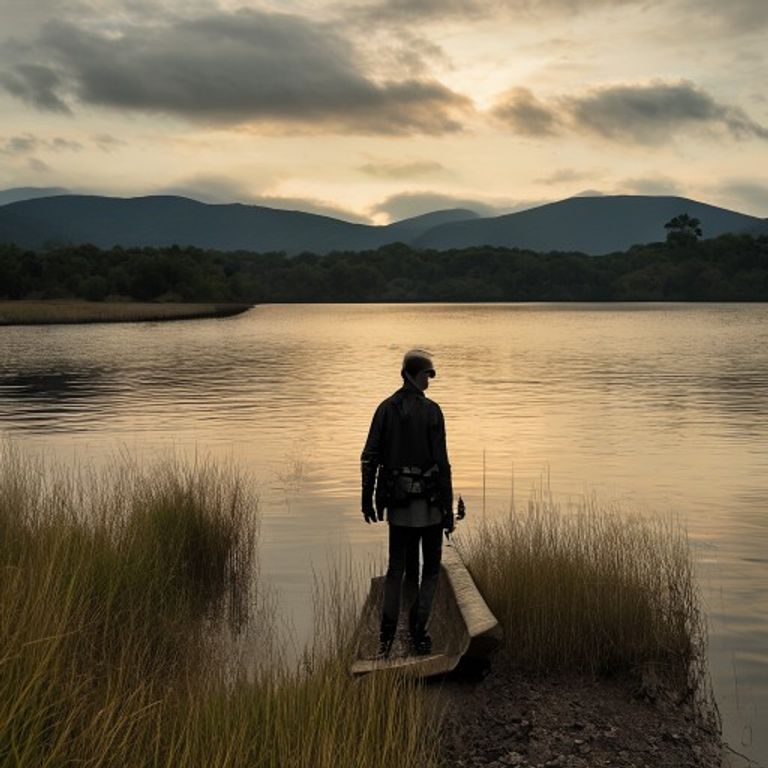
Four teenagers camping in Finland were attacked in their tents in the early morning; only one survived with serious injuries, and the crime was never fully solved.
⚠️ Research conducted with the aid of Deep Research is subject to referential ambiguity.
🖥️Clean HTML code using a proprietary tool.
👥 Research by Guilherme Felipe, Curation by Sílvio Lôbo
The Dark Mystery of Bodom Lake: An Immortal Nightmare in Finland
On a clear summer night, Bodom Lake, an idyllic retreat in Finland, became the scene of one of the most brutal and inexplicable crimes in Scandinavian history. What should have been a night of leisure for four teenagers turned into a bloody nightmare that would haunt the nation for decades, leaving behind a trail of unanswered questions and theories that defy logic.
1. The Context and the Incident: Where, When, and How the Mystery Began
The early morning of June 5, 1960, marked the beginning of the infamous Bodom Lake Murders Case. Four young people, Nils Gustafsson, Seppo Boisman, Anja Tuulikki Mäki, and Solveig Annikki Tommola, had set up camp on the shores of the lake, about 22 kilometers from the center of Espoo. The location, isolated and popular among young people, promised a night of fun and romance, far from the prying eyes of the city.
Around 4 AM, the unthinkable happened. A brutal, swift, and violent attack claimed the lives of three of the four campers. The survivor, Nils Gustafsson, an 18-year-old, was found in a state of shock, with severe injuries and a disfigured face. The scene was desolate: the tent torn, belongings scattered, and the bodies of Boisman, Mäki, and Tommola lifeless, marked by blunt force trauma and stab wounds. Gustafsson's bicycle also disappeared, a detail that would become crucial in the investigation.
2. Timeline of Events: A Chronological Reconstruction of Key Facts
- June 4, 1960: The four teenagers arrive at the campsite at Bodom Lake.
- Night of June 4-5, 1960: The young people spend the night camping.
- Approximately 4:00 AM on June 5, 1960: The attack occurs. Witnesses claim to have heard screams and strange noises coming from the direction of the campsite.
- Approximately 6:00 AM on June 5, 1960: The first of the survivors, a bank teller named Kauko Kuivalainen, who was passing through the area, finds Gustafsson's body and realizes the horror of what had happened. He alerts the authorities.
- Arrival of Authorities: Police and emergency services arrive at the scene, finding the bodies and the severely injured Gustafsson.
- Initial Investigation: Police begin searching for the assailant and the missing bicycle. The area is cordoned off, and the press begins reporting on the crime.
- July 1960: Karl Valdemar Gyllström, a man known for his erratic behavior and for having been seen in the area on the night of the crime, is arrested. He becomes the prime suspect.
- 1961: Gyllström is acquitted, as the evidence against him is deemed insufficient. He dies under mysterious circumstances in 1969, drowning in the same lake.
- Following Decades: The case remains unsolved, with numerous theories and speculations emerging.
- 2005: The case is reopened by the Finnish police with new forensic techniques. Nils Gustafsson is charged with triple homicide.
- 2007: Nils Gustafsson is acquitted of all charges. His innocence is considered proven, and the case returns to being unsolved.
3. The Main Theories: Possible Explanations for the Horror
Over the decades, the Bodom Lake Murders Case has generated a proliferation of theories, from the most earthly to the most fantastic. The police's inability to present a definitive culprit has fueled fertile ground for speculation.
Official and Most Probable Theories:
- The Lone Killer: This is the most traditional theory, postulating the existence of an unknown assailant who attacked the group. The brutality and efficiency of the attack suggest someone with experience or an extremely strong motive. The missing bicycle could have been used for the escape.
- The Crime of Opportunity/Robbery: An individual passing by the location, possibly attracted by the presence of the young people, decided to attack them in search of valuables or out of a violent impulse. The lack of an elaborate plan could explain the chaotic nature of the crime.
- The Suspect Karl Valdemar Gyllström: As mentioned, Gyllström was the prime suspect at the time. His presence in the area, his unstable temperament, and his subsequent death in the lake fueled suspicion. However, the lack of concrete evidence never definitively incriminated him. Police reports from the time indicate he had an alibi for part of the night, but his involvement in the crucial moments remained uncertain.
- The Accusation of Nils Gustafsson (and subsequent acquittal): In 2005, with the reopening of the case, the police focused on Gustafsson. The theory suggested that he, in a fit of rage or disagreement with his friends, had committed the murders and then injured himself to simulate an attack. The discovery that his injuries could have been self-inflicted was a central point. However, the court considered the evidence insufficient to prove his guilt, leading to his acquittal. The debate about the origin of his injuries and his fragmented memory after the trauma remain points of contention.
Alternative, Conspiracy, or Paranormal Theories:
- The Attack by "Strangers": Some speculation suggests the attack was orchestrated by unknown individuals, possibly linked to criminal activities or even a bizarre cult. This theory lacks any concrete evidence but persists in popular imagination.
- Involvement of More Than One Assailant: Given the speed and brutality of the attack, some suggest that more than one assailant was involved. However, the lack of reports of multiple figures at the scene and the nature of the injuries do not provide robust support for this hypothesis.
- Involvement of Matti Juhani Saari: A man with a criminal past, Saari, who committed another brutal crime in 1987, was considered a possible suspect in later investigations. His similarity to the psychological profile of a potential Bodom Lake assailant led to this line of inquiry, but no conclusive link was established.
- The Paranormal: Although less common in academic discussions, theories involving supernatural forces or unidentified flying objects (UFOs) have been considered by some. The seemingly inexplicable nature of the crime and its isolated location have given rise to these fantasies.
4. Controversies and Blind Spots: What Did the Investigation Miss?
The Bodom Lake Murders Case is a case study in how an initial investigation can be hampered by a series of factors, leaving gaps that have become almost insurmountable.
- The Slow and Flawed Initial Investigation: The lack of experience of the police at the time in dealing with such violent and complex crimes is often cited as a determining factor. The crime scene was not ideally preserved, and evidence collection may have been compromised.
- Loss of Evidence: One of the biggest mysteries is the disappearance of Gustafsson's bicycle. Its location could have revealed crucial information about the assailant's escape route or if it was abandoned. Reports indicate the bicycle was never found.
- Conflicting Testimonies: Several witnesses reported seeing a man in a dark jacket fleeing the area. However, the descriptions varied, generating confusion and making it difficult to identify a specific suspect. One key testimony was from a man who claimed to have seen another person approaching the campsite moments before the attack, but his identification was never confirmed.
- The Case of Gyllström: Although he was the prime suspect, the lack of conclusive evidence made him "the suspect who got away." The investigation into him was intense but yielded no definitive results. His death in the lake years later only added a layer of mystery.
- The Reopening of the Case and the Accusation of Gustafsson: The decision to charge Gustafsson in 2005 was controversial. Although new forensic techniques were used, many questioned whether the evidence was sufficient to support a charge after so many years. The subsequent acquittal reinforced the idea that the police may have pursued a mistaken line of investigation, wasting precious time.
- The Nature of Gustafsson's Injuries: The debate over whether Gustafsson's injuries were self-inflicted or the result of the attack continues to be a point of contention. Later expert opinions, although considered by the prosecution, were not enough to convince the court of his guilt.
5. Curiosities and Legacy: The Enduring Shadow of Bodom Lake
The Bodom Lake Murders Case has transcended police headlines to become a pillar of Finnish popular culture and an icon of unsolved crime folklore.
- Cultural Impact: The case has inspired books, documentaries, music, and films. Its brutal nature and persistent mystery have made it a recurring theme in media and discussions about true crime. Finland itself, known for its tranquility, saw its image tarnished by this dark event.
- Macabre Tourism: The crime scene, while kept relatively discreet, attracts curious individuals and mystery enthusiasts, contributing to the sinister aura surrounding the lake.
- The "Guide" to Unsolved Crimes: The case is frequently cited as one of the most notorious examples of unsolved criminal mysteries in Europe. Its longevity and the absence of a definitive culprit make it an object of continuous fascination.
- Legacy of Uncertainty: Despite the efforts of the police, both in the 1960s and in 2005, the Bodom Lake Murders Case remains officially unsolved. The lack of closure for the victims' families and the public in general perpetuates its status as a dark enigma, an open wound in Finland's history. The case continues to fuel debates and inspire new investigations and theories, keeping the mystery alive, even if the hope for a definitive answer seems increasingly distant.



