


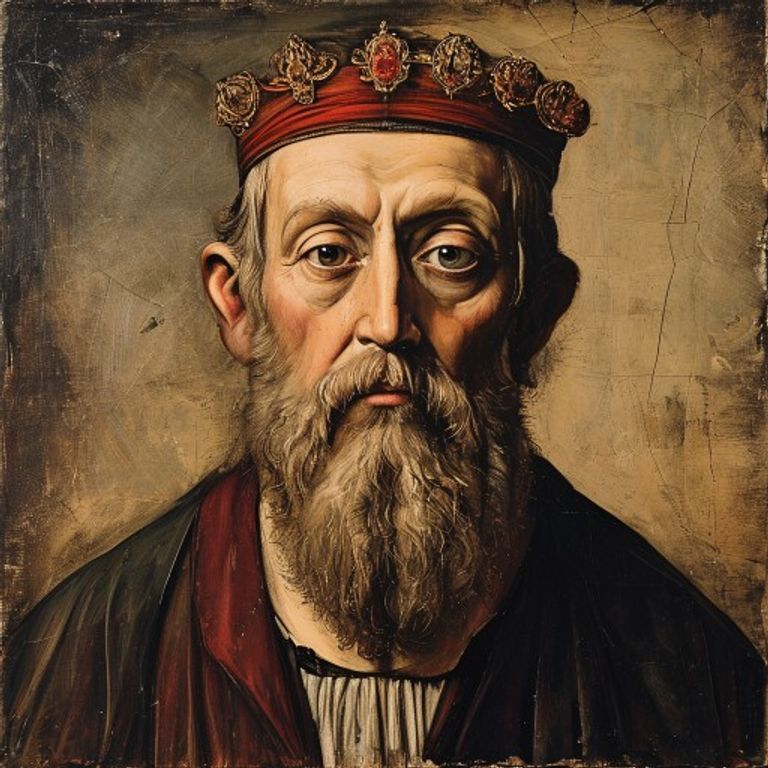
The renowned writer and American Civil War veteran traveled to Mexico in the early twentieth century to observe the country's revolution and disappeared forever.
⚠️ Research conducted with the aid of Deep Research is subject to referential ambiguity.
🖥️ Clean HTML code using a proprietary tool.
👥 Research by Guilherme Felipe, Curation by Sílvio Lôbo
The Disappearance of Ambrose Bierce: An Enigma Through Time
The name Ambrose Bierce evokes images of sharp irony, biting satire, and a cynical view of human nature, especially in times of conflict. A writer, journalist, and veteran of the American Civil War, Bierce was a prominent figure in his time. However, his own life would end as enigmatically as many of his stories. The mystery surrounding his disappearance in 1913, in Mexico amidst the Mexican Revolution, continues to intrigue historians, investigators, and admirers to this day.
1. The Context and the Incident: Where, When, and How the Mystery Began
Ambrose Bierce, at 71 years old, decided to embark on a journey to Mexico in the autumn of 1913. Driven by a mixture of journalistic curiosity and a declared fascination with revolutionary ideals, he wished to witness firsthand the political and social turmoil plaguing the country. It was believed he would join the revolutionary forces of Pancho Villa, although the exact details of his affiliation and purpose remain nebulous.
His last known communication was a letter sent from Chihuahua, Mexico, on December 2, 1913, in which he expressed his desire to "walk into hell" and witness the confrontation between Villa's forces and the federal army. After this date, Ambrose Bierce simply vanished from the historical record. No further contact, no reliable report of his whereabouts, only the silence of a total absence.
2. Timeline of Events
- August 1913: Ambrose Bierce leaves his home in California with the declared intention of traveling to Mexico.
- Autumn 1913: Bierce arrives in Mexico and begins to move through the region, supposedly accompanying or infiltrating revolutionary units.
- December 2, 1913: Bierce sends his last known letter from Chihuahua, expressing his intention to go to the combat zone.
- Early December 1913: The disappearance of Ambrose Bierce is noted.
- 1914 and subsequent years: Various speculations and fragmented reports begin to circulate, but no concrete evidence emerges.
- 2000s and beyond: The case attracts renewed interest from researchers, with attempts to revisit archives and accounts.
3. The Main Theories
The absence of concrete evidence has paved the way for a myriad of theories, ranging from the pragmatic to the fantastic:
3.1. Death in Combat or Victim of Revolutionary Violence
This is the most straightforward and, possibly, the most likely hypothesis. Bierce, a 71-year-old man, voluntarily placed himself in an extremely dangerous environment. It is plausible that he was:
- Killed in a shootout: Amidst the intense battles of the Mexican Revolution, he could have been caught in the crossfire.
- Executed by one of the sides: Given the volatile nature of the conflict, he could have been mistaken for a spy or an enemy and summarily executed. Unconfirmed reports mention a man with Bierce's characteristics being executed by federal soldiers after a battle in Ojinaga.
- Victim of illness or accident: Travel and combat conditions were precarious. A sudden illness or a fatal accident (fall, drowning) are possibilities, though less documented.
3.2. Political Assassination
Considering the turbulent political landscape, some speculate that Bierce may have been the target of a planned assassination. His critical writings and his involvement with revolutionary figures could have displeased specific factions, both from the federal side and from within the revolutionary movement itself.
3.3. Desertion or Voluntary Escape
While it seems unlikely for a man of his age and reputation, some suggest that Bierce, perhaps disillusioned with the reality of the revolution or seeking a more dramatic end to his life, may have orchestrated his own disappearance. However, there are no indications to support this theory beyond the enigmatic nature of the writer himself.
3.4. Alternative and Paranormal Theories
As is common in cases of persistent mystery, more esoteric theories have emerged:
- Theories of Symbolic Death/Ritualistic Suicide: Some interpret his famous phrase "walk into hell" as a premonition or a statement of intent for a dramatic and intentional end, perhaps linked to his dark views on life.
- Involvement with Cults or Secret Societies: In his time, there were various secret societies and groups with peculiar beliefs. Although without concrete evidence, Bierce's eccentric nature led to speculation about involvement with such organizations, which could have been the reason for his disappearance.
- Time Travel or Dimensional Portal: In more fantastical veins, the complete absence of any trace has led to paranormal theories about time travel or passage to another dimension, although these lack any factual basis.
4. Controversies and Blind Spots
The main controversy in the Bierce case lies in the scarcity and fragmentation of information. The Mexican Revolution was a period of widespread chaos, with lost documents, incomplete records, and unreliable eyewitness accounts due to fear, misinformation, and the ephemeral nature of events.
- Conflicting Accounts: Various reports have emerged over the years, some claiming to have seen Bierce with Pancho Villa, others with the federal army, and still others describing an old, tired man being taken away by soldiers. None of these narratives have been solidly corroborated.
- Ignored or Missing Clues: Official archives related to the Mexican Revolution and foreigners present in the country are incomplete. Investigations into supposed belongings of Bierce (such as his hat or diary, which were allegedly found in different locations) were never conclusive, or the items simply disappeared.
- The Official Investigation (or lack thereof): There was no robust and prolonged official investigation into Bierce's disappearance by American or Mexican authorities. It was initially believed that he would be just another victim of the civil war, and the lack of significant family pressure (although he had children, the relationship was distant) contributed to the case being relegated to a secondary level.
- The Problem of Age and Health: Bierce's health in 1913, at 71 years old, is a crucial factor that most theories would need to explain. Surviving amidst intense combat would be extremely challenging for someone of his age and possibly with fragile health.
5. Curiosities and Legacy
The disappearance of Ambrose Bierce has become one of the most enduring mysteries of American literature. His legacy as a dark and insightful writer, known for "The Devil's Dictionary," is undeniable. However, his personal end added a layer of fascination and tragedy to his figure.
- The Mystery as Part of the Work: Bierce's disappearance echoes the dark and often unresolved nature of his own stories. The absence of a clear ending to his own life amplifies the aura of mystery that permeated his work.
- Searches and Expeditions: Throughout the 20th century, various individuals, including admirers and historians, undertook unofficial searches in Mexico in the hope of finding traces of Bierce or evidence of his final fate. All were fruitless.
- Current Status: The case remains officially unsolved. Although many theories are considered more probable than others, none have been proven. Relevant archives remain scarce, and the Mexican Revolution, with its fragmented documentation, hinders retrospective investigation. The "Ambrose Bierce Case" remains one of those historical enigmas that may never have a definitive answer, leaving us only with the questions and the shadow of a man who ventured into one of the most turbulent periods of a foreign country and was never seen again.



