


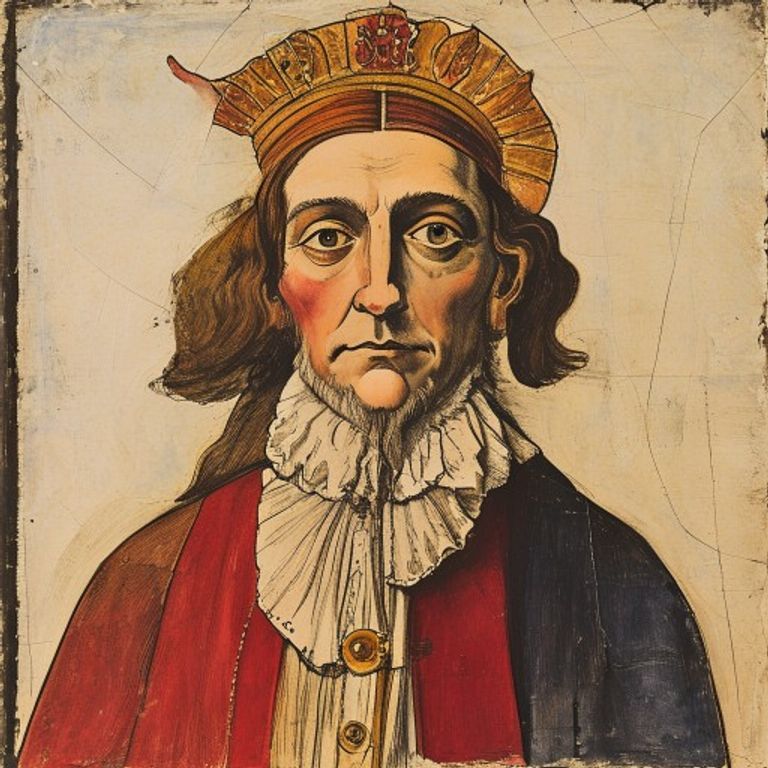
The author of 'The Little Prince' disappeared during an aerial reconnaissance mission over the Mediterranean in 1944, his exact whereabouts remaining an absolute enigma for over half a century.
⚠️ Research conducted with the assistance of Deep Research is subject to referential ambiguity.
🖥️ Clean HTML code using a proprietary tool.
👥 Research by Guilherme Felipe, Curation by Sílvio Lôbo
Antoine de Saint-Exupéry's Flight Without Return: Between Legend and Reality
By [Your Name], Senior Investigative Journalist
1. The Context and the Incident: The Last Flight in Search of Freedom
The sky, which served as the stage for Antoine de Saint-Exupéry's greatest adventures and inspirations, also became the setting for his most profound and enduring disappearance. A writer, poet, and aviator, Saint-Exupéry was already an iconic figure even before his final mission. In the midst of World War II, he enlisted in the Free French Air Forces, seeking to actively contribute to the fight against Nazi occupation. It was during a photographic reconnaissance mission over the region of Sardinia, in Italy, that the mystery began to unfold.
On the afternoon of July 31, 1944, the Lockheed P-38 Lightning, piloted by the author of "The Little Prince" himself, took off from an airfield in Corsica. His task was to map and gather information on enemy defenses. However, the aircraft and its pilot never returned. The sudden and inexplicable disappearance of such a well-known and beloved man triggered a wave of speculation that continues to this day, transforming his last flight into one of aviation's and history's most emblematic unsolved cases.
2. Timeline of Events: The Dissolution of a Trail
Reconstructing the events surrounding Antoine de Saint-Exupéry's disappearance is an arduous exercise, marked by a scarcity of direct testimonies and the fleeting nature of wartime events.
- July 31, 1944, Morning: Saint-Exupéry, known for his extensive experience as a long-time pilot, prepares for a reconnaissance mission in his Lockheed P-38 Lightning. He is based in Corsica.
- July 31, 1944, Afternoon: Saint-Exupéry's aircraft takes off, presumably from Borgo, Corsica. The mission involves flying over Sardinia and possibly other areas of the Mediterranean occupied by Axis forces.
- July 31, 1944, Afternoon/Evening: The aircraft does not return to base. Radio signals cease. An initial search is launched but is unsuccessful in locating the plane or its pilot.
- August 1944 onwards: Several search attempts are made by Allied forces, but Saint-Exupéry's trail seems to have evaporated into thin air. Initial reports suggest the aircraft may have been shot down.
- 1998: A fisherman finds an identification bracelet bearing the name "Reynald S. de Saint-Exupéry" off the coast of Marseille. The bracelet is later identified as belonging to the writer, found in waters that do not align with the planned route.
- 2000: A French diving team, led by Henri-Germain Delauze, discovers wreckage of a Lockheed P-38 Lightning in the depths of the Mediterranean Sea, about 80 km southwest of Marseille. Among the wreckage are parts of the cockpit and a serial number that, upon analysis, is consistent with Saint-Exupéry's aircraft.
- 2003: The remains of an aviator are found in one of the wreckage pieces and, after DNA testing, are confirmed to be those of Antoine de Saint-Exupéry. The discovery, however, raises new questions, as the location of the wreckage is far from the original mission area.
3. The Main Theories: A Patchwork of Possibilities
The mystery surrounding Saint-Exupéry's disappearance has fueled a myriad of theories, some grounded in fact, others floating in the realm of speculation.
Theory 1: Shot Down by the Enemy (Probable Hypothesis)
This is the most widely accepted and, in many respects, the most logical hypothesis. Saint-Exupéry's mission was over hostile territory, and the presence of German or Italian aircraft in the region was constant. The P-38 was a fighter and reconnaissance aircraft, but it was vulnerable. The theory suggests that the aircraft may have been detected by enemy fighters or anti-aircraft fire and shot down. The wreckage found in 2000 could be the result of a forced landing in the water after being damaged, or even a direct impact.
Based on: Military reports from the time indicating aerial combat in the region, and the fact that similar aircraft were lost in combat. The compatible serial number of the found wreckage.
Theory 2: Mechanical Failure or Pilot Error (Probable Hypothesis)
Despite Saint-Exupéry's vast experience, aviation in the 1940s was inherently dangerous. Unexpected mechanical failures in complex equipment, especially under combat flight conditions, could lead to a fatal accident. A navigation error, disorientation, or a sudden health issue during flight are also possibilities. However, the absence of a distress call or any sign of struggle argues against this theory as the sole explanation, unless the failure was catastrophic and instantaneous.
Based on: The inherent risks of aviation, even for experienced pilots.
Theory 3: Capture or Desertion (Historical Speculation)
This theory, while less credible, gained some traction due to the context of the war and Saint-Exupéry's persona. Some suggest he might have been captured by the Germans and, for some reason, his death was not disclosed. Another, darker variation, posits the possibility that he deserted, seeking to escape the pressures of war or his own fame. However, there is no substantial evidence to support such claims, and the discovery of wreckage with remains makes this theory highly improbable.
Based on: Narratives about prisoners of war and the desire of some to "find" the author alive.
Theory 4: Conspiracy and Paranormal Theories (Speculation)
As is common in cases of disappearances of public figures, more fanciful theories have emerged. Some involve the idea that Saint-Exupéry was the target of a secret conspiracy, perhaps because he discovered something compromising during his missions. Others, more esoteric, flirt with the idea that he "transcended" or left this plane of existence in some mysterious way. These theories lack any factual basis and fall into the realm of fiction.
Based on: The desire to find unconventional explanations for deep mysteries.
Theory 5: The Encounter with the German Pilot (Controversial Theory)
A theory that has gained prominence in recent decades, and which has generated controversy, involves an encounter with a German pilot. Horst – a Luftwaffe pilot – allegedly claimed to have shot down an American aircraft on July 31, 1944, and years later, identified the aircraft as Saint-Exupéry's. He reportedly regretted his action and, sometime later, sought out Saint-Exupéry's family to apologize. The discrepancy between the planned route and the location of the wreckage found in 2000 is a crucial point for this theory, suggesting that Saint-Exupéry may have deviated from his route and been intercepted closer to the French coast.
Based on: Testimonies from a German pilot and reports of his subsequent remorse. The location of the wreckage in 2000 is the main argument in its favor, suggesting a possible alternative route or combat closer to the coast.
4. Controversies and Blind Spots: Where Truth Dissolves
The investigation and subsequent discovery of Saint-Exupéry's wreckage were not without controversies and gaps that fuel debate.
- The Location of the Wreckage: The main controversy revolves around the location of the wreckage found in 2000, about 80 km southwest of Marseille. This area is significantly distant from the planned mission route to Sardinia. How did the aircraft get so far? Does this support the theory of a route deviation or combat that led it to this region? Or does it suggest that the identification of the wreckage as Saint-Exupéry's aircraft may be flawed?
- Incomplete Identification of Remains: Although the remains were confirmed to be Saint-Exupéry's through DNA, forensic analysis of the exact conditions of death or whether there were prior injuries before the crash is limited.
- Late and Contradictory Testimonies: The German pilot theory, for example, is based on testimonies that emerged decades after the event. The reliability of these accounts, especially when confronted with official documents from the time, is questioned.
- Ignored Clues and Incomplete Archives: In the urgency of war, much information may have been lost or deemed unimportant. The declassification of military archives later often reveals details that could have shed light on the case, but not always conclusively.
- The Identification Bracelet: The discovery of the bracelet in 1998, near Marseille, was a crucial milestone, but its location, far from the expected route, only intensified the mystery. Why was it there? Was it carried by sea currents after the crash?
5. Curiosities and Legacy: The Legend That Persists
Antoine de Saint-Exupéry's disappearance transcended the military sphere to become a cultural icon. His figure as the aviator-poet, the creator of a timeless universe in "The Little Prince," ensured that his mystery would never be forgotten.
- Literary Legacy: The impact of his work, especially "The Little Prince," continues to inspire generations, adding a layer of poetic melancholy to his disappearance. Many see in the aviator a character who, like his own characters, sought a greater truth, a meaning to existence, to the ends of the sky.
- Enduring Fascination: The case of Saint-Exupéry exemplifies human fascination with unsolved mysteries, especially when they involve figures of great charisma and cultural impact. The search for answers continues, driven by new discoveries and reinterpretations of old evidence.
- Current Status: Although Saint-Exupéry's remains have been identified, the case itself, in terms of the exact circumstances of his disappearance, officially remains unsolved in the sense of a definitive and incontestable explanation. Official investigations were closed after the identification of the remains, but public debate and independent research continue. The discovery of the wreckage, while significant, brought more questions than definitive answers, allowing the veil of mystery surrounding the aviator-poet's last flight to remain intact.
Antoine de Saint-Exupéry continues to fly in our imagination, a symbol of the relentless search for meaning in a complex and, at times, tragic world. His last flight, a question mark etched in the sky of 1944, echoes as a perpetual invitation to reflect on the limits of knowledge and the enduring power of legends.



