


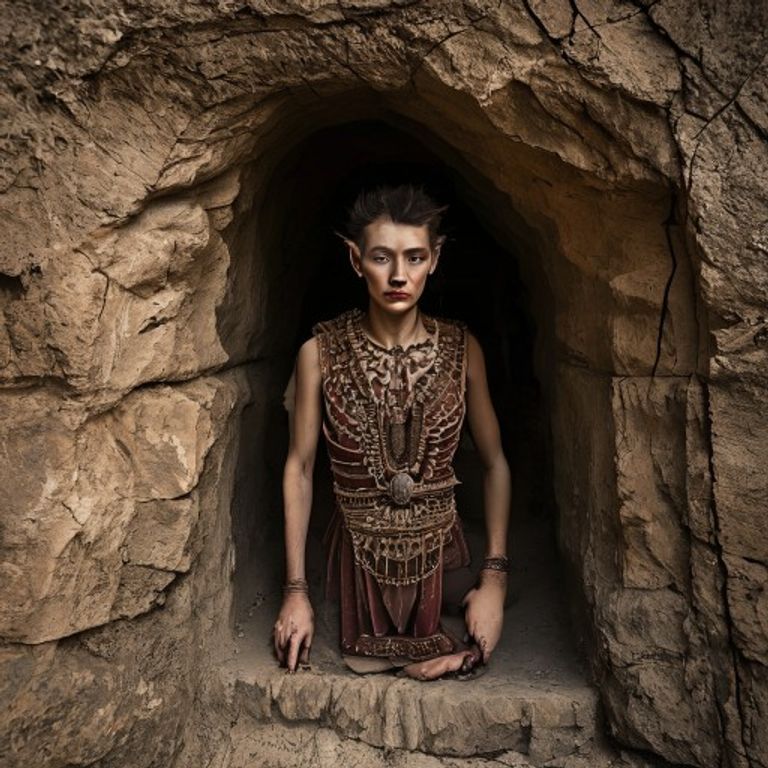
A vast network of caves in Ecuador supposedly houses a metallic library from an ancient civilization, attracting expeditions that even included astronaut Neil Armstrong.
⚠️ Research elaborated with the aid of Deep Research is subject to referential ambiguity.
🖥️Clean HTML code using a proprietary tool.
👥 Research by Guilherme Felipe, Curation by Sílvio Lôbo
The Enigma of Cueva de los Tayos: An Investigative Account
Amidst the dense and unexplored jungles of Ecuador, lies a place that echoes with whispers of mystery and intrigue: Cueva de los Tayos (Cave of the Tayos). More than just a geological formation, this complex system of underground caves has become the epicenter of one of modern history's most persistent enigmas, attracting explorers, scientists, and, inevitably, theories that challenge logic and reason.
This article aims to unravel, with analytical rigor, what we know and what remains shrouded in mist about Cueva de los Tayos. We will carefully separate proven facts from speculation, delving into reports, testimonies, and the enigmatic nature of the site itself.
1. The Context and the Incident: Where, When, and How the Mystery Began
The modern history of Cueva de los Tayos as a center of mystery gained momentum from the 1960s onwards. Located in the province of Morona Santiago, in southeastern Ecuador, near the border with Peru, the cave was already known to local indigenous tribes, such as the Shuar, who used it as a refuge and hunting ground. The name "Tayos" derives from the nocturnal bird Steatornis caripensis, known locally as tayos, which inhabits its depths in large numbers.
What transformed Cueva de los Tayos into a focal point for investigations and conspiracy theories was largely the alleged discovery of artifacts and evidence of an advanced, or even extraterrestrial, civilization that inhabited the site in ancient times. The most prominent narrative that catalyzed international interest involves the Hungarian-Argentine explorer and pilot Juan Moricz.
In 1965, according to reports, Moricz received information from Shuar indigenous people about the existence of a vast network of underground tunnels containing metallic artifacts of unknown origin. Upon exploring the cave, Moricz allegedly found, in inaccessible depths, a supposed "metallic library" with engraved plates and objects suggesting a technology and culture far older than those known.
Although Moricz presented some of these findings to the public and researchers, the exact nature and authenticity of many of the artifacts became the core of the mystery. The lack of unrestricted access and the secretive nature surrounding some explorations fueled speculation about what truly existed (or exists) in the depths of Cueva de los Tayos.
2. Timeline of Key Events
A chronological reconstruction of the events surrounding Cueva de los Tayos is crucial to understanding the evolution of the mystery:
- Pre-Colonial and Local Historical Periods: Ancestral knowledge of the Shuar indigenous tribes about the cave. Use as a refuge, hunting ground, and possibly for rituals.
- 1950s/Early 1960s: Rumors and local stories about the cave's depths and possible unusual findings begin to circulate.
- 1965: Juan Moricz reports his first expedition to Cueva de los Tayos and the alleged discovery of metallic artifacts and a "metallic library."
- Late 1960s: Moricz presents some of his findings at conferences and to researchers, generating the first major international buzz.
- 1976: A renowned international expedition, led by Major Derek Denman, with the participation of British and Ecuadorian scientists and military personnel, conducts a more detailed exploration. The expedition sought to validate Moricz's claims and explore the vastness of the cave.
- 1978: Swiss explorer Erich von Däniken, known for his theories about extraterrestrial visitors, visits Ecuador and becomes deeply interested in the case, adding more fuel to alternative theories.
- 1980s onwards: Several other expeditions, both scientific and by independent explorers, take place in the region, but with increasingly restricted access, especially to the areas allegedly explored by Moricz.
- Recent Years: Interest in Cueva de los Tayos persists, with new explorations and ongoing debate about the veracity of the original discoveries.
3. The Main Theories
The mystery of Cueva de los Tayos is fertile ground for various interpretations, ranging from scientific skepticism to faith in the supernatural.
3.1. Scientific and Police Hypotheses
-
Geology and Biology: The cave itself is a remarkable geological phenomenon, with unique formations and underground ecosystems adapted to darkness. The presence of natural niches, unknown galleries, and difficult access can explain the existence of rock formations that resemble artifacts or natural "sculptures."
-
Indigenous Culture and Primitive Art: Artifacts found in the caves could be the work of ancient pre-Columbian civilizations or even more recent Shuar tribes, with primitive artistic and metallurgical techniques. Some engravings may have been misinterpreted due to limited knowledge.
-
Fraud and Overinterpretation: One of the most pragmatic theories suggests that Juan Moricz, or the sources who provided him with information, may have exaggerated or fabricated part of the discoveries. The description of a "metallic library" with thousands of plates could be a fantasy or a misinterpretation of found rocks or minerals.
-
Subterranean Navigation or Ancient Mining Complexes: The possibility of tunnels created by ancient civilizations for navigation or mining purposes is plausible, but evidence of advanced technology remains scarce and contested.
3.2. Alternative, Conspiracy, or Paranormal Theories
-
Advanced Ancient Civilization (Atlantean, Lemurian, etc.): This is one of the most popular theories. The idea is that Cueva de los Tayos served as a refuge or a repository of knowledge for lost and highly advanced civilizations that possessed technologies superior to ours. The metallic artifacts would be proof of this technology.
-
Extraterrestrial Origin: The most audacious theory suggests that the artifacts and the cave's structure itself were created or modified by extraterrestrial beings. The "metallic library" would be a record of cosmic history or alien knowledge. Erich von Däniken popularized this idea, connecting it with other evidence of alien intervention in ancient civilizations.
-
Dimensional Portals or Subterranean Bases: Some paranormal theories suggest that the cave may house portals to other dimensions or be an operational base for unknown beings, whether terrestrial or of other origin.
-
Government Conspiracy to Hide the Truth: Many believe that governments (Ecuadorian, and possibly others) possess knowledge about the true nature of Cueva de los Tayos, including the existence of invaluable technologies or artifacts, and are actively suppressing this information to prevent panic or for their own purposes.
4. Controversies and Blind Spots
The investigation into Cueva de los Tayos is rife with inconsistencies, overlooked clues, and a veil of secrecy that fuels controversies:
-
Authenticity of Artifacts: The greatest controversy lies in the authenticity and origin of the artifacts presented by Juan Moricz. Independent expert reports on these items are scarce or contested. The lack of public access to detailed and comprehensive analysis prevents definitive conclusions.
-
Official Reports and Declassification: Although the 1976 expedition was widely documented, many specific details and discoveries remained classified for long periods. Complete declassification of all official reports, if they exist, would be crucial for transparency.
-
Conflicting Testimonies: Accounts from different explorers and indigenous guides vary in detail, especially regarding the exact location of the most significant findings and the nature of the objects discovered. The interpretation of these testimonies is often influenced by the investigators' pre-existing beliefs.
-
Overlooked or Lost Clues: The intrinsic difficulty of exploration, the vast extent of the cave system, and the possibility that findings were lost, damaged, or intentionally hidden create significant blind spots in the narrative.
-
Restricted Access and Information Control: Access to the Cueva de los Tayos area is controlled by Ecuadorian authorities, especially in zones considered of archaeological or strategic interest. This control, while possibly justified by preservation, also raises suspicions about what is being kept out of public reach.
5. Curiosities and Legacy
Cueva de los Tayos has transcended the realm of scientific exploration to become an icon of popular culture and a symbol of an unsolvable mystery.
-
Cultural Influence: The case has inspired books, documentaries, and heated debates about human history, the possibility of lost civilizations, and interaction with beings from other worlds. Erich von Däniken capitalized heavily on the generated interest, using the case as one of the pillars of his theories.
-
The Explorer's Challenge: The cave, with its labyrinthine tunnels and unfathomable depths, continues to attract adventurers and scientists seeking to unravel its secrets. However, the logistical complexity and risks involved make each expedition a challenging undertaking.
-
Current Status: The case of Cueva de los Tayos has not been officially "reopened" or "closed" in the traditional sense of a criminal case. It remains in limbo, a historical and archaeological mystery that constantly attracts new research and speculation. The Ecuadorian government is interested in protecting the site and promoting responsible research, but access to the more controversial areas remains limited.
-
The "Metallic Library" Persists: The idea of a vast collection of metallic plates engraved with ancestral or alien knowledge continues to be the most alluring and mysterious element of the case, fueling the imagination and the hope that one day the truth will be fully revealed.
Cueva de los Tayos is a powerful reminder that, even in our increasingly mapped and digitized world, there are still places where the unknown resides, challenging our certainties and inviting us to question what we think we know about our past and our place in the universe.



