


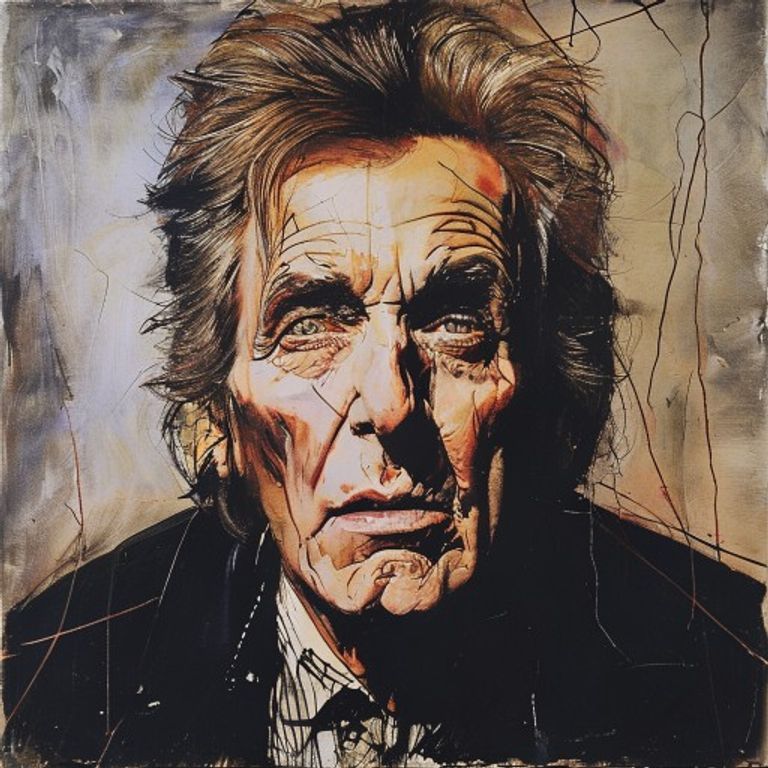
The artist's passing in 2016, days after the release of an album that served as a planned farewell, ending one of rock's most influential careers.
⚠️ Research conducted with the aid of Deep Research is subject to referential ambiguity.
🖥️ Clean HTML code using a proprietary tool.
👥 Research by Guilherme Felipe, Curation by Sílvio Lôbo
The Final Whisper: Unraveling the Enigma of David Bowie's Death
On January 10, 2016, the world of music and culture was shaken by devastating news: the death of David Bowie. Initially presented as a private battle against cancer, the way this struggle was handled and the details that subsequently emerged cast a shadow of mystery over the iconic artist's final days. This investigative article aims to dissect the "Case of David Bowie's Death," separating irrefutable facts from speculation and unraveling the layers of an enigma that still resonates.
1. The Context and the Incident: The Silence Before the Storm
The mystery of David Bowie's death does not lie in a crime scene or a sudden, public event, but rather in the deliberately discreet way his final moments were managed. Bowie, a master of reinvention and public persona, opted for near-absolute silence regarding his health in the months leading up to his passing. The news of his liver cancer diagnosis, discovered in 2014, was kept in absolute secrecy, even from many of his closest collaborators.
The incident that marked the end of Bowie's earthly life occurred at his residence in SoHo, New York, on January 10, 2016. The official announcement was made on his social media channels, with a statement from his family confirming his death after a "courageous 18-month battle with cancer." The lack of explicit medical details and the timing, close to the release of his final album, "Blackstar," on his 69th birthday (January 8, 2016), added layers of intrigue.
2. Timeline of Key Events
- March 2014: David Bowie is diagnosed with liver cancer. The illness is kept secret.
- 2015: Bowie secretly records "Blackstar," an album conceived as a "farewell gift" to his fans.
- January 8, 2016: Release of the album "Blackstar" in celebration of Bowie's 69th birthday. The album, with dark and thematic music videos, is later interpreted as a premonition.
- January 10, 2016: David Bowie passes away at his home in SoHo, New York, at age 69.
- January 11, 2016: The news of his death is publicly announced through his official channels.
- January 12, 2016: Bowie's body is cremated in a private ceremony in New York. His ashes are scattered in Bali, Indonesia.
3. The Main Theories
The mystery surrounding Bowie's death is not of a criminal nature, but rather concerns how his illness and final days were managed, fueling various interpretations.
3.1. Scientific and Medical Hypotheses (Proven Facts)
- Liver Cancer Diagnosis: A fact confirmed by the family and widely reported. The progression of the disease is the primary factor that led to his passing.
- Experimental Treatment: Speculations suggest that Bowie may have participated in experimental treatments, which would explain the secrecy and the intensity of his final struggle. However, no official medical report has detailed these treatments.
3.2. "Planned End" and Conceptual Art Theories
- "Blackstar" as Artistic Testament: The most widespread and plausible theory is that "Blackstar" was deliberately created as a final work, a piece of art that reflects on mortality. The music videos, in particular, contain symbolism regarding death, rebirth, and transcendence.
- "Death" as Performance Art: Some speculate that Bowie's "death" itself was conceived as one last great performance, a final act of reinvention to shock and inspire. The discretion and timing point to meticulous control over his final narrative.
3.3. Alternative and Paranormal Theories (Speculation)
- Extraterrestrial Connections and Occultism: Bowie was always associated with cosmic and mystical themes. More speculative theories suggest his death may have been influenced by non-terrestrial forces or occult practices, given his fascination with these themes throughout his career. There is no concrete evidence to support such claims.
- Media Manipulation and "Simulation": In more conspiratorial circles, the idea circulates that Bowie's death was a simulation, an elaborate hoax to withdraw from public life. This theory lacks any factual basis.
4. Controversies and Blind Spots
The main blind spot in the "Case of David Bowie's Death" is the extreme privacy maintained regarding his illness. While respectable from the family's perspective, this fueled speculation.
- Lack of Medical Details: Detailed official medical reports regarding the specific type of cancer, the stage, and the treatment received were not publicly disclosed, which prevents a deeper clinical analysis.
- Silence of Close Collaborators: Although understandable due to the secrecy, the lack of detailed comments from people very close to Bowie about his final days contributes to the atmosphere of mystery.
- The Meaning of "Blackstar": The interpretation of the symbols in "Blackstar" as premonitions is a form of posthumous reading. While powerful, it is an artistic interpretation and not a proven fact that Bowie explicitly intended this meaning.
5. Curiosities and Legacy
The legacy of David Bowie transcends his music. His death, wrapped in a carefully constructed veil of mystery, reinforced his image as an enigmatic and visionary artist.
- Cultural Impact: The news of his death generated a global wave of mourning and tribute. Artists from around the world celebrated his life and work, and "Blackstar" was acclaimed as one of the most important albums of 2016.
- The "Farewell Gift": The decision to release "Blackstar" a few days before his death solidified the idea that Bowie orchestrated his exit with the same mastery with which he shaped his career. The album is seen as a final act of artistic control and a touching farewell to his fans.
- Current Status of the "Case": The "Case of David Bowie's Death" is not an open police or legal case. It was a tragic event, handled with the privacy the family desired. The mystery lies in the interpretation of his final days and his final work, an enigma that will continue to fascinate and inspire for generations.
- The Mystery of the Will: There are curiosities about the exact content of his will and the destination of his fortune, part of which was allocated to projects linked to music and art, reinforcing his legacy.
Ultimately, the "Case of David Bowie's Death" does not offer definitive answers in a traditional sense. Instead, it invites reflection on art, mortality, and the way we choose to leave our mark on the world. The enigma is not in the cause of his death, but in the narrative that he, with his unmistakable genius, chose to leave for us.



