


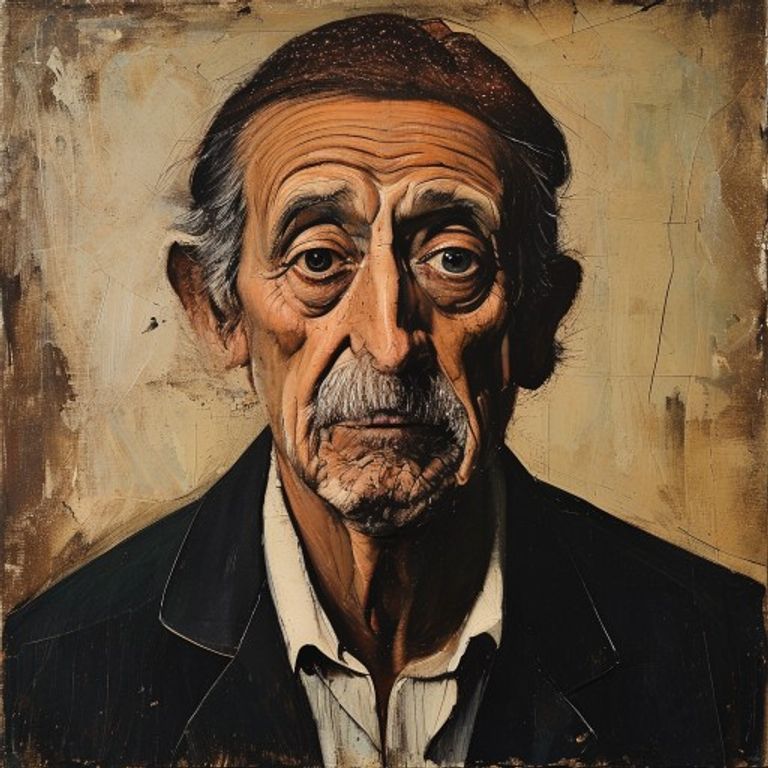
The Italian philosopher and mathematician burned at the stake by the Inquisition in 1600 for defending the infinity of the universe and the existence of multiple inhabited worlds.
⚠️ Research conducted with the aid of Deep Research is subject to referential ambiguity.
🖥️ Clean HTML code using a proprietary tool.
👥 Research by Guilherme Felipe, Curation by Sílvio Lôbo
Fire and Mind: The Unfinished Mystery of Giordano Bruno
In an era where the Earth was the unshakeable center of the universe, one man dared to challenge this cosmic order. Giordano Bruno, a Renaissance philosopher, theologian, and cosmologist, was not just a thinker ahead of his time; he was a martyr for ideas, whose tragic end in Rome on February 17, 1600, echoes through the centuries as one of the most profound and unsettling mysteries of intellectual history. This article delves into the fragments of a case that transcends mere religious judgment, entering the depths of heresy, persecution, and the search for truth, even if that search leads to the stake.
1. The Context and the Incident: Where, When, and How the Mystery Began
The mystery of Giordano Bruno did not begin on a single night of crime or an isolated event. It unfolded over years of persecution, exile, and a prolonged trial by the Roman Inquisition. Bruno, born Filippo Bruno in Nola, Kingdom of Naples, in 1548, was a restless spirit. His mind teemed with ideas that flirted dangerously with Catholic orthodoxy. He believed in an infinite universe, populated by countless stars and inhabited worlds, a conception that dismantled the prevailing geocentric and theocentric view.
His theories were not limited to cosmology. Bruno also questioned fundamental dogmas of the Christian faith, which led to constant conflicts with religious authorities throughout Europe. After years of wandering through various cities, such as Geneva, Paris, London, Oxford, and Prague, he was lured back to Italy, believing in an environment more conducive to his ideas under the promise of a safe conduct. However, in 1592, in Venice, he was betrayed by a Venetian nobleman, Giovanni Mocenigo, and handed over to the Inquisition. The trial that followed, and culminated in his conviction and execution at the stake in Campo de' Fiori, in Rome, is the epicenter of the mystery: what exactly sealed his fate and why?
2. Timeline of Key Events
- 1548: Birth of Filippo Bruno in Nola, Kingdom of Naples.
- 1576: Bruno flees Naples after being accused of heresy and joins the Dominican Order, adopting the name Giordano.
- 1580-1585: Period of intense intellectual activity and conflict in Europe, including stays in Geneva, Paris, London, and Oxford. Bruno presents his cosmological and philosophical theories.
- 1585: Return to Paris, where he continues his dissertations and controversial publications.
- 1586-1588: Stay in Prague, where he publishes important works such as "De la causa, principio e uno" and "De l'infinito, universo e mondi".
- 1591: Bruno returns to Italy, settling in Padua.
- 1592: Bruno is denounced by Giovanni Mocenigo in Venice and arrested by the Venetian Inquisition.
- 1593: Bruno is handed over to the Roman Inquisition authorities and transferred to Rome.
- 1593-1600: Long and tortuous trial in Rome, with interrogations, partial confessions, and stubborn refusals to renounce his beliefs.
- 1600: On February 8, Bruno is declared guilty of heresy and sentenced to death. On February 17, he is executed at the stake in Campo de' Fiori, Rome.
3. Main Theories
The mystery surrounding Giordano Bruno lies in the exact motivations behind his conviction and death. Explanations range from historical and theological interpretations to speculations about power games and even more fantastic theories.
3.1. Heresy as the Primary Motive (Official Hypothesis)
This is the official explanation of the Inquisition and the theory most widely accepted by historians. Bruno was convicted for a set of propositions considered heretical by the Catholic Church. His crimes included:
- The belief in an infinite universe with multiple inhabited worlds, which contradicted Aristotelian-Ptolemaic cosmology and the centrality of the Earth as God's work for humanity.
- Questioning the divinity of Christ, transubstantiation, and the Trinity.
- Adherence to Neoplatonic and Hermetic ideas that the Church viewed with suspicion.
- His refusal to renounce these doctrines, even under torture and threats, was seen as obstinacy and contumacy, which aggravated his situation.
Logic: The Inquisition's mission was to eradicate heresy and maintain the purity of the faith. Bruno's propositions were, in fact, a direct affront to established dogmas and represented an intellectual and spiritual danger to the Church.
3.2. Political and Personal Persecution (Conspiracy/Historical Theory)
Some argue that heresy was merely a pretext for Bruno's conviction. Theories suggest:
- Personal Enmity: The denunciation by Giovanni Mocenigo, his host in Venice, may have had personal motivations of revenge or jealousy, exploiting Bruno's vulnerability.
- Power Games: Bruno became a pawn in power struggles between the Church and other European powers, or even within the Church itself. His radical ideas could be seen as a threat to the social and political order, not just the religious one.
- Diverse Accusations: Beyond heresy, Bruno was accused of magical practices and insults to the faith. The breadth of the accusations may indicate an attempt to build a solid case against him, regardless of the veracity of each item.
Logic: History is full of examples of individuals silenced or persecuted for reasons beyond the formal accusation. Bruno's eccentric nature and reputation as an agitator may have facilitated his demonization.
3.3. Philosophical Obstinacy and the Martyr of Truth (Philosophical/Humanist Theory)
This perspective focuses on Bruno's intellectual integrity. He was not a heretic by whim, but by deep conviction in his theories, which he saw as the true face of reality.
- Bruno believed his cosmological and philosophical ideas were manifestations of divine truth, not blasphemy.
- His refusal to recant was not blind stubbornness, but an uncompromising defense of his intellect and his understanding of the universe.
- He is seen as a precursor to modern scientific thought, a martyr who paid the ultimate price for defending freedom of thought and rational inquiry.
Logic: Bruno's courage in the face of death, without renouncing his convictions, is a testament to his strength of character and dedication to the search for truth, making him a symbol of intellectual resistance.
3.4. Alternative and Paranormal Theories (Speculation)
Although without concrete factual or historical foundation, the mystery of Bruno has attracted more esoteric speculations:
- Esoteric Connections: Bruno's adherence to certain currents of Hermeticism and Kabbalah led some to speculate about secret knowledge or even influences from other dimensions.
- Aliens and Time Travel: At one extreme, some theorize that Bruno's visions of multiple inhabited worlds could be "glimpses" of extraterrestrial realities, or that he possessed knowledge that transcended his time.
Logic: These theories arise from the fascination with the boldness of Bruno's ideas and the inexplicable nature of his knowledge, extrapolating into the supernatural or fictional.
4. Controversies and Blind Spots
The case of Giordano Bruno, despite its seemingly definitive conclusion, is permeated by controversies and gaps that fuel the mystery:
- Incomplete Documentation: Although the Inquisition's trial records have been preserved, some crucial details of the investigation, such as complete transcripts of interrogations or specific testimonies, may have been lost or censored over time.
- The Role of Mocenigo: The exact motivation of Giovanni Mocenigo for denouncing Bruno remains under debate. His personal motives may have been exploited by the Inquisition to accelerate the conviction.
- The Duration of the Trial: Bruno's trial lasted eight years. This long duration suggests that the Inquisition may have sought a forced retraction, but also indicates a difficulty in gathering concrete evidence or obtaining the desired confession.
- Refusals to Recant: Bruno's obstinacy in not renouncing his beliefs was a determining factor in his conviction. However, the exact nature of the final conversations and offers of pardon (if any) are unclear. Reports indicate he refused to renounce "about twenty-six propositions" that the Church considered heretical.
- "Martyr of Reason" vs. "Heretical Prophet": The debate over whether Bruno should be seen as a martyr for freedom of thought or as an obstinate heretic who deliberately challenged the established faith continues. Historians disagree on the degree of his fanaticism and the real impact of his ideas at the time.
5. Curiosities and Legacy
Giordano Bruno's legacy is complex and enduring, transcending the boundaries of philosophy and entering popular culture.
- A Symbol of Freedom of Thought: Bruno has become an icon of the struggle for intellectual and scientific freedom. His execution is frequently cited as an example of the Church's repression of the progress of knowledge.
- The Monument in Campo de' Fiori: In 1889, in protest against the temporal power of the Papacy, a monument in his honor was erected in Campo de' Fiori, the site of his execution. On the pedestal, an inscription proclaims him "the century he predicted everywhere."
- Later Influence: Although his cosmological ideas were not immediately accepted or developed, the vision of an infinite universe and the possibility of other worlds found resonance in later thinkers, such as Galileo Galilei and Isaac Newton, who paved the way for modern astronomy.
- Current Status of the Case: The case of Giordano Bruno is historically archived. The Catholic Church, through the Vatican, at moments like the Year 2000, expressed regret for past actions of the Inquisition, but there is no formal "reopening" process for this specific case. The analysis and reinterpretation of his legacy and his conviction continue to be the subject of academic study and debate.
- The "Philosophical Death Penalty": Some historians argue that the accusation of heresy was, in essence, a form of "philosophical death penalty," used to silence those whose ideas could destabilize the prevailing power and belief structure.
The fire that consumed Giordano Bruno in 1600 did not extinguish his ideas, but immortalized them in a twilight of mystery. His story reminds us of the dangerous dance between faith, reason, and power, and of the eternal struggle for the freedom to think, even when that freedom demands the ultimate sacrifice.



