


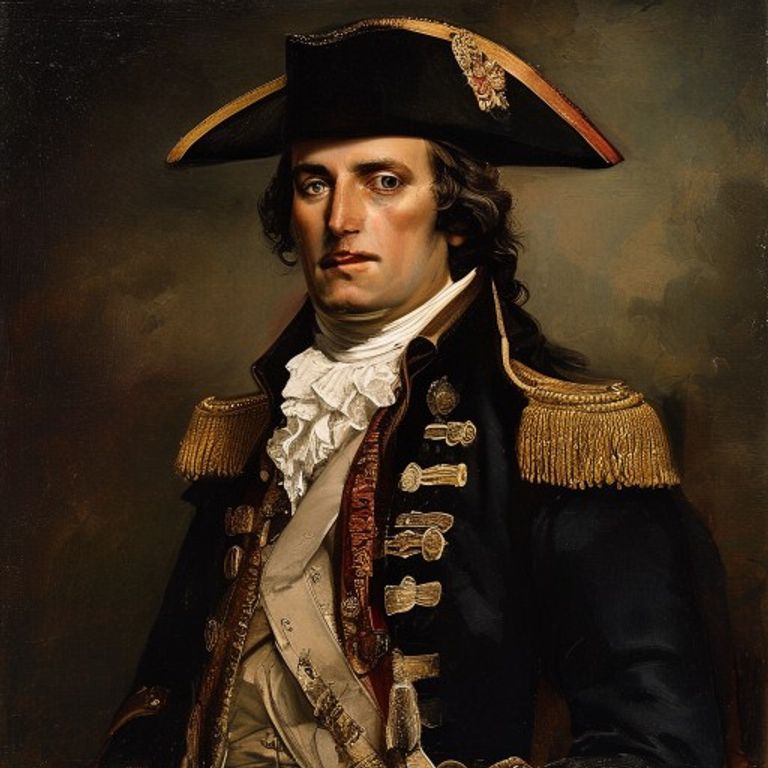
The emperor died in exile in 1821; although the official report cites cancer, the high concentration of arsenic found in his biological samples suggests slow and deliberate poisoning.
⚠️ Research prepared with the aid of Deep Research is subject to referential ambiguity.
🖥️ Clean HTML code using a proprietary tool.
👥 Research by Guilherme Felipe, Curation by Sílvio Lôbo
The Emperor's Enigma: Unraveling the Mystery of Napoleon Bonaparte's Death
History is filled with monumental figures whose lives and deaths continue to spark debate and speculation. Few, however, reach the status of an enigma as persistent as the passing of Napoleon Bonaparte. Exiled on a remote island, the once-powerful emperor of France succumbed under circumstances that, to this day, fuel a fascinating and sometimes dark mystery. This article investigates the layers of uncertainty surrounding the death of one of the most influential personalities in Western history.
The Context and the Incident: The End of an Empire on Saint Helena
After his final defeat at the Battle of Waterloo in 1815, Napoleon Bonaparte was deported by the British to the island of Saint Helena, an isolated British outpost in the South Atlantic. There, under the strict surveillance of Governor Sir Hudson Lowe, the former emperor spent his final years, a prisoner in a tropical paradise that became his final prison. It was on May 5, 1821, at the age of 51, that Napoleon drew his last breath, closing an epic chapter of European history. The official report of the time declared the death as the result of stomach cancer, a disease that also claimed his father. However, the unusual circumstances of his exile, the nature of his symptoms, and the legacy of conspiracies that always surrounded him opened the doors to questions and theories that persist to this day.
Timeline of Crucial Events
- June 1815: Napoleon's defeat at Waterloo and subsequent surrender to the British.
- October 1815: Napoleon's arrival on the island of Saint Helena.
- 1815-1821: Period of exile and decline in Napoleon's health on Saint Helena.
- 1821: Increasing malaise and symptoms of advanced illness.
- May 5, 1821: Death of Napoleon Bonaparte at Longwood House, Saint Helena.
- Subsequent years: Autopsy performed, resulting in an official report of stomach cancer.
- Later decades: Emergence of new analyses and theories regarding the cause of death.
The Main Theories: From Natural Disease to Planned Assassination
The wealth of interpretations regarding Napoleon's death reflects the complexity of his life and the environment of distrust that surrounded him. Hypotheses range from scientific explanations to speculations bordering on the paranormal.
1. Stomach Cancer (Official Hypothesis)
- Logic: Based on the post-mortem autopsy, which reported the presence of a gastric ulcer and signs of cancer. The family predisposition (his father died of the same disease) reinforces this line of reasoning.
- Evidence: The autopsy report, although subject to later criticism, is the main pillar of this theory. Reports from the doctors who attended him also mention symptoms compatible with the disease.
2. Arsenic Poisoning (Popular Theory)
- Logic: The later discovery of high levels of arsenic in samples of Napoleon's hair, as well as in personal items and the walls of his residence at Longwood, fueled the hypothesis of slow and deliberate poisoning. Arsenic was a common poison at the time and could be administered subtly.
- Evidence: Modern hair analyses, although questionable regarding external contamination, show significant spikes of arsenic that seem to have occurred at different times in Napoleon's life. The very atmosphere of Longwood, with its furniture and wallpaper impregnated with arsenic present in pigments, raises the possibility of chronic exposure.
- Suspects: The main targets of this theory fall upon Sir Hudson Lowe, the British governor, seen as an implacable enemy of Napoleon, or disgruntled British and French officials who might have had motives to silence the emperor permanently.
3. Inadequate or Voluntary Medical Treatment (Alternative Hypothesis)
- Logic: Some historians suggest that the medical treatment received by Napoleon, which included the administration of drugs such as tartar emetic (a strong emetic), may have aggravated his condition or even contributed to his passing. There is also the possibility that he, suffering and without hope, might have given up fighting for his life.
- Evidence: Medical records of the time detail the treatments administered, which were considered standard but which we now know to have potential severe side effects.
4. Other Theories (Conspiracy and Paranormal)
- Logic: These encompass everything from more elaborate conspiracies, such as a plan orchestrated to remove Napoleon from the European political scene by other powers, to more esoteric speculations involving occult forces or paranormal influences.
- Evidence: These theories lack solid factual foundation and are generally based on subjective interpretations or speculations without documentary support.
Controversies and Blind Spots: The Shadows of the Investigation
The official investigation into Napoleon's death, although it concluded with the cancer hypothesis, presents several flaws and points that fuel distrust:
- Questionable Autopsy: The autopsy was conducted by doctors with varying levels of experience and, crucially, without the presence of family members or an independent investigating judge. The lack of a more detailed report and the possibility of result manipulation are points of contention.
- Hair Samples and Contamination: Modern hair analysis, while revealing, is complex. It is difficult to determine whether the arsenic present is due to direct ingestion, environmental exposure, or even preservation methods used at the time. The Longwood environment itself was known for its humidity and mold, which could affect the integrity of the samples.
- The Role of Sir Hudson Lowe: Governor Lowe was a figure hated by Napoleon and his followers, which makes him a natural suspect for poisoning theorists. His strict administration and his conflicted relationship with the exile created an environment conducive to suspicion. Reports from his detractors describe him as cruel and inflexible.
- Missing or Ignored Evidence: Over the years, various pieces of evidence crucial to the investigation may have been lost or deliberately suppressed. Political volatility and the interest in closing the case quickly may have led to the discarding of relevant information.
- Conflicting Testimonies: Reports from doctors, servants, and officials who were on Saint Helena present inconsistencies regarding Napoleon's symptoms, the administration of treatments, and the general environment of Longwood.
Curiosities and Legacy: The Emperor Who Lives in Doubt
The case of Napoleon Bonaparte's death transcends a mere medical or criminal issue. It has become a cultural phenomenon, inspiring books, films, and countless academic and popular discussions.
- Hair as Evidence: The obsession with Napoleon's hair samples, which have become objects of study and desire, is a testament to the enduring fascination with the character.
- The Legacy of Doubt: The lack of a definitive answer regarding his death contributes to the aura of mystery that surrounds Napoleon. The enigma fuels the narrative of an extraordinary man whose final circumstances could not be less than intriguing.
- Current Status: The case, for official purposes, was closed long ago. However, academically and in the popular imagination, it remains open. New scientific and historiographical analyses continue to emerge, keeping the debate alive. There is no official effort to reopen the case, but historical and forensic investigation continues on different fronts.
As science advances and new analysis technologies emerge, the ghost of Napoleon Bonaparte hovers over Saint Helena, a reminder that even the destinies of great men can be lost in the mists of history and the persistence of mysteries.



