


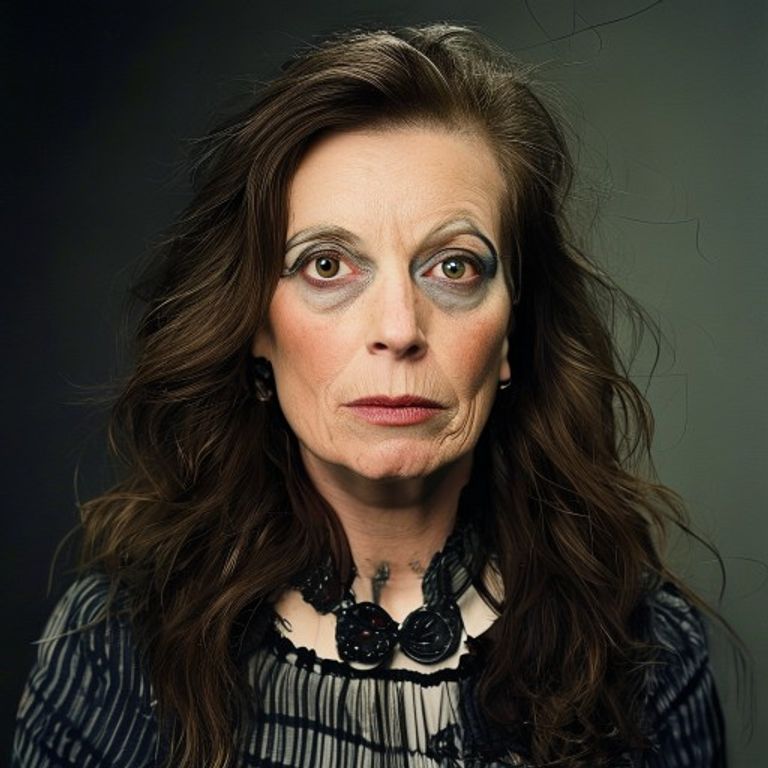
The beloved actor committed suicide in 2014; the autopsy revealed he suffered from Lewy body dementia, a degenerative disease that severely affected his mental health.
⚠️ Research conducted with the aid of Deep Research is subject to referential ambiguity.
🖥️ Clean HTML code using a proprietary tool.
👥 Research by Guilherme Felipe, Curation by Sílvio Lôbo
The Case of Robin Williams' Death: An Investigative Look at a Mystery Wrapped in Sorrow
The news of Robin Williams' passing on August 11, 2014, shocked the world. Celebrated for his unparalleled talent, contagious energy, and his ability to masterfully transition between drama and comedy, the revelation that the actor had taken his own life at his residence in Tiburon, California, left a legion of fans and colleagues in mourning and perplexity. However, behind the public pain lies a mystery that, for some, transcends simple personal tragedy, fueling questions and a search for answers that go beyond the apparent.
1. The Context and the Incident: The Silence Broken by Tragedy
The mystery surrounding Robin Williams' death does not lie in an absence of an official explanation, but rather in the dissonance between the vibrant public figure and the deep darkness the actor was battling in private. Williams was known for his open battle against depression and anxiety, problems he often used as material for his humor, but which, behind the scenes, consumed him. Months before his death, he had been diagnosed with Parkinson's disease, a neurodegenerative condition that, although in its early stages, frightened him and intensified his fears about losing his lucidity and acting ability. The incident occurred at his residence, a quiet refuge in the hills of Tiburon. Police were called to the property around 7:00 PM on August 11, 2014. Upon arrival, they found Robin Williams' body in his bedroom, with no signs of a struggle. The official cause of death, confirmed by the Marin County Coroner's Office, was suicide by asphyxia.
2. Timeline of Events: The Last Days of a Legend
Although the tragedy was sudden for the public, the events leading to Robin Williams' death were complex and marked by a progressive deterioration of his mental and physical health.
- July 2014: Robin Williams checks into a rehabilitation center to deal with depression and alcoholism issues. He publicly reveals his struggles.
- Early August 2014: The actor receives a diagnosis of Parkinson's disease. This intensifies his fears and anguish.
- August 10, 2014: Reports from family and friends indicate that Williams seemed darker and more worried than usual, yet still engaged in conversations and activities.
- August 11, 2014 (Afternoon): According to reports, Williams spent the afternoon at his residence. His wife, Susan Schneider, was away from the house visiting family.
- August 11, 2014 (Evening): Williams' housekeeper finds him unresponsive in his bedroom. Police are called.
- August 12, 2014: The Marin County Coroner's Office releases the preliminary report, confirming death by suicide.
3. Main Theories: Seeking Explanations Amidst Grief
The community and fans, shocked by the loss, sought to understand the reasons that led Robin Williams to take such an action. Theories range from the most plausible and clinically grounded to those that explore the dimension of mystery and speculation.
3.1 Scientific and Police Hypotheses (Most Likely)
* Deep and Treatment-Resistant Depression: This is the official and most widely accepted explanation. Williams had been battling depression for decades, and despite having sought treatment repeatedly, the disease seemed to have become refractory, aggravated by other health conditions. * Fear of Parkinson's Disease Progression: The Parkinson's diagnosis, with the associated fear of losing control over his body and mind, may have been a triggering factor, leading him to believe his future would be one of unbearable suffering and degradation. * Combination of Factors: It is likely that a combination of factors – chronic depression, anxiety, the stigma of mental illness, the impact of the Parkinson's diagnosis, and perhaps even health issues not publicly revealed – culminated in his decision.
3.2 Alternative and Speculative Theories
* **Post-Parkinson's Diagnosis Despair:** Some speculations focus specifically on the immediate psychological impact of the Parkinson's diagnosis. The idea is that the fear of future degradation, incapacity, and the loss of his identity as an artist was overwhelming. * **Substance Influence (Officially Dismissed):** Although initial reports might have raised this hypothesis, the official report ruled out the presence of illicit drugs or medications at toxic levels. There was a presence of prescribed medications for his conditions, but not in doses that indicated acute abuse. * **Conspiracy Theories (Unfounded):** As with many celebrity cases, conspiracy theories emerged, alleging a possible murder or cover-up. However, there is no concrete evidence to support these claims. The police investigation was straightforward and the conclusions were firm based on forensic evidence. * **Paranormal or Supernatural Factors (Highly Speculative):** In specific niches of interest, the case may be explored from the perspective of unexplainable forces. However, these theories lack any empirical or investigative basis and are based purely on speculation and personal beliefs.
4. Controversies and Blind Spots: Gaps in the Public Narrative
Despite the official clarity regarding the cause of death, some aspects of the case fuel debate and the search for a deeper understanding.
- The Exact Nature of Williams' Mental Illness: Although publicly known for his struggles with depression, the extent and complexity of his psychological condition may not have been fully understood by the public. Reports after his death, such as the one mentioning his struggle with Lewy body dementia (a form of dementia associated with Parkinson's), brought new perspectives.
- The Duration of Psychological and Physical Suffering: The exact timeline of the worsening of his symptoms, both psychological and physical (related to Parkinson's), is not public in detail. The internal agony he may have experienced in the days or weeks leading up to his death remains largely in his private sphere.
- The Stigma of Mental Illness: Williams' death laid bare, for many, the persistence of the stigma surrounding mental health issues. The struggle of such a successful and admired individual brought to light the difficulty many people face in seeking help and being understood.
5. Curiosities and Legacy: The Shadow That Does Not Dim the Shine
The case of Robin Williams' death left a complex legacy. It served as a somber warning about the reality of depression and mental illness, even among those who seem to have it all.
- Cultural Impact: Williams' death generated a global wave of mourning and tributes. His films and characters were revisited, and his art was celebrated as a testament to his genius.
- The Legacy of Awareness: The case boosted conversations about mental health, encouraging many people to seek help and speak openly about their own struggles. The Robin Williams Foundation, created by his family, aims to combat mental illness and promote education on the topic.
- Current Status: The case was officially closed as a suicide by the police and the coroner. There are no ongoing investigations. However, the mystery for many does not lie in the cause, but in the depth of the pain that led such a luminous individual to such a tragic end.
- The Fight Against Lewy Body Dementia: The later revelation that Williams also suffered from Lewy body dementia, a particularly debilitating condition, added another layer of understanding to his battle, highlighting the cruelty of multiple coexisting neurological and mental illnesses.
The "Case of Robin Williams' Death" is not a mystery to be solved with clues and suspects, but a poignant reminder of the complexity of the human mind and the silent battle many fight against their own shadows. The brilliance of his art continues to shine, but the darkness that consumed him serves as a persistent echo of the need for compassion, understanding, and support in our journeys.



