


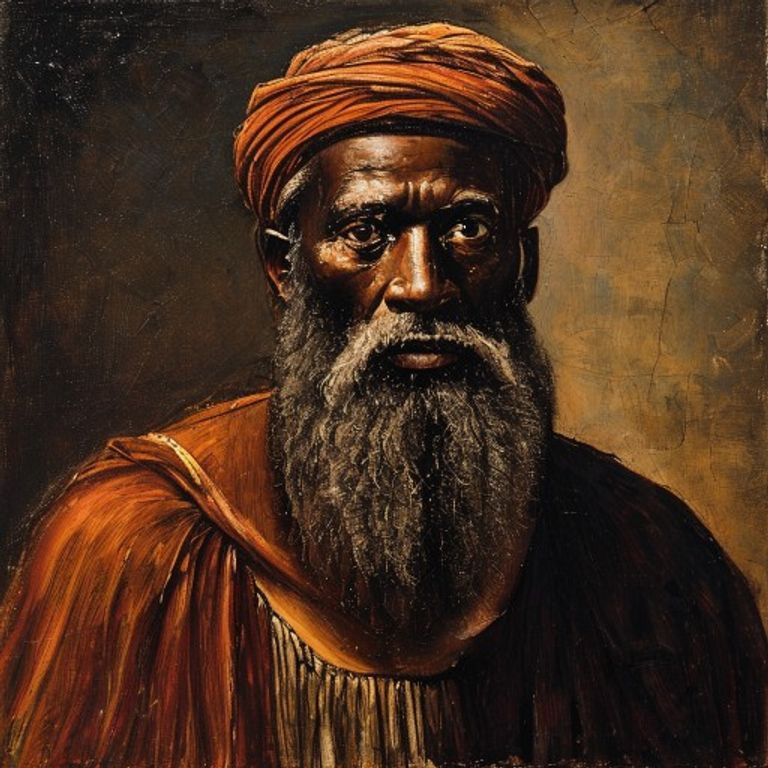
The author of 'Twelve Years a Slave' disappeared mysteriously in 1857, shortly after regaining his freedom and beginning a lecture tour, with his final fate never being known.
⚠️ Research conducted with the aid of Deep Research is subject to referential ambiguity.
🖥️ Clean HTML code using a proprietary tool.
👥 Research by Guilherme Felipe, Curation by Sílvio Lôbo
The Enigma of Solomon Northup: From Captivity to Freedom, An Enslaved Truth
In 1853, an autobiographical account shocked and fascinated the world, unveiling a dark chapter of American history: the enslavement of a free man. Solomon Northup, a Black musician and farmer born in New York, disappeared mysteriously, only to reappear twelve years later, sold as a slave in the Southern United States. The story of his capture, captivity, and eventual liberation, narrated in his book "Twelve Years a Slave," is a brutal testimony of inhumanity and a persistent puzzle regarding the exact circumstances of his kidnapping.
1. The Context and the Incident: Where, When, and How the Mystery Began
Solomon Northup was a man who enjoyed a life of relative freedom and prosperity in Malta, New York. Married with children, he was known for his musical skills, frequently traveling to play the violin at events. His life, however, was abruptly interrupted in 1841. Northup's narrative describes how he was approached by two men, Merrill Brown and Alexander Hamilton, who introduced themselves as musicians and offered him a lucrative job opportunity in New York.
Seduced by the promise of money and the chance to demonstrate his talent, Northup accepted the offer. He was instructed to travel with the men to Washington D.C., where the employment would be formalized. What followed was a terrifying descent into the nightmare of slavery. Upon arriving in the capital, Northup was drugged, chained, and sold as a slave, despite having his free papers with him. The mystery lies in the audacity and effectiveness of the trap set for a free man, and in the systemic failures that allowed such a crime to go unpunished for so long.
2. Timeline of Events
- Early 1841: Solomon Northup, a resident of Malta, New York, is approached by Merrill Brown and Alexander Hamilton with a job proposal.
- March 1841: Northup travels to Washington D.C. with Brown and Hamilton, under the pretext of a musical engagement.
- April 1841: In Washington D.C., Northup is betrayed, drugged, and sold as a slave. He is taken to New Orleans and, subsequently, to William Ford's plantation in Louisiana.
- 1841-1853: Northup lives under different slaveholders, including William Ford, Edwin Epps, and John M. Tibeats. He uses the name "Platt" during his captivity.
- 1853: With the help of a Canadian carpenter named Samuel Bass, Northup manages to send letters to friends and family in New York, detailing his situation.
- January 1853: Henry B. Northup, a lawyer from Saratoga and son of Solomon's former master, Clark Northup, locates Solomon and initiates legal proceedings for his release.
- January 1853: Solomon Northup is formally freed.
- 1853: "Twelve Years a Slave" is published, recounting his experience.
3. Main Theories
The disappearance and subsequent enslavement of Solomon Northup can be explained by a combination of factors, and the investigation into the exact circumstances of his capture has led to various theories over time.
Legal and Police Theories (Proven Facts and Most Likely Hypotheses)
- Fraud and Kidnapping Theory: This is the most widely accepted explanation, proven by Northup's accounts and subsequent investigations. Merrill Brown and Alexander Hamilton, operating as disguised slave traders, deceived Northup with a fake job offer. In Washington D.C., a city where the sale of slaves was legal, they sold him to the slave market, taking advantage of the legal fragility and the difficulty for a free Black man to prove his status in a hostile environment. Henry B. Northup's investigation corroborated this course of action.
Alternative and Conspiracy Theories
- Connection to Slave Trafficking Networks Theory: Although not a conspiracy theory in the sense of an elaborate plot, there is speculation about whether Brown and Hamilton were part of a larger network of slave traders that aimed to kidnap free Black people to sell them in the South. The precision with which they identified and lured Northup suggests prior knowledge of his circumstances.
- Local Authorities' Complacency Theory: The ease with which Northup was sold in Washington D.C. raises questions about the complacency or inability of local authorities to enforce laws protecting free Black people. The absence of an immediate and effective investigation into his disappearance, despite his claims of being a free man, is a point of questioning.
Paranormal or Supernatural Theories (Speculation Without Scientific Basis)
It is important to note that there are no paranormal or supernatural theories with any factual basis or journalistic credibility regarding the case of Solomon Northup. The narrative fits firmly into a specific social and legal context of the time.
4. Controversies and Blind Spots
Despite the general clarity of the events, some aspects of Solomon Northup's kidnapping remain as blind spots and generate controversy:
- The Exact Identity of the Perpetrators: While Merrill Brown and Alexander Hamilton are mentioned as the kidnappers, their exact identities and what happened to them after selling Northup are not entirely clear in the records. The possibility that they had accomplices or operated under other names cannot be completely ruled out.
- The Failure in the Initial Investigation: The delay in a serious investigation into Northup's disappearance by New York authorities is notable. His status as a free man in an abolitionist state should have guaranteed a faster and more robust response.
- The Role of Clark Northup: Although Clark Northup, Solomon's former master, later became an advocate for his freedom, the lack of any action or concern regarding his disappearance for many years is a point that raises some questions, although he may have considered Solomon as a former slave who simply moved away.
- Lost Physical Evidence: The lack of concrete physical evidence, such as Northup's original free papers, which would have been confiscated at the time of his kidnapping, makes a complete forensic reconstruction of the events difficult.
5. Curiosities and Legacy
The case of Solomon Northup transcended his time, becoming a symbol of the cruelty of slavery and the fight for freedom.
- Cultural Impact: The book "Twelve Years a Slave" had an immense impact on public opinion, serving as a powerful argument against slavery. Its 2013 film adaptation, which won the Oscar for Best Picture, reignited global interest in the story and brought the brutality of Northup's experience to light for a new generation.
- Historical Legacy: Northup's story is a crucial reminder that slavery was not just a condition for Africans brought directly from Africa, but also for Black people born free on American soil. It is a testament to the vulnerability of civil rights and the need for constant vigilance against oppression.
- Current Status: The case of Solomon Northup is no longer a mystery to be solved in the sense of an active criminal investigation. The central facts of his kidnapping and captivity have been established and corroborated. However, the case remains an indelible landmark in history, serving as a perpetual warning about the injustices of the past and the ongoing challenges for equality and human dignity.
The story of Solomon Northup is a living document of human resilience and a cautionary tale that continues to echo through the ages, reminding us that the search for truth, even amidst the deepest shadows of history, is an inalienable journalistic and moral duty.



