


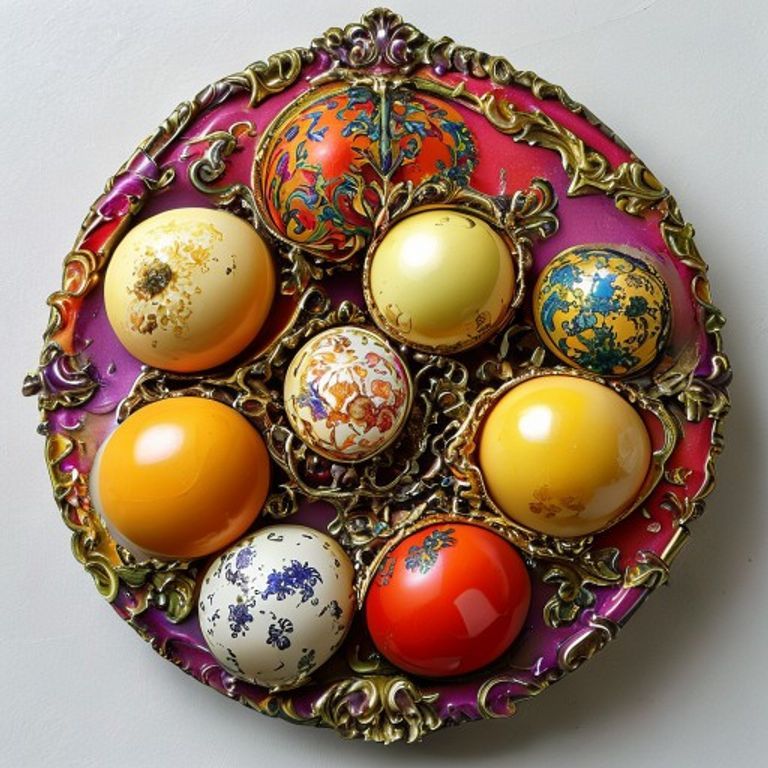
Several priceless Russian imperial jewels, crafted with precious metals and rare stones, disappeared during the revolution and remain missing.
⚠️ Research elaborated with the aid of Deep Research is subject to referential ambiguity.
🖥️Clean HTML code using a proprietary tool.
👥 Research by Guilherme Felipe, Curation by Sílvio Lôbo
The Enigma of the Lost Fabergé Eggs: An Endless Search for Imperial Treasures
Amidst the splendor and tragedy of the Russian Revolution, one of the most intriguing mysteries in the history of jewelry emerged: the disappearance of several Fabergé eggs, masterpieces of inestimable artistic and historical value created for the Russian imperial family. These objects, symbols of opulence and the unparalleled talent of Peter Carl Fabergé, became the focus of a global hunt that, decades after the events, still echoes with unanswered questions.
1. The Context and the Incident: The Fall of an Empire and the Disappearance of Jewels
The setting is Russia in the early 20th century, an empire in social and political turmoil. The House of Fabergé, with its established reputation, annually produced, at the request of Tsar Nicholas II, a decorated egg to be presented to Empress Alexandra Feodorovna, and occasionally to other family members. These eggs were commissioned in secret and held precious surprises within, becoming family heirlooms.
With the outbreak of the October Revolution in 1917, the imperial family was deposed and subsequently brutally murdered. In this whirlwind of violence and social upheaval, the fate of many precious possessions, including the Fabergé eggs, became uncertain. Thousands of artworks and jewels were looted, confiscated, or simply lost amidst the chaos. The Kremlin, in particular, became a focal point for the accumulation of confiscated treasures from the nobility, but the organization and documentation of these assets, amidst the civil war, were, at best, precarious.
The "incident" was not an isolated event but rather a gradual process of loss and dispersal that unfolded over years, with the climax occurring during and immediately after the revolution. The exact number of Fabergé eggs that disappeared is unknown, but it is believed that several of the more than 50 eggs commissioned by the imperial family are lost forever or in private collections yet to be revealed.
2. Timeline of Events
- 1885: The first Fabergé Egg, the "Hen Egg," is commissioned by Tsar Alexander III for his wife, Tsarina Maria Feodorovna.
- 1885 - 1917: The tradition of annual Fabergé eggs continues, with 50 known eggs created for the imperial family.
- March 1917: The February Revolution overthrows Tsar Nicholas II. The imperial family is placed under house arrest.
- October 1917: The October Revolution brings the Bolsheviks to power. The Romanov family is transferred to Yekaterinburg.
- July 1918: Tsar Nicholas II, Tsarina Alexandra, and their children are executed by the Bolsheviks.
- Post-Revolution Period (1918 - 1920s): Post-revolutionary chaos leads to the dispersal and looting of imperial assets, including potential Fabergé eggs. Many assets are gathered in the Kremlin, but cataloging is deficient.
- 1920s - 1930s: Reports of Fabergé eggs appearing in Western sales and collections. Some are identified and recovered.
- 20th and 21st Centuries: Sporadic investigations and continuous search for missing Fabergé eggs by historians, collectors, and institutions.
3. Main Theories
The nature of the disappearance, in a context of state collapse and armed conflict, has generated a range of theories, from pragmatic explanations to more fantastical narratives.
Theories of Legitimate (or Near-Legitimate) Provenance
- Organized Sales and Confiscations: The most plausible theory, supported by fragmented documentary evidence, is that some eggs were sold or traded to finance the Soviet regime in its early years. It is believed that the Soviet government, under the leadership of Joseph Stalin, disposed of items considered "bourgeois" to obtain foreign currency. Reports indicate that the Kremlin Armorer, G. S. Arakelian, was responsible for selling many imperial jewels to Europe and America in the 1920s through intermediaries.
- Post-Revolutionary Looting: Amidst the chaos, individuals took the opportunity to pillage imperial properties. Some eggs may have been taken by Red Army officers, soldiers, or civilians with access to royal palaces and residences. These eggs could have been sold privately or retained as spoils of war.
- Clandestine Preservation: A minority of historians suggest that some eggs may have been hidden by loyalists of the imperial family or by individuals who feared confiscation, with the hope of returning them in the future.
Conspiracy and Mystery Theories
- Disappearance on the "Exile Train": A popular but unsubstantiated theory suggests that certain eggs that were with the imperial family when it was transferred into exile may have disappeared under mysterious circumstances during that journey.
- Concealment in Secret Locations: Some speculation points to the possibility of eggs being hidden in secret bunkers, remote monasteries, or even buried, as an act of preservation against destruction.
- Smuggling to the West: There is a possibility that eggs were skillfully smuggled out of Russia by agents or individuals with international connections, disappearing into the collections of wealthy families or collectors willing to pay exorbitant prices, without registering their provenance.
Alternative and Paranormal Theories (With Low Historical Credibility)
- Supernatural Influences: In more esoteric circles, speculation exists about the possibility of unknown forces or mystical energies being involved in the fate of the eggs, although there is no factual basis for such claims.
- Interference by Intelligence Agencies: In a more conspiratorial scenario, some suggest that foreign intelligence agencies may have acted to obtain and conceal these treasures during the period of instability.
4. Controversies and Blind Spots
The investigation into the lost Fabergé eggs is a minefield of difficulties and frustrations.
- Incomplete and Destroyed Documentation: Records from the Kremlin and other institutions that handled confiscated assets are notoriously incomplete, fragmented, or were deliberately destroyed during the turbulent post-revolutionary years. This hinders the traceability of many items.
- Ownership Identification: Distinguishing a genuine Fabergé egg from a fake or a piece made by imitators has been a constant challenge. The absence of hallmarks or distinctive marks in some cases, or their falsification, exacerbates the problem.
- Secrecy of Private Collections: Many eggs that may have reached the black market or were acquired by private collectors remain unknown to the public and historians. The reluctance to disclose ownership of such items, for fear of scrutiny or legal issues, creates a veil of secrecy.
- "Duplicate Eggs" and Authenticity Controversies: Over the years, reports of eggs resembling known models have emerged, raising debates about whether they are lost originals, fakes, or previously unseen models created by Fabergé. A notable example is the "Imperial Spring Egg," which resurfaced in 2015, sparking debates about its authenticity and provenance.
- Ambiguous Official Reports: Reports of sales of imperial artifacts by the Soviet government, such as those compiled by the commission for the sale of artworks from the Kremlin collection, are often vague regarding the specific items sold and the buyers, making the identification of specific Fabergé eggs sold in these transactions an exercise in pure deduction.
5. Curiosities and Legacy
The mystery of the lost Fabergé eggs has transcended the world of jewelry and history, permeating popular culture.
- The Fascination of Wealth and Power: The idea of fabulous treasures lost in the turmoil of history evokes a sense of adventure and romance, capturing the imagination of collectors, historians, and the public alike.
- The Continuous Search: The search for lost Fabergé eggs is an endeavor involving private investigators, historians, genealogists, and even treasure hunters. Reports of "sightings" or new discoveries emerge periodically, rekindling interest in the case.
- Lost Works of Art: Each lost Fabergé egg represents not only incalculable monetary value but also a gap in art history and the cultural memory of imperial Russia. Its rediscovery would be an event of historical magnitude.
- Fabergé's Legacy: The mystery contributes to the legendary aura of Peter Carl Fabergé and his work, reinforcing the idea that not all the secrets of his creative genius have been fully unveiled.
- Current Status: The case of the lost Fabergé eggs remains, in large part, an unsolved mystery. Although some eggs have been recovered or identified over the decades, a significant number are still considered missing. Official investigations, in the sense of a large dedicated task force, ceased long ago. However, the interest of the historian and collector community remains alive, with occasional research and discoveries that continue to fuel the legend. The hope that more of these magnificent imperial treasures may one day resurface keeps the Fabergé case in an eternal state of investigative suspense.



