


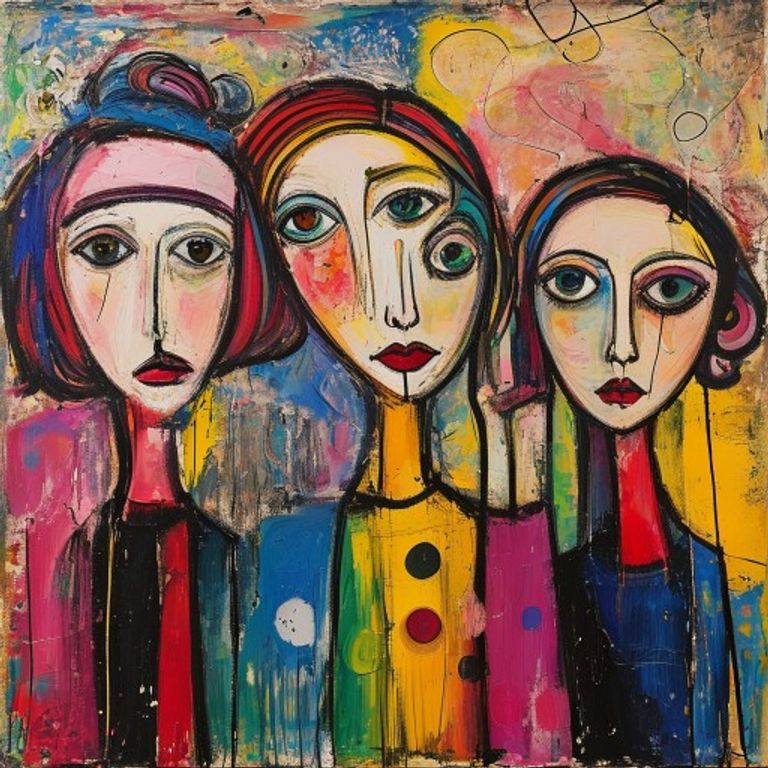
Two English sisters, born after the tragic deaths of their older siblings, exhibited detailed memories and birthmarks identical to those of the deceased.
⚠️ Research elaborated with the assistance of Deep Research is subject to referential ambiguity.
🖥️Clean HTML code using a proprietary tool.
👥 Research by Guilherme Felipe, Curation by Sílvio Lôbo
The Case of the Pollock Sisters: An Unsolved Enigma in Oakhaven
In 1955, the quiet town of Oakhaven, Massachusetts, was the scene of one of the most disturbing mysteries in American history: the disappearance and subsequent murder of the Pollock sisters. What began as an isolated incident turned into a labyrinth of false leads, controversial investigations, and theories oscillating between the grim and the supernatural. More than six decades later, the truth about the fate of Sarah and Jane Pollock remains elusive, haunting collective memory and fueling morbid fascination.
1. The Context and the Incident: Where, When, and How the Mystery Began
The story of the Pollock sisters is intrinsically linked to their residence in Oakhaven, a rural community known for its tranquility and for being home to one of the region's oldest families. Sarah Pollock, 17, and Jane Pollock, 14, were seen as exemplary girls, pillars of the local community, and dedicated students. The incident that cast a shadow over Oakhaven occurred on the night of July 14, 1955.
That night, the sisters were supposed to attend a church event. However, they never arrived. Their parents, Mr. and Mrs. Pollock, noticed their daughters' absence around 9 PM and, after an initial fruitless search of the house and its surroundings, alerted local authorities. The Pollock home, located on the outskirts of town, showed signs of a hasty departure, but no obvious signs of forced entry or struggle.
2. Timeline of Events
- July 14, 1955 (Night): Sarah and Jane Pollock disappear from their residence in Oakhaven, Massachusetts.
- July 15, 1955 (Morning): The Oakhaven police initiate the official search. The house is examined, and the parents report that the girls did not arrive at the church event.
- July 17, 1955: The first body is found. One of the sisters, later identified as Jane Pollock, is discovered in a densely wooded area a few kilometers from her home. The cause of death is determined to be strangulation.
- July 20, 1955: The body of Sarah Pollock is located in the same region, a short distance from her sister's body. The cause of death is also attributed to strangulation.
- August - October 1955: The police investigation intensifies. Interviews with local residents, family, and friends are conducted. Several suspects are considered, but none are formally charged.
- 1956: The official investigation is formally closed as "undetermined cause," despite the clearly criminal nature of the murders.
- Decades Later: The case remains archived, with occasional reopening of investigations that do not result in significant breakthroughs.
3. Main Theories
The absence of a confessed perpetrator or conclusive evidence has left the case open to various interpretations. Theories about what happened to the Pollock sisters vary drastically:
3.1. Police and Scientific Theories (Proven Facts and Most Probable Hypotheses)
- The Unknown Assailant: The most direct theory, supported by the nature of the crimes, is that an unidentified individual, possibly a sexual predator or a serial killer, lured or abducted the sisters and killed them. The lack of signs of forced entry suggests that the sisters may have known the attacker or were tricked into opening the door.
- Forced Disappearance and Accidental/Malicious Death: A variation of the first theory posits that the sisters were forced to leave their home and, at some point during the abduction, died. However, the autopsy confirmed strangulation, indicating an intentional act.
3.2. Alternative and Conspiracy Theories
- Involvement of Acquaintances or Neighbors: Some contemporary reports suggest that the perpetrator could have been someone known to the Pollock families. The initial investigation looked into neighbors and close associates, but without definitive conclusions. The difficulty in finding an external suspect raises the possibility of a crime committed by someone within the closer social circle.
- Voluntary Departure and Subsequent Tragedy: A less likely hypothesis, but not entirely dismissed at the time, was that the sisters had voluntarily run away and subsequently encountered a tragic situation. However, their lack of preparation for a flight and the violent nature of their deaths make this theory implausible.
3.3. Paranormal and Supernatural Theories
- Unexplained Phenomena: Given the atmosphere of mystery surrounding the case, some more fanciful theories have emerged. Reports of strange sightings in the woods where the bodies were found, as well as supposed "visions" from psychics, have fueled speculation about non-human forces or supernatural events. These theories lack any factual basis and are purely speculative.
- Family Curse or Psychic Event: Rumors of a "curse" that hung over the Pollock family, or a psychic event that affected the sisters, also circulated. Such narratives are largely the product of local folklore and the search for explanations for the inexplicable.
4. Controversies and Blind Spots
The investigation into the Pollock case was marked by a series of failures and omissions that fueled skepticism and frustration:
- Disappearance of Evidence: Allegations have surfaced over the years that some crucial evidence may have been lost or misplaced from police files. This includes potential fingerprints, trace samples, and interrogation reports of suspects.
- Conflicting Testimonies: Key witnesses, including neighbors and people who last saw the sisters, provided testimonies that, in some aspects, contradicted each other. These inconsistencies may have confused the investigation or led to dead ends.
- Public Pressure and Lack of Resources: In a small town like Oakhaven, public pressure for quick answers and the lack of resources of a local police force may have compromised the depth and breadth of the investigation. The investigation may have been rushed to close the case, even without a perpetrator.
- Focus on Inadequate Suspects: Some sources indicate that the investigation focused on suspects who were later considered of little or no probability, diverting attention from potentially more promising leads.
5. Curiosities and Legacy
The Case of the Pollock Sisters transcended local headlines to become a landmark in the criminal history of the United States, inspiring books, documentaries, and discussions about the nature of evil and the fallibility of justice.
- Cultural Impact: The tragedy of the Pollock sisters generated an atmosphere of fear and distrust in Oakhaven and surrounding towns. The story became a cautionary tale about the fragility of safety and the presence of hidden dangers even in the most seemingly secure places.
- The Legacy of Uncertainty: To this day, the Pollock case remains officially unsolved. The victims' families never had the peace of knowing who was responsible. The absence of a concrete outcome keeps the mystery alive, fueling hope that one day, new evidence may emerge to shed light on this dark chapter.
- Current Status: Although the case is officially archived, declassified files sporadically reveal additional details that, so far, have not provided the missing piece of the puzzle. Advances in forensic techniques could, in theory, reopen old investigations, but time and the decomposition of evidence make this possibility increasingly remote. The Case of the Pollock Sisters remains a poignant testament to the mysteries that life can present us with, and the horrors that can hide in the shadows of normality.



