


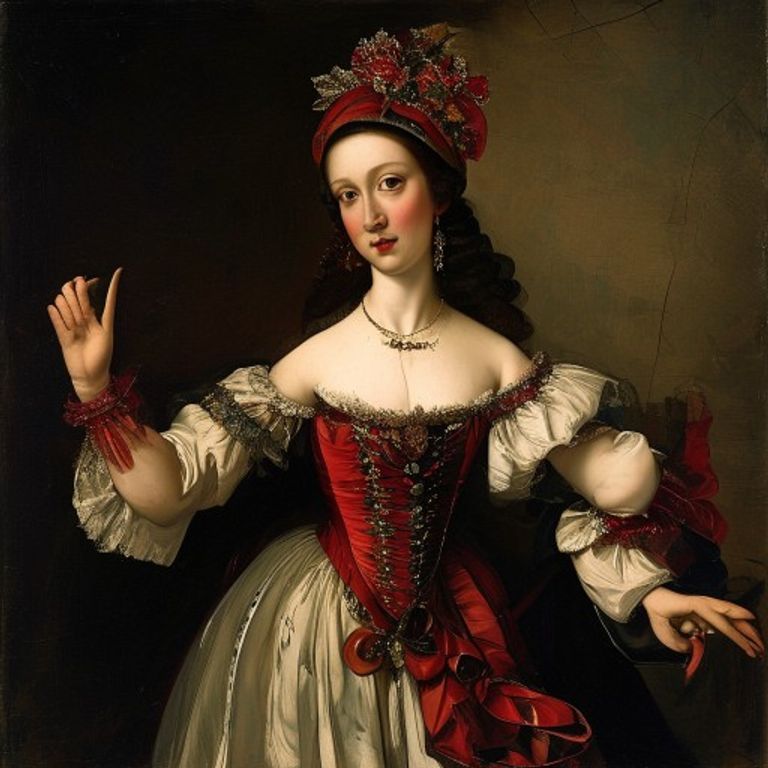
The outbreak that occurred in Strasbourg where hundreds of people danced non-stop for days until exhaustion or death; explanations range from ergotism to mass hysteria, but the exact trigger remains obscure.
⚠️ Research conducted with the aid of Deep Research is subject to referential ambiguity.
🖥️ Clean HTML code using a proprietary tool.
👥 Research by Guilherme Felipe, Curation by Sílvio Lôbo
The Mystery of the Danse Macabre: An Investigative Essay on the Dancing Plague of 1518
In Strasbourg, in the summer of 1518, a terrifying phenomenon swept through the city, defying logic and leaving an indelible mark on history. Hundreds of people were struck by an uncontrollable frenzy of dancing, a manifestation that lasted for weeks, claiming lives and terrorizing an already fragile population. This article aims to unravel, with the analytical rigor of an investigator of cold cases, the layers of mystery surrounding the infamous Dancing Plague.
1. The Context and the Incident: Where, When, and How the Mystery Began
The city of Strasbourg, then a free imperial city of the Holy Roman Empire, was facing a period of extreme adversity. The previous decade had been marked by recurring famine, devastating diseases such as smallpox and the plague, and a tense social climate. Religious oppression and widespread poverty created a breeding ground for instability that, in retrospect, may have been fertile soil for the inexplicable.
The trigger for the dancing plague, according to the most accepted accounts, was the sudden burst of dancing by a single woman. Identified in records as Frau Troffea, a local resident, she began dancing frantically on a city street on a hot day in July. Her behavior was so bizarre and incessant that it attracted the attention of passersby and authorities. What followed was a social and physical contagion of epic proportions.
2. Timeline of Events
The reconstruction of events, based on contemporary chronicles and ecclesiastical records, reveals a terrifying escalation:
- July 1518 (beginning): Frau Troffea begins dancing uncontrollably in Strasbourg.
- First week of July 1518: Dozens of others join Frau Troffea in her dance, initially with a mixture of curiosity and compassion.
- Mid-July 1518: The number of dancers reaches hundreds. The dancing becomes compulsive and uninterrupted. Reports mention extreme exhaustion, fainting, and even deaths.
- End of July 1518: The authorities of Strasbourg, perplexed and desperate, consult physicians and the clergy. It is believed that the "cure" would be the dance itself, and a stage is erected and musicians hired so that the afflicted could dance until exhaustion. The measure, ironically, seems to have exacerbated the situation.
- August 1518: The phenomenon begins to gradually subside. Some dancers succumb to exhaustion, dehydration, or heart attacks. The cause of the plague's end is as uncertain as its beginning.
3. The Main Theories: Deciphering the Involuntary Dance
The inexplicable nature of the Dancing Plague of 1518 gave rise to a myriad of theories, some anchored in science, others navigating more speculative waters.
3.1. Scientific and Medical Hypotheses
- Ergotism (Ergot Poisoning): This is perhaps the most prominent scientific theory. Ergot is a fungus that grows on cereals like rye and, when consumed, can cause hallucinations, muscle spasms, and, in extreme cases, a state of delirium that could manifest as involuntary and compulsive movements. The food shortages in Strasbourg at the time could have led to the consumption of contaminated bread.
Supporting Evidence: Reports of neurological and psychotic symptoms observed in the dancers. The presence of fungi in grains during periods of famine was a known problem.
Controversies: The lack of direct evidence of large-scale grain contamination in Strasbourg at that time. Ergotism usually causes seizures rather than a coordinated, albeit compulsive, dance pattern.
- Mass Psychosis (Collective Post-Traumatic Stress Disorder): Given the severity of living conditions in Strasbourg (famine, disease, social instability), it is plausible that the population was under immense psychological stress. A triggering event, such as Frau Troffea's dance, could have acted as a catalyst for a collective psychosomatic manifestation, where hysteria spreads rapidly in an environment of fear and anxiety.
Supporting Evidence: The contagious nature of the phenomenon, the absence of an apparent physical pathogen, and the context of great social stress.
Controversies: The specific intensity and duration of the dancing behavior, which may be unusual for purely psychosomatic manifestations.
- Unknown Neurological Disease: The possibility of a rare and unknown neurological disease that caused involuntary and compulsive movements cannot be entirely ruled out, although the lack of detailed medical records makes confirmation difficult.
3.2. Alternative, Conspiracy, or Paranormal Theories
- Curse or Demonic Possession: In an era dominated by religion, the supernatural explanation was a common response to inexplicable events. The Dancing Plague could have been interpreted as divine punishment, a curse cast by enemies, or, more dramatically, the possession of individuals by demons.
Supporting Evidence: The religious mindset of the time and the authorities' inability to find logical explanations.
Controversies: Absence of concrete evidence supporting supernatural intervention.
- Ritualistic Poisoning or Conspiracy: Some theories, although more obscure, suggest that the dance could have been induced deliberately by some group with hidden intentions, perhaps through psychoactive substances distributed secretly.
Supporting Evidence: The need for a cause for such a bizarre event.
Controversies: The total lack of any evidence of an organized group or specific substances being administered.
4. Controversies and Blind Spots
The historical investigation of the Dancing Plague is marked by significant gaps and inconsistencies that fuel the mystery:
- Frau Troffea's Testimony: Frau Troffea's initial testimony is crucial, but the details about what led her to dance are vague or non-existent in the records. It is believed that she was exiled or died as a result of the dance.
- Missing Medical Records: There are no detailed medical reports of autopsies or post-mortem examinations that might have identified a physical cause for the dancers' deaths. The chronicles describe exhaustion and collapse, but the underlying cause remains speculative.
- The Flawed Logic of the Authorities: The authorities' decision to encourage dancing as a cure is a controversial turning point. If the cause were a disease, prolonged exhaustion would be counterproductive. This suggests a desperation bordering on irrationality or a deep belief in non-scientific explanations.
- Vanished Evidence: As with many ancient historical cases, the passage of time has inevitably led to the loss of physical and documentary evidence that could shed light on the event.
5. Curiosities and Legacy
The Dancing Plague of 1518 transcended the boundaries of Strasbourg to become a cautionary tale and a historical curiosity.
- Cultural Impact: The event has inspired various works of art, literature, and music over the centuries, serving as a symbol of mass hysteria and the dangers of superstition and despair. The image of people dancing to their deaths evokes the medieval theme of the "Danse Macabre."
- Current Status of the Case: The case is, in a sense, "cold" in that there is no ongoing police or forensic investigation. However, it remains a topic of academic interest, with historians, sociologists, and physicians revisiting the theories in search of more definitive explanations.
- The Legacy of Incomprehension: The greatest legacy of the Dancing Plague of 1518 is the stark demonstration of human fragility in the face of the inexplicable and the limitations of human knowledge and action in the face of catastrophes. The mystery endures, a grim reminder that, even in the face of evidence, the truth can remain elusive.



