


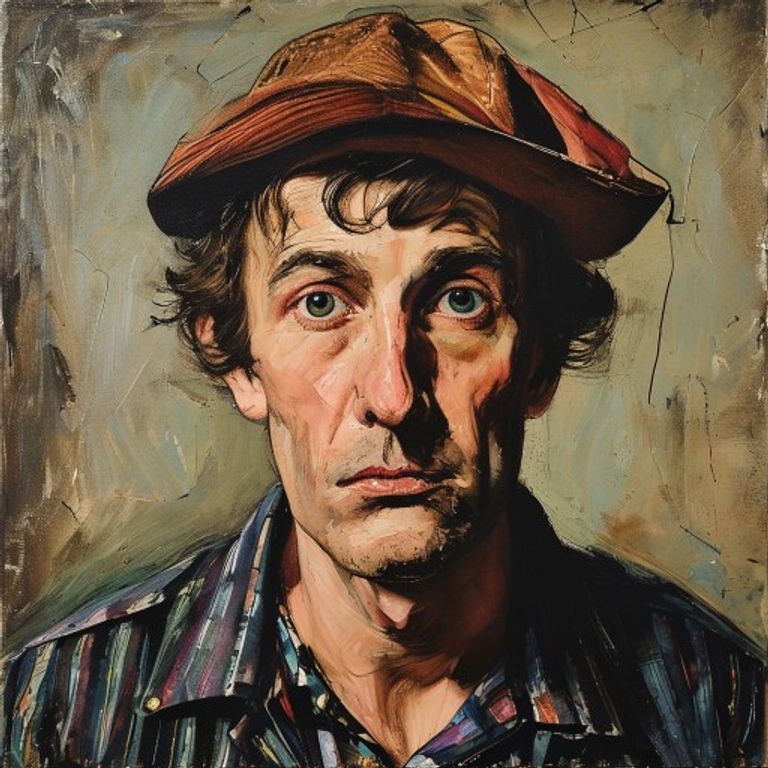
The journalist found dead in 1991 while investigating 'The Octopus', a vast conspiracy involving stolen software and international espionage.
⚠️ Research conducted with the aid of Deep Research is subject to referential ambiguity.
🖥️ Clean HTML code using a proprietary tool.
👥 Research by Guilherme Felipe, Curation by Sílvio Lôbo
The Danny Casolaro Case: The Conspiracy That Led to Death
On August 10, 1991, the body of Danny Casolaro, a freelance investigative journalist seeking to uncover a conspiracy of monumental proportions, was found in a bathtub in his hotel room in the small town of Martinsburg, West Virginia. The scene, at first glance, appeared to be a suicide. However, the circumstances surrounding his death and the nature of his investigation cast a shadow of doubt and mystery that persists to this day. This article aims to dissect one of the most intriguing unsolved cases in investigative journalism, rigorously separating fact from mere speculation.
1. The Context and the Incident: The Shadow of Innovation and Envy
Danny Casolaro dedicated the final years of his life to investigating "Inge-Tech", a fictitious company that, according to his findings, operated as a front for an intricate scheme of intellectual property theft and blackmail, with ramifications that allegedly reached the highest echelons of technology and the United States government. His quest to "unravel the conspiracy" led him to follow leads involving disgruntled former employees, rising tech moguls, and an underworld of corporate and government secrets.
The fatal incident occurred in a room at the Sheraton Inn, in Martinsburg, West Virginia. Casolaro was in town to meet with a confidential source, from whom he hoped to obtain crucial information for his investigation into Inge-Tech. His death, marked by deep cuts to his wrists, was declared a suicide by local authorities. However, the way Casolaro died, the nature of his investigation, and the evidence he was about to reveal raise serious questions about the official version.
2. Timeline of Key Events
- Late 1980s: Danny Casolaro begins his investigation into Inge-Tech and an alleged software theft and industrial espionage scheme.
- 1990: Casolaro publishes initial articles on the case, gaining some media attention, but still far from unraveling the entirety of the conspiracy.
- Early 1991: Casolaro's investigation intensifies. He accumulates a considerable amount of documents and information and gets closer to key sources. Reports from his sources indicate that he felt increasingly threatened.
- August 1991: Casolaro travels to Martinsburg, West Virginia, to meet with a source.
- August 10, 1991: Danny Casolaro's body is found lifeless in his hotel room. Local police, after a preliminary investigation, declare the death a suicide.
- Post-1991: Casolaro's family and friends question the official version, pointing to the lack of evidence supporting suicide and the dangerous nature of his investigation.
- Subsequent years: Several attempts to reopen the case and deepen the investigation are made, but without significant success in changing the official status of the death.
3. The Main Theories: From Suicide to Global Conspiracy
The complexity of Danny Casolaro's case gave rise to multiple theories, each with its proponents and critics. Below, we present the most prominent ones:
Official Theory (Suicide):
Local police, based on the scene found, concluded that Casolaro committed suicide. The logic is based on the presence of cuts on his wrists, consistent with a self-inflicted wound, and the apparent absence of signs of a struggle or forced entry into the room. However, critics point to the lack of a convincing suicide note and the fact that Casolaro had shown great excitement about his recent discoveries, making the act seem unlikely.
Corporate/Government Assassination Theory:
This is the most widely discussed theory and is supported by many who followed Casolaro's investigation. The logic is that Casolaro was about to expose a large-scale conspiracy involving intellectual property theft, espionage, and market manipulation by Inge-Tech and its alleged partners. The assassination would be a way to silence him permanently, preventing the release of information that could shake powerful companies and even the government. The lack of a suicide note and the sudden and unexpected nature of his death fuel this hypothesis. Reports indicate that Casolaro felt threatened and that his sources had warned him about the imminent danger.
Intelligence Agency Involvement Theory:
A variation of the assassination theory, this hypothesis suggests that Casolaro unearthed information too sensitive regarding intelligence operations, possibly involving illegal or unauthorized activities. The death would have been orchestrated by elements within intelligence agencies to protect their secrets and operations. The difficulty in obtaining access to certain documents and the alleged obstruction of investigations by some entities could be indications of this theory.
Mafia or Organized Crime Involvement Theory:
Although less prominent than corporate or government theories, some speculate that Inge-Tech, or the operations Casolaro was investigating, could have ties to organized crime. In this scenario, his death would be retaliation for interfering in illicit business.
Alternative/Paranormal Theories:
Although the case does not possess clear elements suggesting paranormal or extraterrestrial explanations, the surrounding mystery and the absence of definitive answers can, in some circles, give rise to less conventional speculation. However, there is no concrete evidence to support such theories in the context of the Casolaro case.
4. Controversies and Blind Spots in the Investigations
The official investigation into the death of Danny Casolaro was marked by several controversies and blind spots that fuel doubts and alternative theories:
- Lack of Conclusive Evidence of Suicide: The absence of an explicit and convincing suicide note is one of the strongest points of contention. Although wrist cuts can indicate suicide, the shape and depth can be interpreted in different ways.
- Ignored or Poorly Investigated Leads: Critics argue that local police did not thoroughly investigate the possible threats Casolaro had been receiving. The nature of his investigation, which put him on a collision course with powerful interests, required a more thorough investigation of the circumstances that led him to Martinsburg.
- Presence of Unknown People at the Hotel: Reports from hotel staff indicate the presence of unknown individuals loitering in the hallway of the floor where Casolaro was staying, something that was not adequately investigated by the police.
- The Nature of "Inge-Tech": The difficulty in tracking and proving the existence and operations of Inge-Tech raises questions about whether the company was truly fictitious or an extremely well-protected and secret front.
- Missing Documents: Allegations suggest that some of Casolaro's documents and notes, which could contain crucial information, disappeared after his death, raising suspicion of evidence tampering.
- Contradictions in Testimonies: As in many complex cases, it is possible that some witness statements were conflicting or misinterpreted by the official investigation.
5. Curiosities and Legacy: The Unfinished Search for Truth
The case of Danny Casolaro transcended the realm of journalism and became a symbol of the search for truth in the face of hidden powers and corruption. His story inspired books, documentaries, and debates that keep the memory of his investigation and the mystery that surrounded him alive.
- The Book "The Octopus": Journalist Steve Wetulla and writer Douglas Frantz investigated Casolaro's case and published the book "The Octopus" in 1993, which details Casolaro's investigation and the possible theories about his death.
- Documentaries and Media: The case continues to be explored in documentaries and articles that seek new leads or re-examine existing evidence.
- Current Status: Officially, the case remains closed as a suicide. However, the lack of consensus and persistent doubts mean it is considered an unsolved case by many independent investigators and enthusiasts of historical mysteries. There is no indication that authorities have officially reopened the investigation with new substantial evidence.
- The Legacy of the Investigation: Casolaro's work, even if not fully completed by him, serves as a reminder of the importance of investigative journalism and the risks inherent in exposing uncomfortable truths. His story is a call for vigilance and healthy skepticism in the face of simplistic official explanations for complex and potentially criminal events.
The case of Danny Casolaro continues to be an enigma, a story of ambition, danger, and an unfinished search for a truth that may have been intentionally buried. The questions persist, and the shadow of the conspiracy cast over his death continues to loom, inviting new reflections and, perhaps, one day, definitive answers.



