


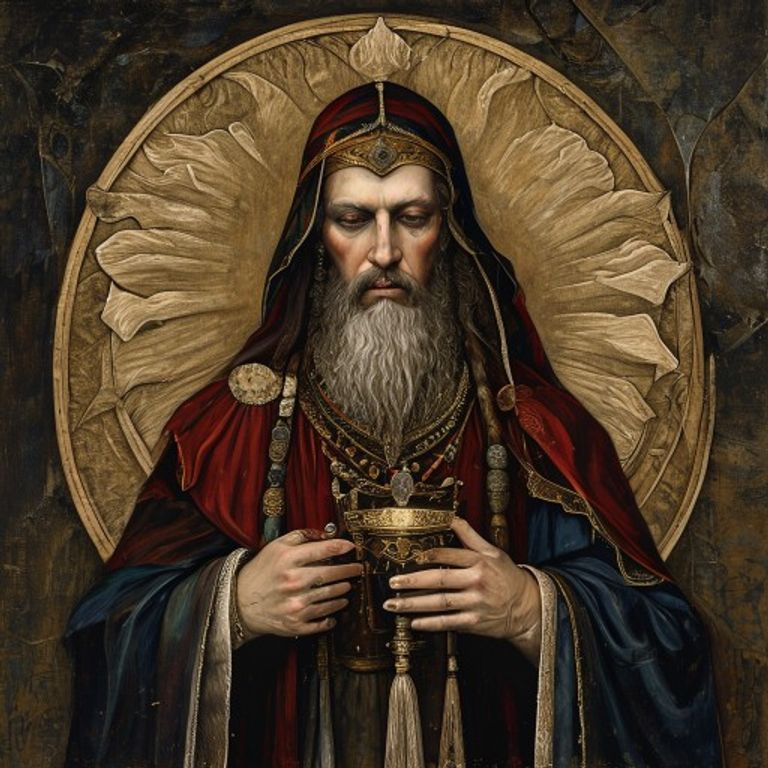
A British nobleman who vanished in 1974 following the murder of his children's nanny; despite numerous alleged sightings around the world, his final whereabouts remain an aristocratic mystery.
⚠️ Research conducted with the aid of Deep Research is subject to referential ambiguity.
🖥️ Clean HTML code using a proprietary tool.
👥 Research by Guilherme Felipe, Curation by Sílvio Lôbo
The Enigma of Lord Lucan: The Disappearance that Haunts the British Legacy
The year was 1974. Great Britain, immersed in an era of transition and cultural effervescence, was abruptly shaken by a crime that would challenge the logic and investigative capacity of its authorities: the brutal murder of Sandra Rivett, the Bingham family nanny, and the subsequent disappearance of Richard John Bingham, the 7th Earl of Lucan. This case, which became synonymous with an unsolvable mystery, continues to fascinate and generate heated debates decades later.
1. The Context and the Incident: The Night of November 7, 1974
The tragedy unfolded at the Bingham family residence on Lower Belgrave Street, Belgravia, an affluent London neighborhood. On the night of November 7, 1974, 29-year-old Sandra Rivett was found dead in the house, brutally beaten and strangled. The crime scene was one of shocking violence, with evidence of an intense struggle. Shortly thereafter, the master of the house, 39-year-old Lord Lucan, would be found missing, while his wife, Lady Lucan (Veronica), was found injured and in a state of shock.
According to the testimony of Lady Lucan, which was central to the initial investigations, an intruder had attacked the nanny and then assaulted her. However, the narrative presented inconsistencies, and the authorities' focus quickly turned to Lord Lucan. It was suspected that he, amidst a troubled divorce and severe financial problems, had committed the crime, possibly in a fit of rage or premeditation.
2. Timeline of Key Events
- Night of November 7, 1974: Sandra Rivett is murdered at the Bingham residence in Belgravia. Lady Lucan is found injured.
- Early hours of November 8, 1974: Lord Lucan is seen by a taxi driver, John Short, with blood-stained clothes in Dover, the main port for departure to continental Europe. According to the driver, he claimed to have witnessed a murder.
- November 8, 1974: The house is searched; there are no signs of forced entry, but there are signs of an internal struggle. Lord Lucan's disappearance is officially declared.
- 1975: An official inquest declares Lord Lucan the murderer of Sandra Rivett. He becomes the first Earl to be legally declared dead while alive.
- Subsequent decades: Numerous reports and sightings of Lord Lucan emerge around the world, fueling theories and speculation.
3. The Main Theories
Lord Lucan's disappearance gave rise to a myriad of theories, ranging from the rational to the fantastic. Below, we present the most prominent ones:
3.1. Flight and Suicide (Official Police Hypothesis)
The theory most accepted by the British police at the time, and consolidated in the 1975 inquest, is that Lord Lucan murdered Sandra Rivett (possibly mistaking her for his wife, or in a fit of fury) and subsequently fled the country. It is believed he killed himself in a remote location or at sea to avoid capture and scandal. The taxi driver's mention of Dover corroborates the idea of flight. The lack of a body, however, is the main weakness of this hypothesis.
3.2. Flight Abroad and a New Life
A variation of the flight theory is that Lord Lucan managed to leave the UK and build a new life in another country, possibly with the help of friends or financiers. Reports of sightings in countries such as Australia, South Africa, and even continental Europe fuel this hypothesis. Declassified documents from the Foreign Office and Home Office suggest that investigations were carried out in various jurisdictions, but without conclusive results.
3.3. The Conspiracy Theory: The "Scarlet Club"
This theory, which gained traction with John Pearson's book "The Scars of Lord Lucan," suggests that Lord Lucan was a member of a secret and influential circle of aristocrats and businessmen known as "The Scars" or "The Portuguese Connection." According to this narrative, the murder of Sandra Rivett was an accident or a "detour" in a larger plan, and Lord Lucan was "helped" to disappear to protect the club's members. The theory points to the wealth and influence of the circle's members as facilitators of a successful escape and a meticulous cover-up.
3.4. Involvement of Third Parties
Some speculation suggests that Lord Lucan may have been framed or that other people were involved in the crime. The possibility of a hired killer or an accomplice who facilitated the disappearance cannot be ruled out, although concrete evidence to support such claims is lacking.
3.5. Paranormal or Supernatural Theories
Although not supported by scientific evidence, some more eccentric theories suggest that Lord Lucan may have been the victim of inexplicable events, such as being abducted by aliens or encountering some type of paranormal phenomenon. These theories, naturally, belong to the realm of pure speculation and are not considered in formal investigations.
4. Controversies and Blind Spots
The Lucan case is full of controversies and blind spots that have fueled the mystery:
- The Confusion at the Crime Scene: The initial investigation was criticized for its slowness and the apparent confusion regarding the crime scene. The lack of an immediate and thorough tracking of Lord Lucan is a major focus of criticism.
- Lady Lucan's Testimony: Although crucial, Lady Lucan's testimony was marked by moments of apparent amnesia or incoherence, raising questions about her reliability, although she has been consistently defended by many investigators.
- Ignored or Lost Clues: Several potential leads have been raised over the years, from items found in Lord Lucan's possession before his disappearance to testimonies suggesting alternative escape routes. It is believed that some evidence may have been lost or underestimated by the authorities.
- The Lack of Conclusive Proof: The absence of a body or a confession from Lord Lucan, combined with the lack of irrefutable forensic evidence of his participation in the murder of Sandra Rivett, leaves a vacuum of certainty that no theory has been able to fill completely.
- The 2012 Declassified File: The declassification of documents related to the case in 2012 brought to light information about investigations carried out in other countries, but it did not offer definitive answers, only deepened the mystery.
5. Curiosities and Legacy
The Lord Lucan case transcended police files to become a cultural phenomenon. The story of an aristocrat who disappeared after a brutal crime captured the public imagination, inspiring books, documentaries, films, and countless conspiracy theories. The name Lucan became synonymous with an unsolvable mystery.
Currently, the case remains officially unsolved. Although Lord Lucan has been legally declared dead, the absence of a body and the persistence of sightings and theories keep alive the hope that one day the truth about his fate may come to light. The Bingham family, for its part, lives under the shadow of this enigma, with the title of Earl passing from generation to generation, always carrying the weight of their predecessor's disappearance and the tragedy of 1974.
The Lord Lucan case serves as a grim reminder that, even in the most organized societies, mystery and uncertainty can persist, challenging logic and haunting the legacy of individuals and institutions for decades on end.



