


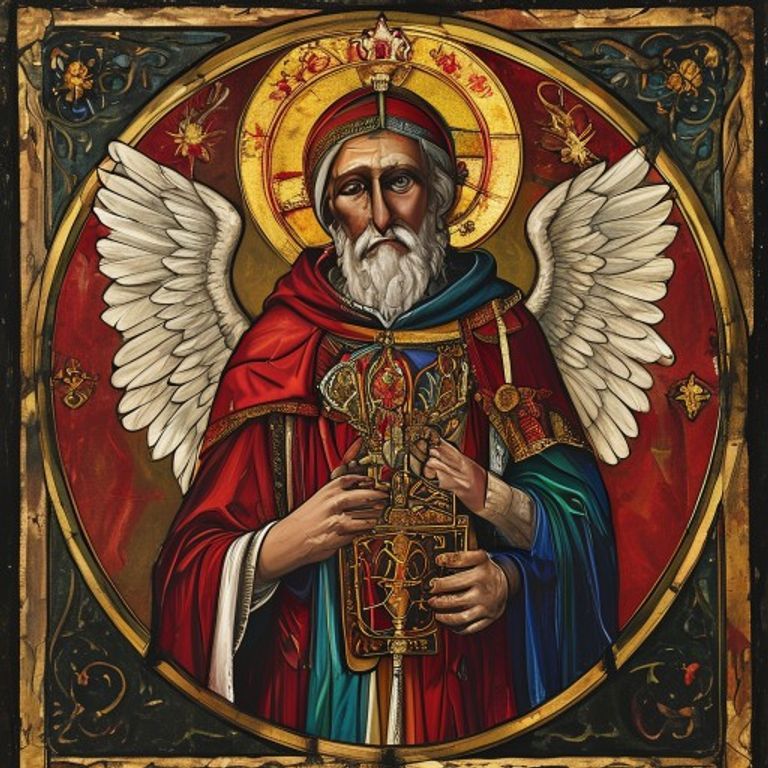
The sacred chalice used at the Last Supper, which became the central object of medieval legends and archaeological quests as a symbol of immortality and divine power.
⚠️ Research conducted with the aid of Deep Research is subject to referential ambiguity.
🖥️ HTML code cleaned using a proprietary tool.
👥 Research by Guilherme Felipe, Curation by Sílvio Lôbo
The Chalice Enigma: Unraveling the Holy Grail Case
By [Your Senior Investigative Journalist Name]
For centuries, the search for a mystical artifact has captivated the human imagination. We are not speaking here of pirate treasure or a religious relic of tangible power, but of an object shrouded in legend, synonymous with mystery and a supposed capacity to offer eternal life or spiritual enlightenment: the Holy Grail. This article delves into the depths of the "Holy Grail Case," a term that, far from referring to a single, proven incident, encompasses a spectrum of historical mysteries, inconclusive investigations, and speculations that intertwine around the identity and fate of this legendary chalice.
1. The Context and the Incident: Where, When, and How the Mystery Began
The mystery of the Holy Grail is not a police case in the modern sense, with a defined crime scene and an identifiable perpetrator. Its origin dates back to medieval European legends, particularly in Arthurian literature. Texts such as Chrétien de Troyes' Perceval (late 12th century) and the Queste del Saint Graal (13th century) popularized the idea of a sacred chalice, often associated with the Last Supper of Jesus Christ and, in some versions, the cup used by Joseph of Arimathea to collect Christ's blood at the crucifixion. The exact nature of the Grail and its location became an enigma that, while lacking an isolated "incident" to investigate, has a cultural and historical ignition point in the proliferation of these narratives and the subsequent quest for their physical veracity.
The search for a physical object that matches the legendary description has intensified over the centuries. Various locations and artifacts have been, and still are, proposed as the true Holy Grail, from the Chalice of Valencia in Spain to relics found in churches and monasteries throughout Europe. Each proposal opens a new chapter in the mystery, without ever closing it definitively.
2. Timeline of Events: A Chronological Reconstruction of the Legend and the Quest
The reconstruction of a timeline for the "Holy Grail Case" is intrinsically linked to the evolution of the legend and the history of its search:
- Late 12th Century: Chrétien de Troyes writes Perceval, le Conte du Graal, introducing an enigmatic "grail" into his narrative, although its connection to the Last Supper is not explicit.
- 13th Century: Texts such as the Queste del Saint Graal establish the link between the Grail and the Last Supper and the blood of Christ, solidifying its Christian and mystical importance.
- Middle Ages: The search for and veneration of relics associated with the Grail become common. Various monasteries and churches claim to possess fragments or versions of the chalice.
- 19th and Early 20th Century: Academic and popular interest in the Grail resurged, driven by research into mysticism, alchemy, and religious history. Authors such as Richard Wagner in his operas (Parsifal) revived the legend.
- Mid-20th Century Onwards: Academic research attempts to decipher the literary and historical origins of the Grail. Various theories emerge regarding the identity of the artifact, from the use of a simple chalice to more symbolic interpretations.
- Recent Years: The popularization of the Grail through fiction (such as Dan Brown's book The Da Vinci Code) reignites public debate, although often blurring fact and fiction.
3. The Main Theories: Hypotheses and Speculations
The "Holy Grail Case" is a mosaic of theories, reflecting the absence of conclusive evidence:
3.1. Scientific and Historical Hypotheses (Attempts to Anchor in Facts)
- The Chalice as a Symbol: The most accepted theory in academia is that the Grail never existed as a specific physical object, but rather as a powerful literary and spiritual symbol. Its search represents the journey toward enlightenment, purity, and connection with the divine.
- Existing Relics: Various relics have been proposed as the authentic Holy Grail. The most well-known is the Holy Chalice of Valencia, an agate cup kept in the Cathedral of Valencia, Spain. Historical reports indicate its possession since the 11th century, but its direct connection to Jesus Christ remains speculative, based on traditions and a lack of absolute proof. Other relics include chalices found in archaeological sites or kept in museums.
- Alchemical Interpretations: Some researchers suggest that the "Grail" may have been an alchemical metaphor for the vessel where transformations occurred, or even for the Philosopher's Stone.
3.2. Alternative, Conspiracy, and Paranormal Theories
- Messianic Bloodline: A theory popularized by books such as The Holy Blood and the Holy Grail by Baigent, Leigh, and Lincoln, suggests that the Grail is not an object, but the bloodline of Jesus Christ and Mary Magdalene, and that the search refers to the protection of this lineage and its secrets. This theory lacks robust historical or archaeological support.
- Connections to Paganism and Ancient Cults: Some theories speculate about pre-Christian origins of the Grail myth, connecting it to pagan fertility rituals or goddess cults.
- Concealment by Secret Societies: Conspiracy theories often involve secret societies, such as the Templars or the Illuminati, who allegedly found, hid, or controlled the secret of the Grail for political or spiritual reasons. There is no concrete evidence to support such claims.
- The Grail as an Alien or Interdimensional Object: In more esoteric and paranormal circles, the Grail is imagined as an artifact of non-terrestrial or interdimensional origin, possessing immeasurable powers.
4. Controversies and Blind Spots
The nature of the "Holy Grail Case" generates numerous controversies and blind spots, inherent to its legendary origin and the lack of irrefutable evidence:
- Lack of Concrete Physical Evidence: The main controversy is the absence of an artifact that can be unequivocally identified as the Holy Grail, with incontestable historical, archaeological, and scientific proof.
- Multiple Interpretations of Original Texts: The descriptions of the Grail in medieval texts are ambiguous and open to various interpretations, which fuels speculation rather than providing clarity.
- Commercial and Media Exploitation: The popularity of the myth has led to a proliferation of theories and speculations, often driven by commercial interests (books, movies, tourism), distancing itself from rigorous investigation.
- Contested Relics: The claim of authenticity for relics like the Chalice of Valencia is based on tradition and faith, rarely on documentary or scientific evidence that conclusively dates back to the time of Christ. The history of its provenance, while long, contains gaps.
- The Disappearance of Clues: In historical investigations, the lack of original documents, the destruction of archives in wars, or the passage of time create blind spots that prevent the confirmation of certain theories.
5. Curiosities and Legacy
The cultural impact of the Holy Grail is immeasurable:
- Literary and Artistic Inspiration: The Grail is one of the most recurring themes in Western literature, art, music, and cinema, from medieval ballads to contemporary works such as the Indiana Jones film series and the aforementioned The Da Vinci Code.
- Symbol of Search and Transcendence: For many, the Grail has transcended its religious origin to become a universal symbol of the search for something greater, for meaning, healing, or personal fulfillment.
- Ongoing Academic Research: Despite its legendary tone, the study of the Grail remains an active field for historians, philologists, and theologians, exploring its literary, historical, and spiritual roots.
- Current Status: The "Holy Grail Case" is not a case that can be "reopened" or "closed" in the traditional sense. It remains an open enigma, a corpus of legends and speculations that continue to evolve and fascinate. There is no official inquiry underway, but rather a perpetual investigation by humanity itself into its deepest myths.
In the end, the Holy Grail may be more powerful in its intangibility than in any physical form it could take. Its legend invites us to question, to search, and perhaps to find, in the very act of searching, the answer that has echoed through the ages for so many centuries.



