


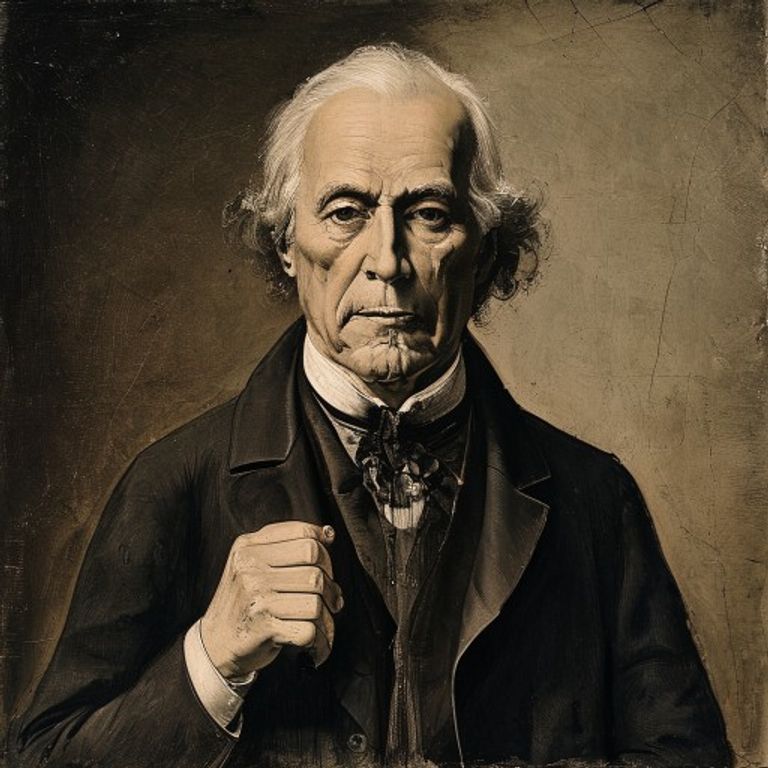
The Brazilian man mistakenly killed by British police on the London Underground in 2005, after being confused with a terrorist shortly after the city's bombings.
⚠️ Research conducted with the aid of Deep Research is subject to referential ambiguity.
🖥️ Clean HTML code using a proprietary tool.
👥 Research by Guilherme Felipe, Curation by Sílvio Lôbo
The Shot That Echoed in the Station: The Inexplicable Murder of Jean Charles de Menezes
Amidst the tension following the July 7, 2005, London bombings, a tragic and controversial event would forever mark the landscape of public safety and the perception of justice: the murder of Jean Charles de Menezes, a Brazilian electrician, by the Metropolitan Police. What should have been a successful counter-terrorism operation turned into an international scandal, leaving a trail of unanswered questions and a legacy of distrust.
The Context and the Incident: Where, When, and How the Mystery Began
On the morning of July 22, 2005, just 17 days after the bombings that shook London's public transport system, the city was on high alert. Security forces were relentlessly searching for those responsible for the attacks and any sign of new threats. It was in this climate of apprehension that the London Metropolitan Police's counter-terrorism unit received intelligence indicating a possible imminent attack. The central information pointed to an individual suspected of being directly linked to the July 7 attacks, who was allegedly about to carry a backpack with explosives onto a bus. Following the trail of the suspect, who used a bus to reach Stockwell underground station in South London, police teams intercepted him. Without warning, and in a hasty and violent action, officers stormed the subway car where Jean Charles de Menezes was sitting, moments after he had boarded the train. He was shot multiple times at point-blank range. The scene, shocking in its brutality and fatal outcome, unfolded before the eyes of other terrified passengers and began an intricate mystery.
Timeline of Events: A Chronological Reconstruction of Key Facts
The reconstruction of events, based on official reports and witness statements, reveals a sequence of actions that culminated in the death of Jean Charles de Menezes:
- July 22, 2005, approximately 9:30 AM: The Metropolitan Police receive intelligence about an individual who is about to commit a suicide attack.
- July 22, 2005, approximately 10:00 AM: The suspect, later identified as Jean Charles de Menezes, boards a bus heading to Stockwell underground station.
- July 22, 2005, approximately 10:05 AM: Jean Charles de Menezes gets off the bus and enters Stockwell underground station.
- July 22, 2005, approximately 10:10 AM: Jean Charles de Menezes boards a train on the Northern Line, heading towards central London.
- July 22, 2005, approximately 10:15 AM: Armed officers from the counter-terrorism unit storm the train car where Jean Charles de Menezes was sitting.
- July 22, 2005, approximately 10:16 AM: Jean Charles de Menezes is shot by police and falls to the floor. He dies at the scene.
- July 22, 2005, after the incident: The police announce that the individual was a terrorism suspect. Later, it is discovered that he was Jean Charles de Menezes, an innocent Brazilian immigrant.
- 2008: The Director of Public Prosecutions (DPP) decides not to criminally charge any police officer involved in the death of Jean Charles de Menezes, citing the need to protect the public.
- 2011: A coroner's jury concludes that Jean Charles de Menezes was "lawfully killed" (in the context of the inquest, though often referred to as "murdered" in public discourse).
Main Theories: Navigating Through Possible Explanations
The theories surrounding the case vary widely, from the most plausible hypotheses within the police and security context to those bordering on speculation and conspiracy theory.
Police and Official Theories:
- Mistaken Identity and Double Agent: The official line, while explicitly avoiding public details to avoid compromising future operations, suggests that intelligence led to the belief that Jean Charles de Menezes was one of the perpetrators of the attacks or a direct accomplice, possibly a "double agent" or an individual about to hand over explosives. The speed of the action was justified by the urgency to neutralize an imminent threat. The Operation HAWK report (the surveillance and intervention operation) points to the belief that the suspect "dressed like a terrorist" and carried a suspicious backpack, elements that led to the fatal decision.
- Facial Recognition Failure: A parallel theory within the police sphere suggests there was a failure in facial identification. Intelligence had identified a suspect with physical characteristics similar to Jean Charles de Menezes, but the operation was executed against the wrong person due to haste or poor communication.
Alternative and Conspiracy Theories:
- Chronic Intelligence Failure and Scapegoating: This theory posits that the information leading to the operation was fragile or mistaken, and that the police, under intense public and media pressure after the attacks, acted overzealously to "show results." Jean Charles de Menezes, a hardworking immigrant, became a convenient scapegoat to cover up incompetence or failure to obtain accurate information.
- The Connection to the Real Attacks: Some conspiracy theorists suggest that Jean Charles de Menezes might have had some knowledge, even if involuntary, of the true authors of the attacks. His quick and silent death would have been a way to prevent him from revealing information inconvenient to the establishment or intelligence services.
- An Inexplicable Systemic Error: This broader hypothesis points to a systemic failure in the chain of command and security protocols. A combination of factors, such as poor communication between different agencies, conflicting information, inadequate training for high-pressure situations, and a "shoot first, ask questions later" culture, culminated in the tragedy.
Paranormal Theories (Less Prominent and Without Evidence):
Although there is no concrete evidence or reports suggesting any paranormal involvement in the case, in cases of great mystery and tragedy, it is common for less grounded speculation to emerge. However, in the case of Jean Charles de Menezes, the focus of the discussion remained strictly within the realms of human action and institutional failure.
Controversies and Blind Spots: The Fog Covering the Truth
The Jean Charles de Menezes case is a labyrinth of inconsistencies and unanswered questions, casting a shadow of doubt over the official investigation and the search for truth.
- Failed Identification: The police claimed that Jean Charles de Menezes was identified as the suspect. However, his physical description differed from that of the man who was supposed to detonate the explosives. Later reports indicate that intelligence was "incomplete" and that the identification was based on a person with similar characteristics.
- Unusual Behavior: Witnesses reported that Jean Charles de Menezes seemed confused and scared when approached by police. He did not display any aggressive behavior that could justify the lethal reaction. His attempt to flee the police cordon was misinterpreted as an act of resistance, when, according to his family, he was only trying to escape a panic-inducing situation.
- Ignored Approach Protocols: The standard protocol for approaching potential suspects, especially in public places, requires prior identification and immobilization, not the immediate use of lethal force. The police action at Stockwell station appears to have violated these procedures, drawing strong criticism from security and human rights experts.
- Missing Clues and Contradictory Evidence: The backpack that supposedly contained the explosives was later found empty and without any trace of explosive devices. This discovery raises serious questions about the veracity of the initial threat and the haste with which the operation was conducted. Eyewitness accounts regarding the number of shots fired and the order in which they occurred also presented some discrepancies.
- The Silence of Intelligence: The precise details of the intelligence that led to the operation were never fully revealed to the public, citing the need to protect sources and methods. This silence fuels speculation and distrust.
- The DPP's Decision: The Director of Public Prosecutions' decision not to criminally charge the officers involved was widely criticized as a cover-up and a failure to hold those responsible for a tragic and unnecessary death accountable.
Curiosities and Legacy: The Scar on Collective Memory
The Jean Charles de Menezes case transcended the borders of the United Kingdom, becoming a symbol of the fight for justice and the need for transparency in police and government actions.
- Cultural and Media Impact: The image of Jean Charles de Menezes, an ordinary worker caught in the crossfire of a poorly executed counter-terrorism operation, moved the world. International media covered the case extensively, highlighting the injustice and the loss of an innocent life.
- The Family's Fight: The family of Jean Charles de Menezes, especially his mother, Maria Otília de Menezes, fought a long and arduous battle for justice, seeking the truth and accountability for those involved. Their persistence was fundamental in keeping the case in the spotlight and pushing for deeper investigations.
- Changes in Police Protocols: The case sparked an intense debate about security protocols and the use of force by police in high-risk situations. There was significant pressure for revisions and improvements in intelligence procedures and approach tactics.
- Current Status of the Case: Although no police officer was criminally convicted, the coroner's jury verdict in 2011, which declared Jean Charles de Menezes was "lawfully killed" (a verdict that caused significant controversy), represented an important moral victory for the family and an acknowledgment of the operation's failure. However, in terms of direct criminal accountability, the case remains largely "shelved" in the UK judicial system.
- A Legacy of Surveillance: The murder of Jean Charles de Menezes serves as a grim reminder of the thin line between public safety and individual freedoms, and the importance of questioning the actions of authority, especially when innocent lives are lost in the name of security. His name, tragically, has become synonymous with a fatal error and an incessant search for truth in a world where it is not always easily revealed.



