


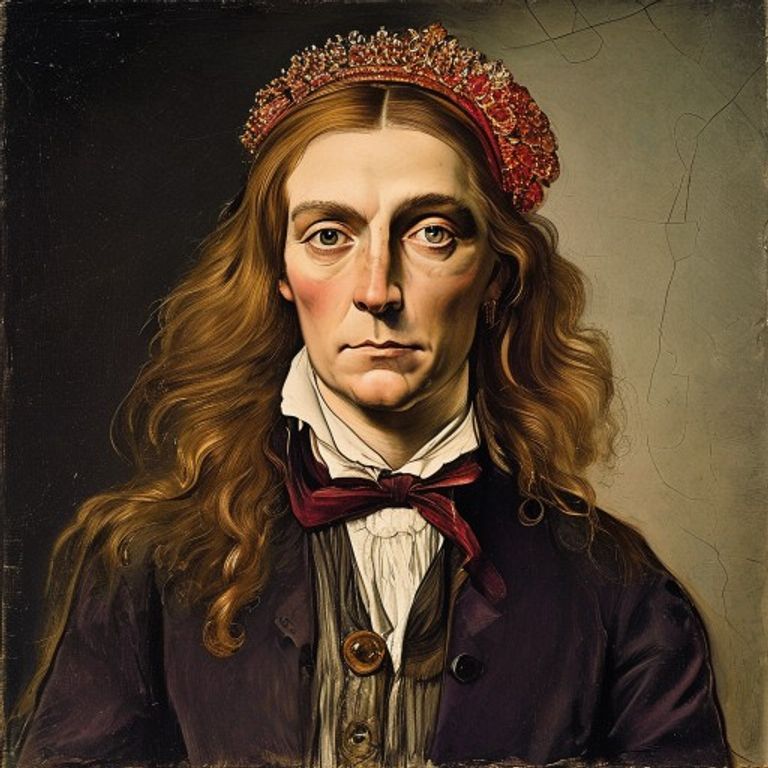
Two brilliant students who murdered a teenager in 1924 just to attempt to commit the 'perfect crime', defended by the legendary lawyer Clarence Darrow.
⚠️ Research conducted with the aid of Deep Research is subject to referential ambiguity.
🖥️ Clean HTML code using a proprietary tool.
👥 Research by Guilherme Felipe, Curation by Sílvio Lôbo
The "Perfect" Crime: The Leopold and Loeb Enigma Unraveled and the Mysteries That Remain
In Chicago, during the vibrant and turbulent summer of 1924, a crime shocked the American nation. Two privileged young men, sons of wealthy families and promising university students, confessed to an act of brutal violence that defied the logic and understanding of the time. The case of Nathan Leopold Jr. and Richard Loeb, self-proclaimed "perfect murderers," was not just a crime, but a complex mosaic of distorted intellectual ambition, nascent psychological theories, and a legacy that still echoes today in discussions about the nature of evil and criminal responsibility.
1. The Context and the Incident: Where, When, and How the Mystery Began
The tragedy unfolded in Chicago, Illinois, a metropolis in the midst of industrial and cultural effervescence. The year was 1924, a period of great optimism and prosperity following World War I, but also of growing social tension and the exploration of new psychoanalytic theories. It was in this setting that Nathan Leopold Jr., 18, an intellectual prodigy with an IQ of 200 and a polyglot, and Richard Loeb, 17, equally intelligent but with a history of rebellious behavior and a fascination with danger, conceived an audacious and macabre plan.
The initial goal, according to their own later confessions, was to commit the "perfect" crime – a kidnapping followed by murder, without leaving traces and without being caught. The chosen victim was Robert Franks, 14, a distant relative of Loeb who attended the same elite school as both young men. On May 21, 1924, the two lured Robert into a rented car in an upscale Chicago neighborhood with the false promise of a ride. What followed was indescribable brutality.
2. Timeline of Events
- May 21, 1924 (Wednesday): Robert Franks is kidnapped and murdered by Leopold and Loeb.
- May 22, 1924 (Thursday): Robert Franks' family receives a ransom note demanding $10,000.
- May 23, 1924 (Friday): Robert Franks' body is discovered in a marsh in Indiana, about 30 miles from Chicago. The police begin an intensive investigation.
- May 27, 1924 (Tuesday): The police, following a crucial lead from a pair of eyeglasses that had fallen in the car used in the kidnapping and belonged to Leopold, interrogate the two young men.
- May 31, 1924 (Friday): Leopold and Loeb confess to the crime after a long interrogation session.
- August 1924: The trial begins, highlighting the defense of Clarence Darrow, who seeks to avoid the death penalty by arguing the defendants' lack of accountability.
- September 10, 1924: Leopold and Loeb are sentenced to life imprisonment, with the possibility of parole after 19 years.
- January 30, 1936: Richard Loeb is murdered in prison by another inmate.
- 1958: Nathan Leopold Jr. is finally released on parole.
- May 29, 1971: Nathan Leopold Jr. passes away in Puerto Rico.
3. The Main Theories
The motivation behind the Leopold and Loeb crime became the subject of intense debate, fueling various theories, some based on evidence, others on speculation:
Psychological and Scientific Theories (Most Likely Hypotheses):
- The Search for Super-Humanity (Nietzsche's Theory): Leopold and Loeb were fervent admirers of Friedrich Nietzsche's philosophy, especially the concept of the "Übermensch" (superman). They believed that, as superior intellectuals, they were above common moral laws and could commit extraordinary acts, including murder, to prove their transcendence. Psychiatric reports of the time, such as those by Dr. William Healy, explored this philosophical influence as a key factor in the distortion of the young men's moral sense.
- Psychosexual Fascination and Perversion: Several psychiatrists and criminologists of the time suggested that the crime was linked to a complex relationship of domination and submission between the two, possibly with latent homosexual elements and a morbid desire for extreme and forbidden experiences. The detailed confessions of the crime's macabre details, and the non-financially motivated nature, reinforce this line of reasoning.
- The Search for Strong Emotions and Existential Boredom: The privileged upbringing and sharp intelligence of the young men, combined with a lack of significant challenges in their lives, could have led to profound boredom and an incessant search for new and intense sensations. The murder, for them, would be the ultimate experience, a test of their limits and their capacity for control.
Alternative and Speculative Theories:
- Influence of Third Parties (Minor Conspiracy Theory): Although there is no concrete evidence, some speculations suggested that the young men could have been influenced or even manipulated by older figures, who might have instilled these dangerous ideas in them. However, the meticulously planned and executed nature of the crime, based on their own confessions, weakens this hypothesis.
- Paranormal or Supernatural Theories (Highly Speculative): In a period where occultism and spiritualism were gaining popularity, more fantastic theories emerged. Some people speculated about demonic influences or negative energies that would have led the young men to commit the act. These theories lack any factual or scientific basis.
4. Controversies and Blind Spots
Despite the confession and conviction, the Leopold and Loeb case is far from being completely resolved in all its aspects. Several controversies and blind spots persist:
- The True Motivation: Although psychological theories are the most accepted, the exact and complete motivation behind such a brutal and seemingly senseless act has never been fully clarified. The confessions, although detailed, may have been influenced by the pressure of the interrogation or the attempt to present themselves in a certain way.
- The Nature of the Relationship between Leopold and Loeb: The exact dynamics of their friendship and mutual influence are subjects of debate. Some argue that Leopold, more intellectually dominant, would have been the main architect of the plan, while others point to Loeb's influence in their search for excitement and danger.
- The Deal with the Franks Family: There are speculations about whether the Franks family, in their grief and despair, might have exerted some influence on the decision to seek a confession instead of a full trial, possibly to avoid further suffering or to ensure the culprits were punished.
- Initially Ignored Clues: The police were criticized for not having acted more quickly based on some initial information. The discovery of Leopold's glasses, although crucial, only occurred after the police had followed other less fruitful lines of investigation.
- The Fate of Some Evidence: Although most of the evidence has been documented, the exact fate of some objects and secondary testimonies can be difficult to track in historical archives.
5. Curiosities and Legacy
The Leopold and Loeb case transcended police news, becoming a cultural landmark and a case study in various areas:
- Impact on Criminology and Psychology: The case boosted interest and research in areas such as criminal psychology, the influence of philosophy on the minds of young people, and debates about the nature of evil. Psychoanalytic theories gained more prominence in courts.
- Clarence Darrow's Defense: The legal strategy of Clarence Darrow, a renowned defense attorney, who argued that the young men were victims of their personalities and psychological influences, changed the landscape of trials, focusing on lack of accountability to the detriment of direct guilt.
- Influence on Popular Culture: The case inspired countless books, films, and plays, including the famous novel "Compulsion" by Meyer Levin and its film adaptation. These works often explore the psychological complexity of the killers and the moral questions raised by the crime.
- Legacy in the Judicial System: The way the trial and sentencing were conducted, prioritizing rehabilitation over maximum punishment, influenced future discussions about juvenile justice and alternative sentencing.
- Current Status of the Case: The case was officially resolved with the confession and conviction of those involved. It has not been reopened for investigation, but continues to be an object of study and fascination. The story of Leopold and Loeb serves as a grim reminder of human capacity for evil, even among the most privileged and intellectually gifted, and of the indelible complexities of the human mind.



