


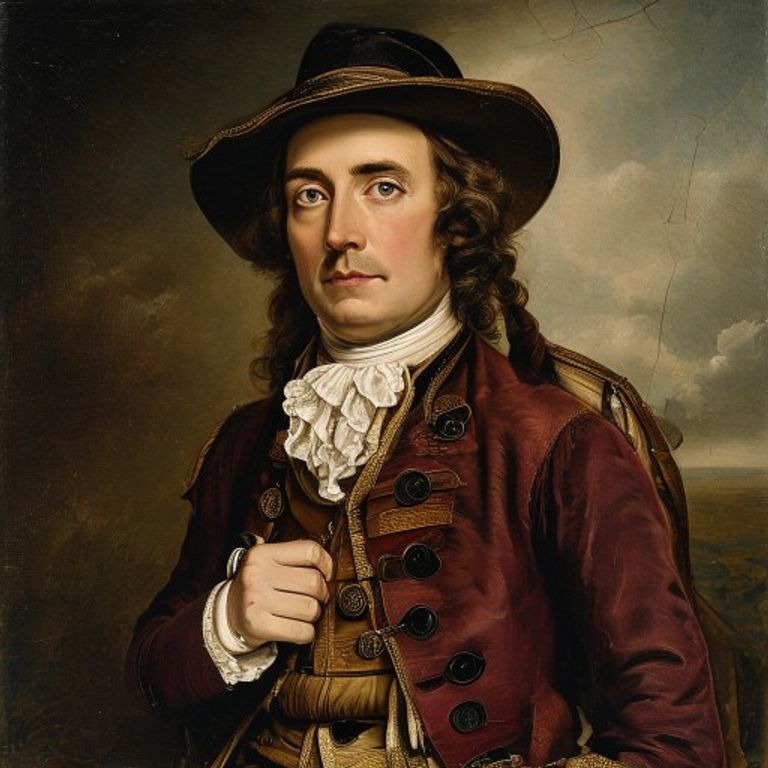
The first overland crossing of the United States to the Pacific in 1804, mapping unknown territories and establishing contact with native tribes.
⚠️ Research conducted with the aid of Deep Research is subject to referential ambiguity.
🖥️ Clean HTML code using a proprietary tool.
👥 Research by Guilherme Felipe, Curation by Sílvio Lôbo
The Enigma of the Lewis and Clark Expedition: A Trail of Mystery on the Frontier
The history of the United States is punctuated by moments of audacious expansion and epic discoveries. Few, however, carry the weight of mystery and speculation like the famous Lewis and Clark Expedition. Officially launched with the goal of mapping the vast territory acquired through the Louisiana Purchase and finding a navigable route to the Pacific Ocean, the journey, led by Captain Meriwether Lewis and Lieutenant William Clark, unveiled unknown landscapes and established contact with numerous indigenous tribes. However, behind the triumphant return, shadows of not fully explained events, tragic losses, and details that, to this day, fuel debates and investigations about what really happened in the vastness of the American frontier, still linger.
1. The Context and the Incident: Where, When, and How the Mystery Began
On May 18, 1804, the Expedition departed from Camp Dubois, near Saint Louis, Missouri, with a clear mission: to fulfill the orders of President Thomas Jefferson. The intent was clear: to explore, catalog flora and fauna, establish diplomatic relations with the natives, and, crucially, search for the "Northwest Passage." For over two years, the expedition navigated treacherous rivers, crossed imposing mountains, and encountered hundreds of new species. However, the origin of the mystery does not lie in a single dramatic "incident," but rather in a series of losses, illnesses, and disappearances of evidence that occurred throughout the arduous journey, especially during the return.
2. Timeline of Events
- May 18, 1804: Official start of the Lewis and Clark Expedition at Camp Dubois, Missouri.
- Autumn 1804: Construction of Fort Mandan in present-day North Dakota, where the expedition would spend the winter and meet Sacagawea, who would become a key figure in the journey.
- 1805: Crossing of the Rocky Mountains and arrival at the Pacific Ocean.
- 1806: Start of the return trip, which proved more dangerous and filled with incidents not fully recorded.
- September 23, 1806: Return of the Expedition to Saint Louis, celebrated as a great success.
- 1809: Meriwether Lewis dies under mysterious circumstances, officially attributed to suicide, but which generate intense speculation.
3. The Main Theories
The enigmas surrounding the Lewis and Clark Expedition are not limited to a single point, but extend to various aspects, generating a range of theories that seek to fill the gaps left by historical records.
Scientific and Forensic Theories (Most Likely)
- Diseases and Natural Accidents: The vast majority of the expedition members suffered from illnesses, injuries, and the harshness of the environment. The death of some members, the physical weakness of others, and the scarcity of medical resources at the time are rational explanations for the losses and difficulties. The death of Lewis, for example, is attributed by many historians to a bout of melancholy and depression, possibly exacerbated by health problems.
- Conflicts with Indigenous Tribes: Although the expedition established mostly peaceful relations, isolated clashes with hostile indigenous groups cannot be ruled out. The lack of detailed records on all encounters may mask more serious incidents.
Alternative and Conspiracy Theories
- Concealment of Discoveries: A persistent theory suggests that Lewis and Clark may have made significant discoveries – valuable natural resources, fertile lands, or even secret routes – that were intentionally omitted or underestimated in their official reports for personal gain or to avoid immediate predatory exploitation.
- Government Secret Agenda: Some speculate that the expedition could have had a secret agenda beyond territorial exploration, such as the search for artifacts or knowledge of ancient civilizations, or even the observation and mapping of unusual geological or biological phenomena that the government of the time did not wish to disclose.
- Sabotage or Internal Conflicts: Although less substantiated, the idea of internal sabotage or serious conflicts between members of the expedition, possibly related to leadership or the distribution of power, is not completely ignored.
Paranormal Theories
- Encounters with Unexplained Phenomena: Amidst the vastness of unexplored territories and the spiritual beliefs of native tribes, the possibility of encounters with phenomena that transcend the scientific understanding of the time is raised. Reports of luminous phenomena, strange sounds, or mystical experiences could be interpreted from this perspective, albeit without concrete evidence.
4. Controversies and Blind Spots
The wealth of detail in Lewis and Clark's journals is remarkable, but the gaps and inconsistencies are equally impressive, fueling the mystery:
- The Death of Meriwether Lewis: The official narrative of his suicide is questioned by many. Forensic reports were rudimentary at the time, and the nature of his wounds sparked speculation about a possible murder. The fact that he was in possession of a considerable amount of money and that his belongings were quickly distributed raises suspicions.
- Loss of Records and Artifacts: Throughout the expedition, and especially during the troubled return, some records, maps, and collected specimens appear to have been lost. The lack of these materials makes it difficult to fully reconstruct some parts of the journey and validate certain observations.
- Testimonies of Expedition Members: Although many members contributed accounts, the uniformity of the testimonies regarding crucial events, such as the death of Lewis, is not always absolute, generating distrust about the veracity of all information.
- The Role of Sacagawea: Although her importance is undeniable, the exact extent of her influence and knowledge of the territory is still a subject of study. There is speculation about whether she knew more than was recorded, perhaps in relation to dangers or alternative routes.
5. Curiosities and Legacy
The impact of the Lewis and Clark Expedition on the formation of the United States is immeasurable. It not only expanded the country's geographical knowledge but also contributed significantly to science, with the cataloging of hundreds of new plant and animal species.
- Popular Culture: The case has inspired countless books, films, documentaries, and works of art, consolidating the image of Lewis and Clark as heroic explorers, but also fueling the fascination with the unresolved aspects of their journey.
- Ongoing Research: Although the original expedition was completed over two centuries ago, historical and archaeological research on it remains active. New documents are discovered, and interpretations of existing evidence are re-evaluated.
- Current Status: The "case" of the Lewis and Clark Expedition, in the sense of a police investigation, has logically been "cold" for a long time. However, as an object of historical study and as a source of mystery and speculation, it remains vibrant and in constant reinterpretation. The death of Lewis, in particular, continues to be a focal point for historians seeking to unravel the final days of the legendary explorer. With each new discovery, the veil covering some aspects of the Lewis and Clark Expedition seems to lift a little, but the aura of mystery remains, a testament to the complexity and bravery of a journey that shaped the nation.



