


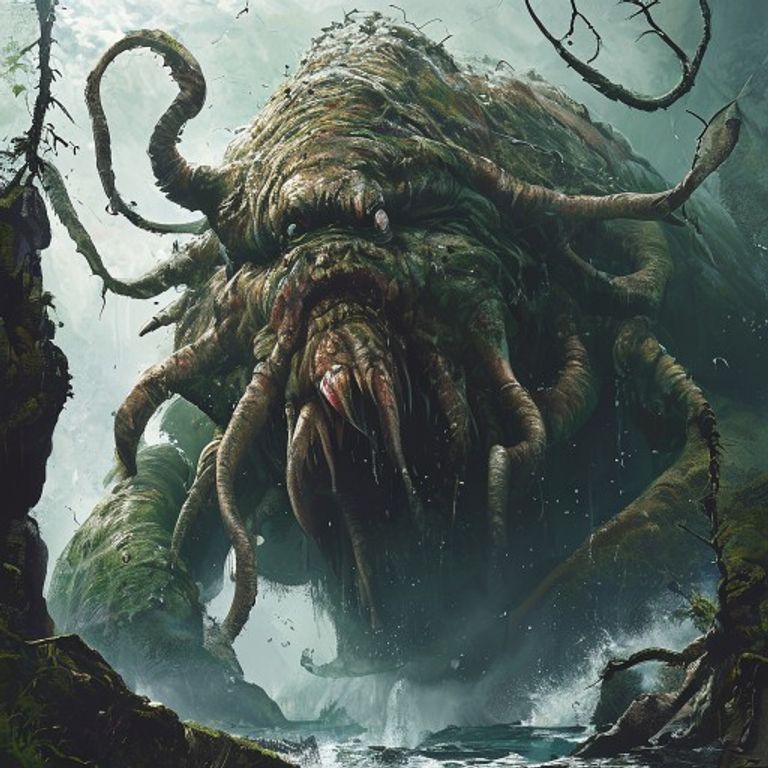
The legend of a prehistoric creature said to inhabit a lake in Scotland, fueled by photographs and reports of sightings that official science has never confirmed.
⚠️ Research conducted with the aid of Deep Research is subject to referential ambiguity.
🖥️ Clean HTML code using a proprietary tool.
👥 Research by Guilherme Felipe, Curation by Sílvio Lôbo
The Loch Ness Monster: A Deep Investigation into Murky Waters
By [Your Senior Investigative Journalist Name]
1. The Context and the Incident: The Silent Scream of Glen Affric
Loch Ness, a deep, dark mirror in the Scottish Highlands, has long inspired legends and whispers. However, it was from 1933 onwards that the myth of the Loch Ness Monster erupted into popular consciousness, driven by a wave of reported sightings and increasing media coverage. The context is crucial: the construction of the new A82 coastal road, which skirts the lake, exposed the landscape to a greater number of people, creating the perfect stage for the emergence of a modern enigma.
The incident that catalyzed the monster's fame occurred in 1933. Reports of a "colossal" and "unknown" creature emerging from the waters gained prominence. The publication of a letter in the Inverness Courier on July 28, 1933, detailing a sighting by a couple, George and Aldie Spicer, who described an "enormous" creature with a "long, serpentine body" crossing the road, is considered a milestone in the modern mythology of the monster.
2. Timeline of Events: A Trail of Enigmas
The history of the Loch Ness Monster is punctuated by a series of significant events that shaped its legend:
- 6th Century AD: Mentioned in chronicles such as the Life of Saint Columba, where the saint reportedly warded off a "water beast" that was attacking a man in the River Ness. This is the oldest record associated with creatures in the lake.
- 1933: The crucial year. The opening of the new road exposes the lake. Reports of sightings multiply, with the George and Aldie Spicer account standing out.
- 1934: The publication of the famous "surgeon's photograph," credited to Robert Kenneth Wilson, which shows a long neck emerging from the water. This image became an icon, despite later revelations about its falsity.
- 1960s-1970s: Periods of intense investigative activity, with expeditions using sonar and submarines, notably the one led by Sir Edward Mountain in 1969.
- 1972: The Loch Ness Investigation Bureau (LNIB) conducts extensive searches, but with inconclusive results.
- 1987: "Operation Deepscan," one of the largest searches ever conducted, mobilized a large number of boats equipped with sonar, which recorded some anomalous contacts, but nothing conclusive.
- 1994: Revelation that the "surgeon's photograph" was an elaborate hoax.
- 2003: The BBC conducts a comprehensive search using advanced technology, including an underwater vehicle and water DNA analysis. The expedition finds no evidence of a large creature.
- 2018: An environmental DNA study conducted by the University of Otago (New Zealand) suggests that most "sightings" can be explained by large eels.
3. Main Theories: Deciphering the Shadow
The unfathomable nature of Loch Ness has given rise to a myriad of theories, each attempting to fill the void left by the lack of definitive evidence:
-
Scientific and Natural Hypotheses (the most likely):
- Giant Eels: Based on recent DNA studies, this theory suggests that large eels, possibly anomalous in size, could be the origin of some sightings. The logic is that in an environment with abundant food and very few natural predators, eels could reach unusual sizes.
- Waves and Wakes: The constant flow of vessels on the lake and strong winds can create unusual and complex waves, which, under certain light and perspective conditions, can be misinterpreted as the movement of a large creature.
- Floating Logs and Debris: Floating organic objects, such as tree trunks that submerge and then re-emerge, or large masses of algae, can resemble parts of a moving animal body.
- Optical Illusions and Atmospheric Distortions: Light refraction, fog, and other atmospheric phenomena in an aquatic environment can create distorted and fleeting images, leading to erroneous interpretations.
- Misidentified Known Animals: Sightings of otters, seals, cormorants, or even swimming deer can be mistaken for something more extraordinary in low-visibility conditions.
-
Alternative and Speculative Theories:
- Prehistoric Survivor (Plesiosaur): The most popular and enduring theory. The idea is that an isolated population of plesiosaurs, marine reptiles extinct for 65 million years, has survived in Loch Ness. The logic lies in the depth and size of the lake, which theoretically could support a population.
- Series of Unknown Creatures: Instead of a single creature, the hypothesis that a family or a group of unknown species lives in the lake.
-
Conspiracy and Paranormal Theories:
- Government Conspiracy: The idea that governments or hidden organizations are aware of the monster's existence but keep it secret to avoid panic or for clandestine research purposes.
- Psychic/Energetic Phenomenon: Some theories suggest that "Nessie" is not a physical creature, but a manifestation of psychic energy or a paranormal phenomenon associated with the lake.
4. Controversies and Blind Spots: The Shadows in the Investigations
The investigation of the Loch Ness Monster is filled with controversies and gaps that fuel the mystery:
- The "Surgeon's Photograph" and the Hoax: The forgery of the iconic image, revealed in 1994 by Christian Spurling, one of those involved, casts a shadow over the credibility of other photographic evidence. The motivation for the hoax, apparently to "get back" at those who believed the story, calls into question the genuineness of other similar images.
- Inconsistencies in Testimonies: Over the decades, countless reports of sightings have been recorded. However, the variation in descriptions (size, shape, number of "humps," color) raises the question of whether all testimonies refer to the same creature, or if they are subjective interpretations of different phenomena.
- Anomalous Sonar Results and the Lack of Clear Explanation: Expeditions like "Operation Deepscan" recorded sonar contacts that were not conclusively identified. The lack of clear images or physical samples of these detections allows for speculation.
- Missing or Ignored Evidence: There are reports that some evidence, such as alleged footprints or artifacts, may have been collected and subsequently lost or not properly analyzed. The lack of a centralized and consistently managed archive hinders traceability.
- The Role of Media and Tourism: The relentless media coverage and commercial exploitation of the myth have created a cycle where the search for "Nessie" has become more of a business than a rigorous scientific investigation. This may have led to the overvaluation of weak evidence and the neglect of more mundane explanations.
5. Curiosities and Legacy: The Persistent Charm
The Loch Ness Monster has transcended the status of a mere local mystery to become a global icon of cryptozoology and folklore. Its legacy is multifaceted:
- Cultural Impact: "Nessie" is a globally recognized figure, inspiring books, films, documentaries, souvenirs, and even marketing campaigns. The lake itself has become a renowned tourist destination, attracting millions of visitors annually in search of the unusual.
- The "Nessie Factor": The case exemplifies the enduring appeal of the unknown and the human nature of seeking explanations for the inexplicable. The lack of a definitive resolution keeps the flame of curiosity alive.
- Current Status: The case of the Loch Ness Monster remains, for the most part, "shelved" in the sense that there is no official investigation underway with the same intensity as in the past. However, scientific exploration, such as DNA studies, continues, seeking to provide answers based on modern methods. The mystery, however, is far from being unraveled for the general public. The legend persists, a constant invitation to uncover the secrets of the deep waters of Loch Ness.



