


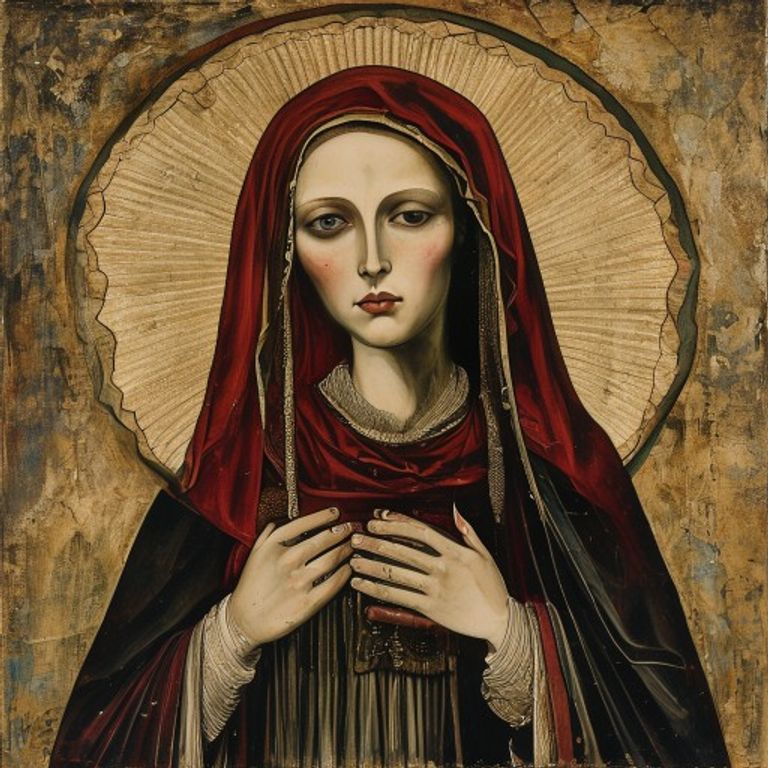
The artist and ex-wife of a CIA agent who was murdered in 1964 on a trail in Washington; her closeness to John F. Kennedy sparked theories that she possessed diaries containing state secrets.
⚠️ Research conducted with the aid of Deep Research is subject to referential ambiguity.
🖥️ Clean HTML code using a proprietary tool.
👥 Research by Guilherme Felipe, Curation by Sílvio Lôbo
The Silent Enigma: The Mary Meyer Death Case
On October 12, 1964, the District of Columbia was shaken by an event that would become one of the most persistent unsolved mysteries in American history. The body of Mary Pinchot Meyer, a prominent figure in Washington D.C.'s social and political circles, was found on the C&O Canal Towpath in Georgetown. What followed was an investigation marked by gaps, contradictions, and a veil of silence that, to this day, obscures the truth about her tragic end.
The Context and the Incident: A Life Between Art and Power
Mary Meyer was more than just a socialite. Born into an influential family, she was the wife of Cord Meyer Jr., a former Marine and CIA officer who played a significant role in the Cold War. Furthermore, Mary was a recognized painter and maintained a circle of friends that included high-ranking figures, notably the then-president John F. Kennedy. The exact nature of her relationship with Kennedy has been the subject of intense speculation, adding a layer of intrigue to her death.
On the afternoon of October 12, 1964, a witness, William Rasmusen, who was walking his dog near the C&O Canal, noticed a woman and a man near a parked car. Shortly thereafter, Rasmusen heard two gunshots. Upon investigating, he discovered the body of Mary Meyer, dressed in a bathing suit, and noted the absence of the man he had seen moments before. The crime scene was marked by the later discovery of two suitcases inside Meyer's car, which suggested she might have been preparing for a trip.
Timeline of Crucial Events
- October 12, 1964, Afternoon: Mary Meyer is last seen alive by William Rasmusen on the C&O Canal Towpath.
- October 12, 1964, Afternoon: William Rasmusen hears two gunshots and discovers the body of Mary Meyer.
- October 12, 1964, Afternoon: Police are called to the scene. Meyer's body is removed.
- October 13, 1964: The death of Mary Meyer is officially declared a homicide.
- October 14, 1964: William J. Crumbaugh, a man with a history of mental health issues, is arrested.
- October 16, 1964: William J. Crumbaugh is released without formal charges.
- 1976: The case is officially reopened following the publication of the book "The Dark Side of Camelot" by Seymour Hersh, which suggests CIA involvement.
- Subsequent Years: Various independent theories and investigations emerge, but the case remains cold.
The Main Theories: A Mosaic of Hypotheses
The official investigation, which culminated in the arrest and subsequent release of William J. Crumbaugh, never reached a definitive conclusion. The lack of concrete evidence and the complex nature of Meyer's social circle paved the way for a myriad of theories:
1. The Loner Misfit: The Initial Police Hypothesis
Proven Facts: Police initially focused on William J. Crumbaugh, a man with a history of psychiatric problems and a record of aggression. He was detained because his description resembled that of the man Rasmusen had spotted. He confessed to having been in the area but denied the murder.
Speculation: Crumbaugh's release without formal charges raises questions. Was it a failure in evidence collection, or was he quickly dismissed as a suspect for undisclosed reasons?
2. The Secret Lover and the Consequence: The JFK Relationship Theory
Proven Facts: There are reports and testimonies indicating that Mary Meyer and John F. Kennedy had an intimate relationship. The nature and depth of this relationship are subjects of debate.
Speculation: One theory suggests that Meyer's murder was linked to her relationship with the president, perhaps as an attempt to silence her, or as retaliation for some secret she might have revealed. Another strand speculates that Kennedy himself could have been involved in her death, or that she was killed by someone who wished to harm the president.
3. The Shadow of the CIA: The Involvement of Cord Meyer and the Agency
Proven Facts: Cord Meyer Jr., Mary's husband, was a high-ranking CIA officer. The agency is known for its covert operations, and in 1976, Seymour Hersh's book "The Dark Side of Camelot" reignited the investigation by suggesting CIA involvement. The book pointed to the possibility that Mary had compromising information, or that her death was related to some service she provided to the agency.
Speculation: The CIA theory is complex. Could it have been an action to protect state secrets, to silence an informant, or even a plan executed by an agency operative who felt threatened by Mary or her relationship with Kennedy? Declassified reports, however, have not provided concrete evidence that directly supports this hypothesis.
4. The Betrayed Husband and Revenge
Proven Facts: Cord Meyer and Mary Meyer were in the process of divorcing or separating at the time of her death. Reports indicate tensions in the relationship.
Speculation: A less prominent but not discarded theory is that Cord Meyer could have had motives to murder his wife, whether out of jealousy, revenge, or to avoid the divorce and the financial or social consequences it would bring.
5. Alternative and Paranormal Theories
Speculation: Over the years, more speculative theories have emerged, including the possibility of mafia involvement, a professional hitman, or even paranormal events. These theories, while lacking robust factual substance, reflect the deep mystery surrounding the case.
Controversies and Blind Spots: The Cracks in the Official Narrative
The official investigation into the Mary Meyer case is full of question marks:
- Crumbaugh's Confession: Although William J. Crumbaugh confessed to being at the scene, the lack of coherent details in his confession and the speed with which he was released raise suspicions about the depth of the police investigation.
- The Mysterious Man: The man William Rasmusen saw with Mary Meyer before the shots were fired was never identified. The description provided by Rasmusen was vague, and the lack of further eyewitnesses is a significant obstacle.
- Missing or Ignored Evidence: Reports suggest that some evidence at the crime scene may have been lost or not properly processed. The absence of more concrete clues is a constant frustration for investigators and enthusiasts of the case.
- Conflicting Testimonies: The complexity of Meyer's social circle led to a series of testimonies, some of which presented inconsistencies, making it difficult to reconstruct the events with precision.
- The Bathing Suit: The fact that Mary Meyer was dressed in a bathing suit while walking on the canal raises questions about her whereabouts and intentions at the time of the attack. Was it an intimate meeting, a sudden escape, or something more sinister?
Curiosities and Legacy: A Mystery That Persists
The Mary Meyer Death Case has transcended the police realm, becoming an enduring symbol of historical mystery and political speculation. Public fascination with her death is fueled by the connection to the Kennedy family and the shadows of the Cold War.
Mary Meyer's legacy is largely defined by the enigma of her death. The case continues to inspire books, documentaries, and online discussions, with new theories and analyses emerging periodically. Despite formal reopenings and renewed interest over the decades, no investigation has managed to lift the veil of mystery that hangs over the C&O Canal Towpath in October 1964. The case remains cold, an open wound in the investigative history of the United States, a reminder that, sometimes, the truth remains hidden forever.



