


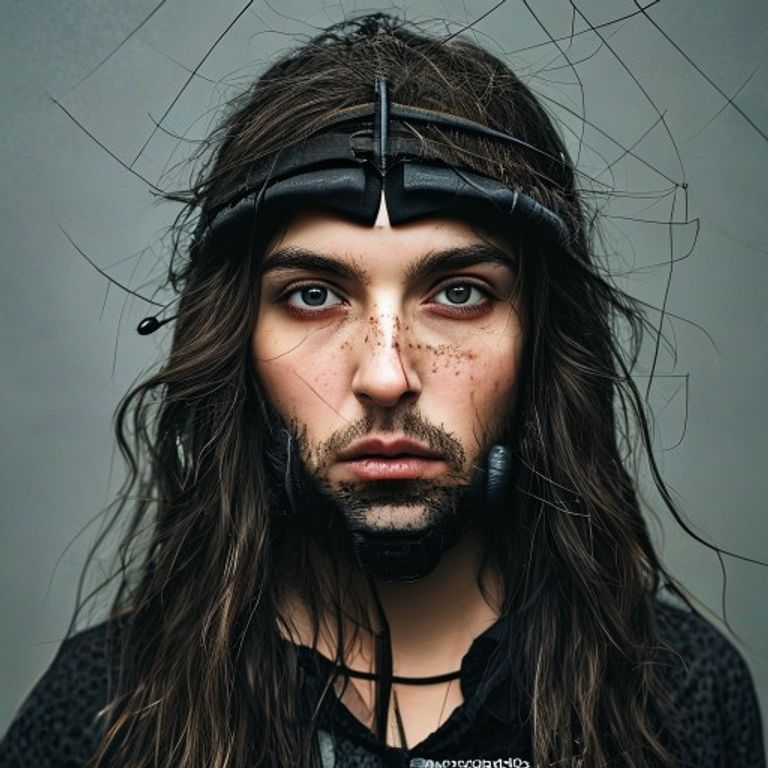
The mysterious interruption of two TV broadcasts in Chicago in 1987 by an individual wearing a Max Headroom mask; the perpetrators and the motivation behind the attack were never identified.
⚠️ Research conducted with the aid of Deep Research is subject to referential ambiguity.
🖥️ Clean HTML code using a proprietary tool.
👥 Research by Guilherme Felipe, Curation by Sílvio Lôbo
The Ghost on the Screen: Unraveling the Enigma of the Max Headroom Signal Hijacking Case
On a rainy night on November 22, 1987, the television screens of Chicago, Illinois, were taken over by a sinister and disturbing figure. The avatar of a futuristic show, Max Headroom, was intercepted by an anonymous hijacker who, wearing a metallic mask and using a distorted voice, uttered nonsensical phrases, challenging the established order and plunging the city into a mystery that persists to this day. This article investigates the contours of this unprecedented incident, separating fact from fiction and exploring the theories that attempt to explain who the ghost in the machine was and why he chose the iconic Max Headroom as his communication channel.
1. The Context and the Incident: The Day Television Lost Control
The year 1987 was an era of technological transition. Cable television was beginning to gain momentum, and pop culture was dominated by icons like Max Headroom himself, played by Matt Frewer, a futuristic talk show host with a robotic speaking style and a cyberpunk aesthetic. The city of Chicago, with its vibrant television scene, was home to stations like WGN-TV and WSBK-TV, which broadcast to millions of homes.
It was during the broadcast of two distinct series that the incident occurred. First, around 9:13 PM, on channel 11 of WGN-TV, during the "Alsace-Lorraine" episode of the science fiction show Doctor Who. Then, approximately 35 minutes later, the hijacking was repeated on channel 32 of WSBK-TV, during the airing of the film The Nine Lives of Fritz the Cat. In both cases, the original image and audio were suddenly replaced by a masked figure in front of a metallic curtain, waving his arms erratically while emitting incomprehensible sounds, interspersed with fragments of incoherent and sometimes offensive speech. The hijacking lasted only about 90 seconds in each broadcast, enough time to sow panic and curiosity.
2. Timeline of Events: Crucial Points on the Night of Chaos
- November 22, 1987, 9:13 PM (Central Time): First interruption of the WGN-TV signal during the broadcast of Doctor Who.
- November 22, 1987, 9:48 PM (Central Time): Second interruption of the WSBK-TV signal during the broadcast of The Nine Lives of Fritz the Cat.
- After the broadcasts: The stations interrupted their programming and launched internal investigations.
- November 23, 1987: News about the hijacking began to circulate, generating alarm and speculation.
- Following days and weeks: The Chicago Police and the FBI initiated formal investigations.
- Subsequent years: The case gained the status of a historical and cult mystery, with various theories emerging.
3. The Main Theories: Seeking Rationality in the Absurd
The bizarre nature of the hijacking opened up a range of possibilities, from plausible technical explanations to more fantastic conspiracy theories.
Scientific and Police Theories (Most Likely):
- Amateur Signal Interference (Pirate VHF/UHF): The hypothesis most accepted by authorities at the time. It is suspected that an individual or group with advanced technical knowledge used a high-power transmitter to override their signal over the stations'. The difficulty of tracking the exact origin of the signal in an urban environment with multiple sources of interference would have made it difficult to capture those responsible. Police reports from the time mention the possibility that the hijacking was carried out from a moving vehicle or an elevated location with a line of sight to the stations' antennas.
- Exploitation of Technical Vulnerabilities: The era was marked by less secure transmission systems. The theory suggests that the hijackers exploited a loophole in the stations' equipment or in the audio and video frequencies. The overlap on two different stations, however, suggests a deliberate and coordinated act, rather than a mere accidental leak.
Alternative, Conspiracy, or Paranormal Theories (Speculation):
- Political or Social Activism: Some speculate that the hijacking could be a form of protest or a coded message. The distorted speech and abstract images could contain criticisms of aspects of society or the media. However, the absence of a clear and coherent message weakens this hypothesis.
- Elaborate Prank: The possibility that a group of hackers or technology enthusiasts orchestrated the hijacking as a challenge or a demonstration of their skills is another line of speculation. The fact that the target was Max Headroom, an icon of television culture, may have been an ironic choice.
- Social or Artistic Experiment: A less conventional theory suggests that the hijacking may have been a social experiment, testing the reactions of the public and the media, or a disruptive artistic performance. The surreal nature of the hijacking fits certain artistic currents of the time.
- Paranormal or Supernatural Theories: Although without a basis in factual evidence, the inexplicable character of the event fueled theories about extradimensional interference, psychic phenomena, or even the manifestation of a rebellious artificial intelligence, something that resonated with the theme of Max Headroom.
4. Controversies and Blind Spots: The Gaps in the Investigation
Despite the initial efforts of the authorities, the Max Headroom signal hijacking case quickly became a dead end, filled with controversies and blind spots.
- Lost or Inconclusive Evidence: Official reports, although they exist, are vague about the evidence collected. The lack of high-quality recordings of the incident by the stations (at the time, the focus was on stopping the hijacking, not documenting it in detail) limited forensic analysis.
- Conflicting or Insufficient Testimony: Witnesses who might have seen something unusual near the stations or who might have had information about pirate transmitters were not enough to direct the investigation.
- Inconsistencies in Technical Analysis: The complexity of the transmission technology of the time and the difficulty in isolating the exact origin of the signal allowed various technical hypotheses to remain without definitive proof. The possibility that the hijacking was carried out from a remote location and the use of signal camouflage techniques hindered triangulation.
- Lack of Clear Motivation: The absence of a claim of responsibility or a comprehensible message made it impossible to determine the motive behind the hijacking, making it difficult to identify potential suspects.
5. Trivia and Legacy: The Echo of a Ghost in Pop Culture
The Max Headroom signal hijacking case transcended police news to become a landmark in pop culture, a symbol of the fragility of media and the unpredictability of the technological future.
- Inspiration for Fiction: The incident served as inspiration for countless works of science fiction, films, TV series, and even video games that explore the theme of media hijacking and the loss of control over information.
- An Icon of "Glitch Art": The visually anomalous and disturbing nature of the hijacking transformed it into an icon of "glitch art," an aesthetic that celebrates digital errors and imperfections.
- Current Status: Officially, the case remains filed as an unsolved incident. Despite not having been formally reopened, the mystery continues to fascinate researchers, enthusiasts, and the curious. Technology has evolved drastically since 1987, but the specter of the Max Headroom ghost serves as a grim reminder that, even in the most advanced communication networks, the unexpected can always lurk.
The ghost on the Max Headroom screen may have disappeared as mysteriously as it appeared, but its echo resonates, a permanent reminder that, behind the apparent digital order, there may exist an intentional chaos, waiting for its opportunity to manifest.



