


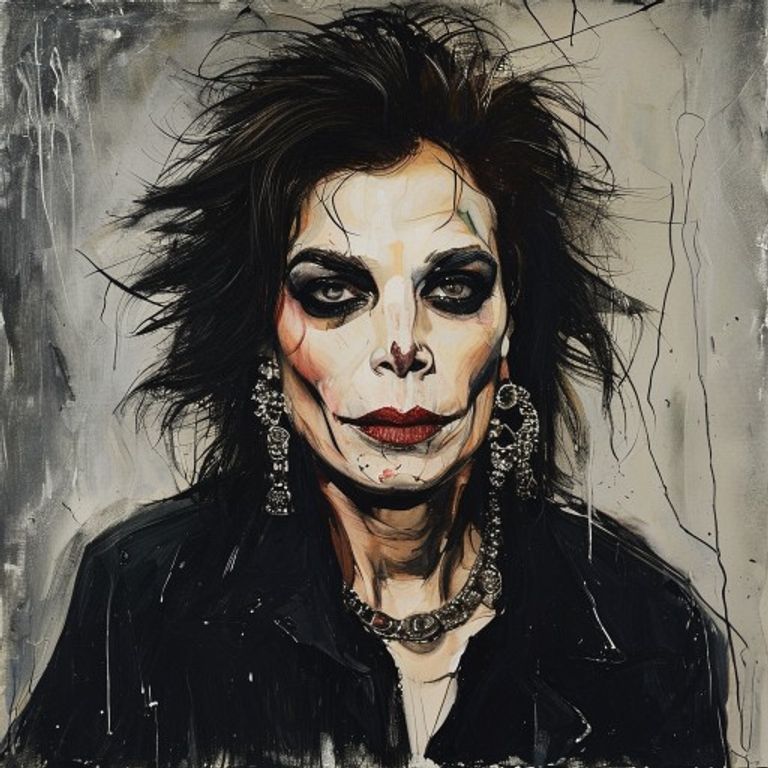
The King of Pop died in 2009 from acute propofol intoxication; although his doctor was convicted, the exact circumstances and the pressures of his final days still generate controversy.
⚠️ Research conducted with the aid of Deep Research is subject to referential ambiguity.
🖥️ Clean HTML code using a proprietary tool.
👥 Research by Guilherme Felipe, Curation by Sílvio Lôbo
The Enigma of Departure: Unraveling the Michael Jackson Death Case
The world was suddenly silenced on June 25, 2009. The news of the death of Michael Jackson, the King of Pop, echoed like thunder in a clear sky, leaving fans in shock and the planet in mourning. However, behind the public grief and the initial official statements, a veil of mystery began to form, fueling speculations that, to this day, defy a definitive conclusion. How did one of the world's greatest pop music icons come to such an abrupt and controversial end? This article investigates the contours of this enigma, separating proven facts from the clouds of uncertainty.
The Context and the Incident: The Beginning of the Mystery
The setting for Michael Jackson's final drama was his sumptuous retreat, a rented mansion in Holmby Hills, Los Angeles. The artist, then 50, was preparing intensively for his highly anticipated "This Is It" concert series, which would mark his return to the stage after years of seclusion and legal controversies. The intense rehearsal routine, combined with a history of health problems and medication dependency, painted a picture of physical and mental fragility.
The incident occurred on the morning of June 25, 2009. Initial details, as widely reported, indicated a sudden collapse at his residence. The arrival of paramedics and the subsequent transport to the Ronald Reagan UCLA Medical Center were marked by palpable despair, but the news of his death, confirmed at 2:26 PM, shocked the world. The official cause, later declared by the Los Angeles County Coroner, was "acute propofol and benzodiazepine intoxication," classified as a homicide.
Timeline of Crucial Events
- 2008-2009: Intensive preparations for the "This Is It" tour, with Michael Jackson undergoing rigorous rehearsals and receiving medical care to deal with pain and insomnia.
- June 25, 2009, Morning: Michael Jackson is found unconscious at his residence. His personal physician, Dr. Conrad Murray, is the one who performs the first resuscitation attempts.
- June 25, 2009, Approximately 1:15 PM: Emergency services are called.
- June 25, 2009, Approximately 1:45 PM: Michael Jackson arrives at the Ronald Reagan UCLA Medical Center.
- June 25, 2009, 2:26 PM: The death of Michael Jackson is officially declared.
- July 2009: The initial autopsy points to a series of medications in his system.
- August 2009: The Los Angeles County Coroner declares the death a homicide due to an overdose of Propofol, a potent anesthetic.
- 2010: Physician Dr. Conrad Murray is indicted for involuntary manslaughter.
- 2011: Dr. Conrad Murray is found guilty of involuntary manslaughter and sentenced to four years in prison. He served just over two years.
The Main Theories Regarding Michael Jackson's Death
The official cause of death, as declared by authorities, is an overdose of prescription drugs administered under the supervision of Dr. Conrad Murray. However, the complexity of the case and Jackson's celebrity status gave rise to a myriad of theories, ranging from the plausible to the fantastic.
Theories Based on Evidence and Official Investigations:
- Involuntary Manslaughter due to Medical Negligence (Official Theory): The police investigation and the trial of Dr. Conrad Murray maintained the thesis that the doctor negligently administered propofol, an anesthetic generally used in hospital settings, in a residential home. The lack of proper monitoring, administration in excessive doses, and the combination with other sedatives led to cardiac arrest. Murray's defense claimed that Jackson was a "self-administering patient" and that he was trying to help him sleep, arguing that the artist was addicted to medication and manipulated his doctors.
- Self-Administration and Medication Addiction: A line of argument, also explored by Murray's defense, suggests that Michael Jackson, in his chronic struggle against insomnia and pain, played an active role in the overdose. He was known to be a "doctor shopper" (a patient who seeks multiple doctors to obtain the same prescription) and to have developed a tolerance to various medications. This theory posits that he may have self-administered or pressured Murray to do so, resulting in the fatal dose.
Alternative and Conspiracy Theories:
- Sabotage or Murder by Third Parties: Some theories, fueled by fans and speculative commentators, suggest that Jackson's death was not accidental or the result of negligence, but rather orchestrated by third parties with financial or personal interests. Targets of this speculation include, but are not limited to, music industry executives, creditors, or individuals interested in controlling his vast estate. The lack of transparency in some aspects of the investigation and the speed with which the body was cremated fueled these narratives.
- Planned Escape: A less common but persistent theory among some devotees suggests that Michael Jackson, tormented by the media, financial pressures, and his desire for privacy, staged his own death to disappear and live a quiet life away from the spotlight. The logistical complexity and the absence of concrete evidence make this hypothesis highly unlikely, but it echoes the desire of many that the artist could find peace.
- Extraterrestrial or Paranormal Intervention: At one extreme of the speculative spectrum, some theories flirt with the supernatural or extraterrestrial. These ideas, generally devoid of any factual basis, attribute the death to mysterious forces or a desire by Jackson to join "other dimensions." These narratives reflect the almost mythical status of the artist for some of his followers.
Controversies and Blind Spots in the Investigation
The investigation into the death of Michael Jackson was not free of flaws and questionable points, which continue to fuel the mystery:
- The Role of Propofol: The administration of propofol, a highly potent medication, in a home environment is, in itself, a point of great controversy. The lack of proper safety and monitoring protocols, as would be observed in a hospital, raises serious questions about Dr. Murray's conduct.
- Contradictory Evidence and Testimony: There were conflicting reports about Jackson's state in the hours leading up to his death. Some testimonies pointed to his debilitated state, while others suggested he was relatively well. The interpretation of forensic evidence, including the amount of medication found, was also a subject of debate.
- The Speed of Cremation: Michael Jackson's body was cremated a few days after his death, preventing any further analysis that might have been requested later. While family members claimed this was the artist's wish, the speed of the process raised suspicions in some circles.
- The Failure to Deeply Investigate Other Possibilities: Critics of the official investigation point out that there was an excessive focus on Dr. Conrad Murray, neglecting the possibility that other individuals could have facilitated or tolerated Jackson's use of medication. The line of investigation could have delved deeper into the network of doctors, pharmacies, and drug suppliers that served the artist.
- Access to Controlled Substances: How an individual had access to such a large quantity of controlled substances, especially potent anesthetics like propofol, raises questions about the control and oversight mechanisms that failed to prevent such a situation.
Curiosities and the Legacy of the Case
The case of Michael Jackson's death transcends personal tragedy to become a cultural phenomenon and a milestone in the history of media and justice.
- Instant Global Impact: The news of his death generated unprecedented worldwide commotion. Social media, in its infancy, was flooded with messages of grief and speculation. The number of online searches for Michael Jackson skyrocketed, breaking internet traffic records.
- The "This Is It" Documentary: The documentary film, composed of footage from rehearsals for the canceled tour, was released posthumously and became a box-office success, offering a glimpse of Jackson's talent and dedication in his final days.
- The Criminal Trial of Dr. Conrad Murray: The trial of Dr. Conrad Murray was a large-scale media event, broadcast live and followed by millions of people. The sentence, although representing a legal closure, did not appease all doubts and speculations.
- Legacy in the Music Industry: The death of Michael Jackson left an immeasurable void in the music industry. His impact as a performer, songwriter, and innovator continues to inspire generations of artists.
- Current Status of the Case: Officially, the case was closed with the conviction of Dr. Conrad Murray. However, for many fans and observers, the mystery regarding the exact circumstances that led to his death and the depth of his medication dependency continue to be topics of debate and unofficial investigation. There are no indications that the case has been reopened by the competent authorities, but the fascination and the search for answers persist in the public sphere.
The case of Michael Jackson's death will remain a somber reminder of how the brightness of a star can be overshadowed by complex shadows, and how the truth sometimes hides in the nuances, the silences, and the unanswered questions.



