


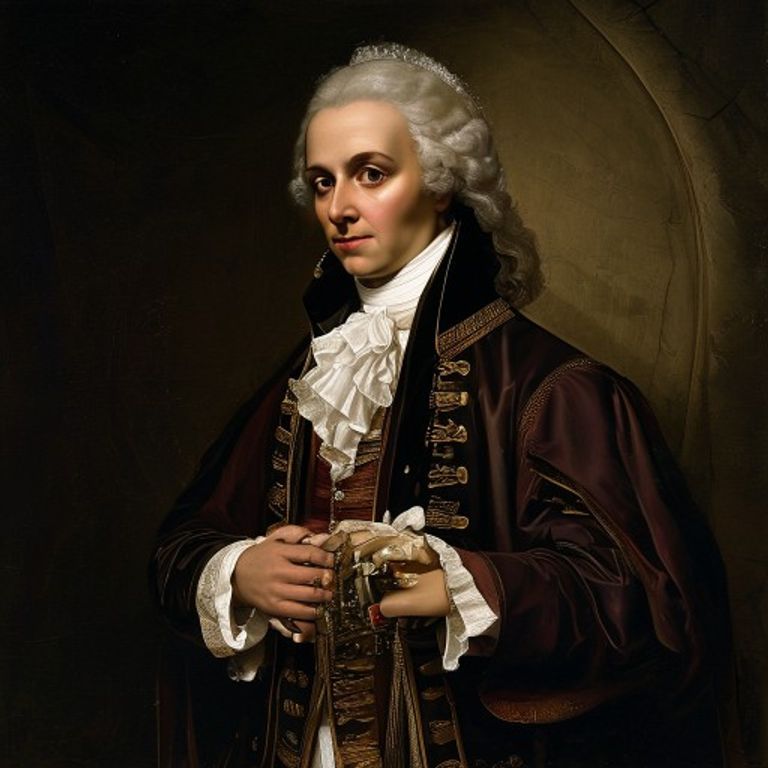
The composer's passing in 1791 at the age of thirty-five, whose official causes cite fever, but which sparked centuries-old legends about poisoning by rivals.
⚠️ Research conducted with the aid of Deep Research is subject to referential ambiguity.
🖥️ Clean HTML code using a proprietary tool.
👥 Research by Guilherme Felipe, Curation by Sílvio Lôbo
The Mystery of Mozart's Death: An Unfinished Score
Vienna at the end of the 18th century was a boiling cauldron of artistic genius and palace intrigue. Amidst this setting, the meteoric figure of Wolfgang Amadeus Mozart emerged, leaving a musical legacy that would echo through the centuries. However, his premature departure at age 35, on December 5, 1791, was as abrupt and shrouded in mystery as some of his most enigmatic compositions. What really took the life of the Austrian prodigy? The answer, it seems, lies in an unfinished score, whose notes were lost in the mists of history.
The Context and the Incident: A Premature End
Wolfgang Amadeus Mozart passed away in his modest apartment in Vienna, at a time when his career seemed to be reaching a new peak, with the triumphant premiere of "The Magic Flute" and the growing success of his Requiem, commissioned anonymously. The illness that struck him was sudden and debilitating. Reports from the time describe high fevers, swelling, and intense pain, culminating in his death within a few weeks. The speed of the deterioration and the lack of a conclusive diagnosis at the time sowed the seeds for the speculations that persist to this day.
Timeline of Events (Key Points):
- January 1791: Mozart receives the anonymous commission for the Requiem.
- September 1791: Premiere of "The Magic Flute" in Vienna, with great success.
- November 1791: Onset of symptoms of Mozart's illness. Reports indicate fever, skin rashes, and muscle pain.
- November 20, 1791: Mozart is forced to take to his bed, weakened by the illness.
- December 5, 1791: Wolfgang Amadeus Mozart passes away in Vienna.
- December 6, 1791: Mozart's burial in a common grave, under the rites for the poor, a detail frequently cited in discussions about negligence or lack of resources for a more dignified funeral.
The Main Theories: A Symphony of Possibilities
The absence of a detailed medical record and the nature of the era open up a vast range of theories, ranging from plausible medical explanations to narratives worthy of a mystery novel.
Medical and Scientific Theories:
- Severe Rheumatic Fever: One of the hypotheses most accepted by music historians and physicians. Rheumatic fever, caused by an untreated bacterial infection (usually streptococcus), can lead to serious complications, including inflammation of the heart (rheumatic carditis) and joint and muscle problems, consistent with the described symptoms.
- Syphilis: Although less likely as a direct cause of death in such a short period, syphilis was an endemic disease at the time and could have weakened Mozart's body, making him more susceptible to other infections.
- Kidney Disease (Acute Renal Failure): The description of swelling (edema) may indicate kidney problems. Severe infections or other conditions could have led to this complication.
- Trichinosis (Parasitic infection by Trichinella spiralis): A less consensual theory, but one that suggests the ingestion of undercooked pork, common in the diet of the time, could have led to infection by this parasite, causing symptoms similar to those described.
- Mercury Poisoning: Old medical treatments frequently used mercury. Chronic poisoning could have weakened Mozart, but the sudden and acute death makes this theory less likely as a primary cause.
Murder and Conspiracy Theories:
- Poisoning by Antonio Salieri: This is, without a doubt, the most famous and romanticized theory, popularized by works of fiction such as the play "Amadeus." The rivalry (possibly exaggerated) between Salieri and Mozart, and the latter's alleged envy of Mozart's genius, fueled this hypothesis. However, there is no concrete evidence to support this accusation. Later accounts by Salieri, in fact, demonstrate admiration for Mozart.
- Masonic Conspiracy: Mozart was a Freemason, and some suggest that his death may have been orchestrated by the brotherhood itself due to some transgression or dangerous knowledge acquired. This theory lacks any empirical foundation.
- Political/Palace Conspiracy: Some speculate that Mozart, due to his progressive ideas or for having been involved in something unfavorable to the established power, was silenced. Vienna at the time was a center of political intrigue, but there are no indications that connect Mozart to such plots in a way that would justify a murder.
Alternative and Paranormal Theories:
- Supernatural Influence/Energy Eclipse: More esoteric theories suggest that Mozart, with his heightened sensitivity, could have been a victim of negative energies or paranormal influences, especially considering the mystical aura that surrounded some of his works, such as "The Magic Flute."
Controversies and Blind Spots: The Melodic Fugues of the Investigation
What is most intriguing about the Mozart case is the remarkable lack of rigor in the documentation and investigations of the time. Several blind spots and inconsistencies arise when we analyze the facts:
- Lack of a Detailed Medical Report: The main obstacle to a conclusive diagnosis is the absence of a complete and reliable medical report. The doctor who attended him, Dr. Closset, recorded some symptoms, but there was no autopsy nor a formal diagnosis accepted unanimously.
- Burial in a Common Grave: The decision to bury Mozart in a common grave, without an individualized tomb, was a common practice for the less fortunate in Vienna at the time. However, for a figure of such cultural importance, the lack of an immediate memorial and the subsequent loss of the exact location of his burial raise questions about the management of his assets and the attention dedicated to his memory by his contemporaries and even his family.
- Disappearance of Documents: Several documents and correspondence relevant to the time of his death seem to have been lost over time, making it difficult to faithfully reconstruct the events.
- Ambiguous Testimonies: Some testimonies from family and friends, collected later, presented conflicting details about Mozart's final days, increasing the degree of uncertainty.
Curiosities and Legacy: The Opera Continues
The mystery surrounding the death of Wolfgang Amadeus Mozart has transcended the historical and medical realm, becoming a cultural icon. The figure of the tormented genius, taken prematurely by unknown forces, has captured the popular imagination and inspired countless works of art, literature, and cinema.
- The Requiem as Prophecy: It is believed that Mozart, feeling the proximity of death, dedicated himself intensely to the composition of his Requiem, treating it as a work that would echo his own departure. The somber nature and the grandeur of the piece fuel this perception.
- The Endless Legacy: Despite the tragedy of his death, Mozart's musical legacy is one of the most prolific and influential in the history of Western music. His work continues to be performed, studied, and admired all over the world.
- Current Status of the Case: The case of Mozart's death remains, for the most part, "shelved" in the sense that there is no formal police investigation underway. However, historical research and medical analyses continue to try to unravel the enigma, adding new layers of understanding, although rarely in a conclusive way. Modern medical science, with forensic analysis tools and knowledge of ancient diseases, has tried to shed light on the possible causes, but the lack of preserved biological material is an insurmountable obstacle.
The death of Wolfgang Amadeus Mozart continues to be one of the great enigmas of music history. An interrupted concert, an unfinished melody that resonates through the centuries, inviting us to speculate and seek the truth amidst the complex tapestry of life and death.



